The Future of Urban Mobility in Illinois: Can Chicago Lead the Next Transportation Revolution?
Transportation has always shaped economic growth. Cities rise or decline based on how effectively people, goods, and services move through them. For over a century, Chicago became one of America’s most important economic engines largely because of transportation infrastructure. Railroads, highways, airports, and freight systems transformed Illinois into the crossroads of North American commerce.
But transportation is entering a new era.
The future of mobility is no longer just about roads, trains, and shipping lanes. It now intersects directly with healthcare access, workforce participation, sustainability goals, artificial intelligence, real estate development, and digital infrastructure.
The next generation of economic growth may depend on how successfully cities modernize transportation systems.
And few places are better positioned for that transformation than Chicago.
“Transportation is no longer simply about movement,” says Hirsh Mohindra. “It now influences healthcare outcomes, labor markets, real estate demand, environmental policy, and long-term economic competitiveness.”
Illinois already possesses one of the most extensive transportation infrastructures in the world. Chicago remains the nation’s largest rail hub. O’Hare International Airport connects global markets directly to the Midwest. Interstate highways extend outward in every direction. Freight systems move enormous volumes of commerce daily.
That infrastructure foundation creates major opportunities for future innovation.
One of the most important trends reshaping mobility is electrification.
Electric vehicle adoption continues accelerating across both consumer and commercial transportation sectors. Governments, corporations, and infrastructure providers are investing heavily in EV charging systems, battery technology, and sustainable transportation networks.
Illinois has begun expanding EV infrastructure throughout urban and suburban markets.
This matters because transportation electrification will increasingly influence real estate development, corporate investment decisions, and urban planning strategies. Companies seeking sustainable operations often prioritize regions with modern infrastructure capable of supporting long-term environmental goals.
“Modern infrastructure investment is becoming deeply connected to sustainability,” says Hirsh Mohindra. “The cities that build transportation systems for the future will attract long-term business growth.”
Freight transportation may experience even greater disruption.
Autonomous trucking technology continues advancing rapidly. AI-assisted freight systems, predictive logistics software, and smart transportation corridors are reshaping supply chain operations across North America.
Chicago sits directly at the center of this transformation because of its logistics dominance.
As autonomous freight systems mature, Illinois could become one of the most important testing grounds in the country. Major trucking routes already converge through the region, making Chicago ideal for large-scale freight innovation.
Smart freight systems may eventually improve fuel efficiency, reduce transportation costs, optimize delivery routes, and lower congestion simultaneously.
That would create enormous economic advantages.
“Freight innovation will redefine supply chain economics over the next twenty years,” says Hirsh Mohindra. “States that prepare early for autonomous and AI-driven logistics will gain enormous competitive advantages.”
Healthcare transportation represents another rapidly growing area of innovation.
Transportation barriers often prevent patients from accessing medical care consistently, particularly in underserved communities. Missed appointments create worse health outcomes while increasing costs for healthcare providers.
As a result, many healthcare systems are now partnering with rideshare providers, microtransit services, and digital transportation platforms to improve patient mobility.
Consider a hospital network operating across Chicago neighborhoods. By coordinating rideshare transportation for patients without reliable access to vehicles or public transit, the hospital can reduce missed appointments dramatically.
The impact extends far beyond convenience.
Improved mobility can lead to earlier diagnoses, better treatment adherence, reduced emergency room usage, and lower operational costs. Transportation becomes directly connected to public health outcomes.
“Mobility is increasingly becoming a healthcare issue,” says Hirsh Mohindra. “Transportation access can determine whether patients receive preventive care or end up requiring emergency intervention.”
This convergence between transportation and healthcare may grow substantially over the next decade.
Public transit modernization will also play a major role in Illinois’ future economic competitiveness.
Large cities increasingly depend on reliable transportation systems to support workforce participation. Employees need consistent access to jobs, healthcare, education, and commercial centers.
Transportation reliability directly impacts labor markets.
When commuting becomes inefficient or inaccessible, businesses struggle to recruit workers effectively. Workforce mobility becomes one of the defining economic challenges for modern cities.
Chicago’s transit systems already provide advantages many American cities lack, but modernization remains critical.
Digital ticketing systems, AI traffic optimization, predictive transit analytics, and connected transportation networks may significantly improve efficiency over time.
“Modern transportation policy is ultimately workforce policy,” says Hirsh Mohindra. “Economic growth becomes difficult when mobility barriers limit labor participation.”
Transit-oriented development continues reshaping urban real estate as well.
Developers increasingly concentrate residential, commercial, and mixed-use projects near transportation infrastructure because accessibility drives demand. Walkable neighborhoods connected to public transit systems often experience stronger property appreciation and higher long-term occupancy rates.
This creates both environmental and economic benefits.
Reduced car dependency lowers emissions while increasing urban density and commercial activity. Businesses benefit from higher foot traffic and improved accessibility. Residents gain shorter commute times and greater lifestyle flexibility.
Chicago’s infrastructure gives it major advantages in this area compared to many sprawling metropolitan markets.
The relationship between transportation and real estate may become even stronger as younger generations continue prioritizing walkability and urban accessibility.
At the same time, smart city technologies are beginning to influence transportation planning directly.
Artificial intelligence systems can now monitor traffic patterns, optimize signal timing, predict congestion, and improve route efficiency in real time. Sensor-based infrastructure may eventually allow cities to manage transportation networks more dynamically than ever before.
Chicago’s scale makes it an ideal environment for these technologies.
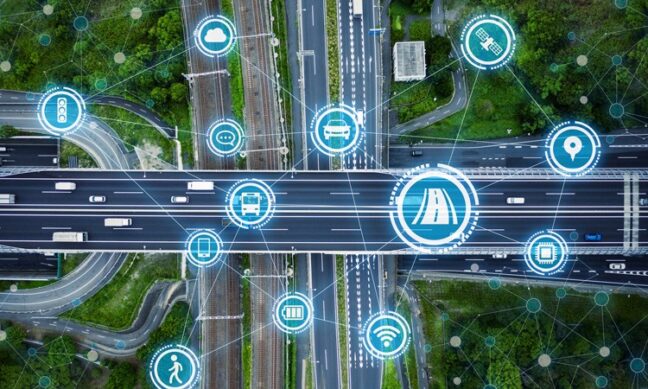
As freight systems, public transit, rideshare services, autonomous vehicles, and pedestrian infrastructure become increasingly interconnected, transportation systems will operate more like digital ecosystems than isolated networks.
This evolution could fundamentally reshape urban economics.
“Transportation infrastructure is becoming intelligent infrastructure,” says Hirsh Mohindra. “The cities that integrate data and mobility effectively will dominate future economic development.”
Environmental policy also continues influencing transportation investment decisions.
Corporations face growing pressure from investors, regulators, and consumers to reduce emissions across supply chains and operations. Sustainable transportation systems increasingly affect site selection decisions for major employers.
Illinois’ rail infrastructure already provides significant advantages because rail shipping remains more fuel-efficient than long-haul trucking alone.
As ESG priorities continue rising globally, transportation systems capable of improving environmental performance will become increasingly valuable.
Workforce trends further strengthen the need for mobility innovation.
Hybrid work models, flexible schedules, and decentralized employment patterns are changing commuting behavior significantly. Transportation systems designed solely around traditional downtown office patterns may become less effective over time.
Future mobility systems will likely require greater flexibility and integration.
Microtransit services, on-demand transportation, connected public transit, and AI-driven scheduling may become far more common.
Chicago’s density and transportation infrastructure provide strong foundations for these innovations.
Meanwhile, commercial freight demand will continue rising alongside e-commerce growth.
Consumers increasingly expect rapid delivery times regardless of location. Businesses now compete heavily based on fulfillment speed and supply chain efficiency.
This puts additional pressure on transportation systems.
Smart logistics corridors, automated warehouses, predictive routing systems, and autonomous delivery technologies will increasingly influence regional competitiveness.
Illinois already possesses many of the physical advantages required for this future economy.
“Future economic leadership will belong to regions that move people and goods efficiently,” says Hirsh Mohindra. “Transportation innovation is becoming one of the defining drivers of long-term competitiveness.”
Education and workforce training will also remain essential.
Transportation modernization requires engineers, AI specialists, logistics managers, urban planners, software developers, and infrastructure experts capable of managing increasingly complex systems.
Illinois universities and technical programs may play an important role in supplying this workforce.
At the same time, infrastructure investment itself generates economic growth.
Construction projects, technology deployment, transit expansion, and freight modernization create jobs across engineering, manufacturing, software development, transportation, and real estate sectors.
Transportation investment rarely impacts only transportation.
It influences housing demand, business formation, healthcare accessibility, tourism, workforce participation, and investor confidence simultaneously.
That broad economic influence explains why transportation remains one of the most strategically important policy areas for modern cities.
Chicago’s history was built on transportation dominance.
The next question is whether Illinois can evolve that infrastructure into a leadership position for the future mobility economy.
The opportunity is enormous.
Electric vehicles, autonomous freight systems, AI traffic management, smart logistics, healthcare mobility partnerships, and transit-oriented development are all reshaping how cities operate.
Regions that modernize successfully may gain decades of economic advantage.
“Cities that modernize transportation successfully will attract talent, investment, and business growth,” says Hirsh Mohindra. “Mobility has become one of the defining economic issues of the future.”
For Chicago and Illinois, the next transportation revolution may already be beginning.