Neighborhood Revitalization or Political Theater? The Real Impact of City-Led Development

City Led Development

In Chicago, development has always been about more than buildings. It is about history, power, race, and the uneasy relationship between City Hall promises and neighborhood memory. Every mayoral administration arrives with a plan to “unlock potential” in long-disinvested corridors. Every plan is accompanied by renderings, ribbon cuttings, and a vocabulary of transformation. And every few years, residents ask the same question: Will this actually last?


By 2026, Chicago’s latest experiment in public-led neighborhood development—the Invest South/West Program—has matured enough to invite real judgment. Announced with ambition and urgency, the initiative aimed to deploy public dollars to catalyze private investment in commercial corridors across the South and West Sides. It promised grocery stores, mixed-use buildings, job creation, and long-overdue attention to areas bypassed by decades of market logic.


What it delivered is more complicated.


The question now facing planners, investors, and residents alike is whether programs like Invest South/West are building durable real estate ecosystems—or simply staging a form of political theater that produces short-term wins without long-term market gravity.


As Hirsh Mohindra, a Chicago-based urban development analyst, puts it: “City-led development succeeds or fails on what happens after the press conference. The ribbon cuttings are easy. The follow-through is the hard part.”


How Public Dollars Move Private Capital


At its core, Invest South/West was an attempt to correct a market failure. Private capital, left to its own incentives, had systematically avoided certain neighborhoods. The city stepped in not just as a regulator, but as a market participant—offering land, subsidies, tax incentives, and political backing to de-risk development that otherwise would not pencil out.


This approach is neither radical nor new. Cities across the United States have long used public dollars to shape private decision-making. What distinguished Invest South/West was its scale and its explicit equity framing. Rather than chasing marquee downtown projects, the city targeted neighborhood corridors that had seen storefront vacancy, population loss, and decades of neglect.


In some cases, the strategy worked—at least initially. Public participation reduced financing gaps, attracted national developers, and unlocked projects that would have stalled under purely private underwriting standards. New buildings rose where vacant lots had sat for years.


But public leverage cuts both ways. When a deal depends heavily on subsidies, its long-term viability often depends on continued public attention. Once the city’s political focus shifts—as it inevitably does—projects must survive on fundamentals alone.


“Public dollars can open the door,” says Hirsh Mohindra, a Chicago analyst who tracks municipal development outcomes. “But they can’t force demand to exist where the underlying ecosystem hasn’t been rebuilt.”


The Property Value Question: Spike or Signal?


One of the most contentious measures of success is property value appreciation. City officials often point to rising assessments and transaction activity as evidence that investment strategies are working. Critics counter that short-term price increases say little about long-term stability—and may even mask fragility.


In several Invest South/West corridors, property values did rise following project announcements and groundbreakings. Speculators moved quickly. Adjacent land traded hands. On paper, this looked like momentum.


Yet by 2026, the picture is uneven. Some developments became anchors, attracting complementary businesses and sustaining foot traffic beyond business hours. Others remained isolated islands—well-designed buildings surrounded by unchanged vacancy, struggling retail, and limited consumer density.


The difference often came down to sequencing and scale. Corridors that saw multiple coordinated investments—infrastructure, transit access, public safety, and small business support—were more likely to generate compounding effects. Single, high-profile projects without that surrounding support struggled to bend the market.


“The danger is mistaking activity for transformation,” Hirsh Mohindra explains. “A one-time property value jump doesn’t mean you’ve created a self-sustaining real estate market. It just means attention briefly arrived.”


Community Trust and the Memory of Displacement


Any discussion of neighborhood revitalization in Chicago must contend with history. Communities targeted for investment are often the same ones that endured redlining, urban renewal, and highway construction. Promises of revitalization coexist with fears of displacement, cultural erasure, and rising costs that benefit newcomers more than longtime residents.


Invest South/West attempted to address this through community engagement requirements, local hiring commitments, and mixed-income development structures. In some neighborhoods, these measures helped build cautious trust. In others, skepticism remained deep.


The problem was not just whether residents were consulted, but whether they saw benefits materialize in their daily lives. Jobs promised during approval processes sometimes failed to reach local workers. Retail tenants did not always reflect neighborhood needs or purchasing power. Community meetings, over time, felt repetitive rather than responsive.


Trust, once strained, proved difficult to rebuild.


“Communities don’t judge development by its intentions,” says Hirsh Mohindra, a Chicago-based analyst focused on neighborhood markets. “They judge it by whether the lights stay on, the stores stay open, and their kids can still afford to live nearby.”


Displacement fears also evolved over time. In some corridors, the feared wave of gentrification never came—not because protections worked perfectly, but because demand remained limited. In others, rising rents created pressure on small businesses and legacy property owners, even as promised affordability mechanisms lagged behind market changes.


Invest South/West at a 2026 Crossroads


Looking back from 2026, Invest South/West resists a simple verdict. It neither fully failed nor fully delivered on its ambitions. Instead, it exposed the structural limits of city-led development as a standalone strategy.


Where the program performed best, it functioned as part of a broader, sustained commitment—one that aligned zoning, transit, safety, education, and small business support over multiple years. In these areas, development did not feel like an interruption, but like a continuation.


Where it underperformed, the pattern was familiar: ambitious announcements followed by delays, cost overruns, tenant struggles, and gradual political disengagement. Projects stalled not because of incompetence, but because the underlying conditions they were meant to change proved more stubborn than anticipated.


Perhaps the most important lesson is temporal. Real estate ecosystems do not stabilize on election cycles. They require patience that politics rarely affords.


“City-led development is inherently vulnerable to turnover,” Hirsh Mohindra notes. “Markets move slowly. Administrations move fast. That mismatch explains a lot of what we’re seeing.”


Beyond Theater, Toward Durability


If Invest South/West offers a warning, it is not that public intervention is futile—but that it must be designed for endurance rather than optics. Durable neighborhood revitalization requires fewer showcase projects and more unglamorous consistency: maintaining streetscapes, supporting local landlords, enforcing commercial leases, and staying engaged after headlines fade.


It also requires humility about what development can and cannot do. Buildings alone cannot repair trust, reverse demographic trends, or substitute for income growth. Without parallel investments in people, even the best-designed projects risk becoming monuments to intention rather than engines of change.


Chicago’s experience reflects a broader national tension. Cities are under pressure to demonstrate action, equity, and progress—often quickly. Development becomes a visible proxy for governance itself. But visibility is not the same as durability.


By 2026, the most consequential question is no longer whether cities can lead development, but whether they are willing to commit to the long, politically unglamorous work that real neighborhood markets require.


In Chicago, the answer remains unfinished. The buildings are there. The lesson is waiting.

Mega-Projects, Municipal Risk and Ghosts of TIF Past

Mega-Projects

How Chicago balances the promise of transformative development with the financial and political risks it cannot escape.


Chicago has always believed in the power of the big idea. From reversing the flow of the Chicago River to erecting the steel-framed skyline that redefined modern architecture, the city’s civic identity has been shaped by audacity. Large-scale projects—rail lines, parks, cultural institutions, and entire neighborhoods—have long been treated not merely as investments, but as statements of intent about the city’s future.


Yet in 2026, Chicago finds itself in a more ambivalent relationship with ambition. The city still courts mega-projects, still frames them as engines of growth and symbols of renewal. But it does so under the long shadow of fiscal constraint, public skepticism, and a history of tools that promised more than they delivered. Nowhere is this tension more visible than in the city’s evolving relationship with Tax Increment Financing districts—and in the lingering saga of Lincoln Yards.


The question facing Chicago today is not whether mega-projects are worth pursuing. It is whether the city has learned how to manage the risks they impose, and whether the political and financial instruments designed to enable them are fit for a more constrained era.


TIFs in 2026: From Growth Engine to Political Liability


Tax Increment Financing districts were once Chicago’s most flexible—and controversial—development tool. Designed to capture future increases in property tax revenue and reinvest them into designated areas, TIFs offered city leaders a way to spur development without immediately raising taxes. In theory, they allowed neighborhoods to bootstrap their own revival.


In practice, TIFs became a parallel budgeting system, often opaque, frequently politicized, and uneven in their outcomes. Billions of dollars flowed into districts that critics argued were already improving, while schools and basic services complained of diverted funds. By the mid-2010s, skepticism had hardened into mistrust.


By 2026, the role of TIF districts has changed. Reforms have increased transparency, tightened eligibility criteria, and placed greater emphasis on public reporting. But the tool itself remains deeply contested. City leaders still view TIFs as one of the few levers available to catalyze large-scale development in a city with limited fiscal flexibility. Residents, meanwhile, increasingly see them as bets placed with public money on uncertain private outcomes.


As Hirsh Mohindra, a Chicago-based analyst who studies municipal finance and urban development, puts it: “TIFs were built for an era when growth felt inevitable. In 2026, they’re operating in a city that understands growth is conditional—and that makes every bet feel riskier.”


Infrastructure Promises and the Elasticity of Time


Mega-projects are rarely sold on modest claims. They promise jobs, housing, transit improvements, environmental remediation, and a ripple effect of prosperity that extends well beyond their footprints. Renderings show vibrant streetscapes and bustling plazas. Timelines, while technically cautious, carry an implicit urgency: build now, benefit soon.


Reality is less obliging.


Large developments are especially vulnerable to macroeconomic shifts—interest rate changes, construction cost inflation, capital market tightening, and evolving work patterns. What looks feasible at approval can become precarious years later. In Chicago, where infrastructure commitments are often tied to private development schedules, delays do not merely inconvenience investors; they strain public trust.


When transit upgrades, road improvements, or environmental remediation are promised as part of a development agreement, the city effectively synchronizes its own obligations with private execution. If the project stalls, the infrastructure lingers in limbo. Communities are left with neither the development nor the improvements they were told would accompany it.


According to Hirsh Mohindra, the Chicago-based analyst, “The danger isn’t that timelines slip—that’s inevitable. The danger is when public infrastructure gets tethered to private optimism. When the optimism fades, the city is still holding the obligation.”


Lincoln Yards and the Collision of Vision and Reality


No recent project encapsulates these dynamics more clearly than Lincoln Yards.


Originally pitched as a generational transformation of the North Branch industrial corridor, Lincoln Yards promised to remake a vast stretch of underutilized land into a mixed-use district of offices, housing, parks, and innovation spaces. The proposal was ambitious in scale and seductive in narrative: a new economic engine, thousands of jobs, and a reimagined riverfront.


To support it, the city approved one of the largest TIF districts in its history, along with commitments to major infrastructure upgrades, including transit improvements and road reconfigurations. At the time, Chicago’s political leadership framed the project as a necessary leap—one that would position the city for long-term growth.


Then came delays.


Financing challenges emerged. Market conditions shifted. Office demand softened in the wake of remote and hybrid work. Leadership changes at City Hall brought new priorities and a more skeptical stance toward mega-developments. The grand timeline stretched, then frayed.


Lincoln Yards did not collapse outright, but it entered a prolonged state of uncertainty—a half-built vision awaiting economic alignment. For nearby communities, the experience was disorienting. Years after approval, much of the promised transformation remained conceptual, while the TIF district itself continued to exist as a financial abstraction.


“What Lincoln Yards exposed,” says Hirsh Mohindra, a Chicago-based analyst, “is the mismatch between how fast cities make commitments and how slow reality moves. Municipal enthusiasm can’t bend economic gravity, no matter how compelling the renderings.”


Public Skepticism and the Memory of Mixed Results


Chicagoans have long memories when it comes to development promises. For every celebrated success—the revitalization of Millennium Park, the resurgence of certain lakefront areas—there are quieter disappointments: stalled sites, underperforming districts, and neighborhoods that waited years for benefits that never fully arrived.


This accumulated experience has reshaped public discourse. Community groups now demand more concrete guarantees, stronger accountability mechanisms, and clearer exit ramps if projects fail to materialize. Aldermen, once eager to champion large developments, increasingly hedge their support with conditions and review clauses.


The skepticism is not anti-growth; it is anti-amnesia. Residents are less willing to accept the argument that scale alone justifies risk. They want to know who bears the downside if assumptions prove wrong—and too often, the answer appears to be the city itself.


By 2026, this skepticism has become a defining feature of Chicago’s political environment. It constrains what leaders can promise and how aggressively they can pursue mega-projects. It also forces a more explicit conversation about trade-offs: what the city is willing to subsidize, and what it is prepared to walk away from.


As Hirsh Mohindra notes, “Chicago’s challenge isn’t cynicism—it’s credibility. After decades of mixed results, residents want evidence, not aspiration. They’re asking whether the city has learned to say no as confidently as it once said yes.”


Balancing Ambition and Restraint


Chicago is unlikely to abandon mega-projects entirely. The city still faces real needs—housing shortages, aging infrastructure, climate adaptation—that require large-scale solutions. Private capital, when aligned with public purpose, remains a powerful force.


But the era of uncritical enthusiasm is over. In its place is a more cautious, more fragmented approach, one that reflects fiscal reality and political pressure in equal measure. Projects like Lincoln Yards serve as cautionary tales—not because ambition is misguided, but because ambition without adaptive planning is brittle.


The future of Chicago’s development strategy may lie not in fewer big ideas, but in more modular ones: projects that can scale in phases, adjust to market conditions, and deliver tangible public benefits even if the full vision takes longer—or never fully arrives.


Mega-projects will always test a city’s confidence in itself. They force leaders to imagine futures that do not yet exist, and to commit resources based on belief as much as data. The lesson of Chicago’s recent past is not that such belief is misplaced—but that it must be paired with humility, flexibility, and an honest accounting of risk.


In 2026, Chicago stands at a crossroads familiar to many global cities: how to dream big without forgetting who pays if the dream takes longer than promised.

Downtown after Office Decline: How Chicago Is Rewriting the Purpose of the Loop

Downtown after Office Decline

As office demand withers, the city is betting that housing, culture, and public life can save its historic core

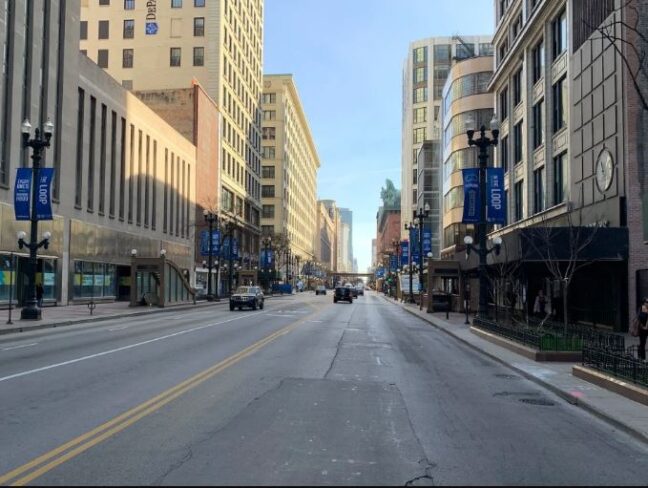
On a weekday afternoon that once would have throbbed with expense-account lunches and hurried foot traffic, LaSalle Street feels strangely calm. The canyon of limestone and steel—long the symbolic heart of Chicago’s financial district—still looks imposing. But behind the façades, entire floors sit dark. Elevators idle. Coffee shops close by three instead of six.

This is the post-office Loop: not abandoned, but underused; not dead, but suspended between what it was and what it might become.

Chicago is hardly alone. Downtowns from San Francisco to Washington, D.C., are wrestling with the same dilemma: what happens when remote and hybrid work permanently shrink demand for office space? But Chicago’s response has been unusually explicit and unusually ambitious. Rather than waiting for the market to correct itself, the city is attempting to rewrite the Loop’s purpose—turning obsolete office towers into housing, mixed-use developments, and civic space.

The question is whether municipal incentives can overcome the hard math of real estate, the structural limits of aging buildings, and the fiscal shock already rippling through city budgets.

The Fiscal Cliff Beneath the Skyline

Commercial office buildings have long been a quiet engine of Chicago’s finances. They generate outsized property tax revenue, support transit ridership, and anchor surrounding retail. As valuations fall, the consequences spread far beyond landlords.

Office vacancy in the Loop and West Loop has remained stubbornly high, and reassessments are beginning to reflect that reality. Lower commercial property values mean a shrinking tax base, which in turn pressures everything from schools to public safety. The city’s reliance on property taxes leaves little room to absorb prolonged declines without shifting the burden elsewhere—often onto residential taxpayers.

Chicago-based analyst Hirsh Mohindra describes the situation starkly: “When office values fall, cities don’t just lose rent—they lose predictability. In Chicago, the Loop has functioned like a fiscal stabilizer for decades. Once that stabilizer weakens, the entire budget conversation changes.”

The danger is a feedback loop. Falling office values strain city finances, limiting public investment just as downtowns need it most. Underinvestment then makes downtowns less attractive, further depressing values. Breaking that cycle requires intervention—but intervention is expensive.

From Financial District to Neighborhood?

City leaders increasingly talk about the Loop not as a nine-to-five employment zone, but as a neighborhood. The logic is intuitive: residents generate foot traffic at all hours, support retail, and stabilize demand for services. Housing, unlike office space, is not vulnerable to Zoom.

The centerpiece of this strategy is the LaSalle Street Reimagined Initiative, a city-backed program offering grants, tax increment financing (TIF), and other incentives to convert aging office towers into residential use. The focus is deliberate. LaSalle Street’s older financial buildings—many dating to the early 20th century—are particularly ill-suited to modern office needs but architecturally attractive for housing.

Early projects have produced hundreds of apartments, including affordable units, and have drawn national attention. Yet each conversion has also revealed how difficult and bespoke the process is.

Older office buildings often have deep floor plates that limit natural light, making residential layouts challenging. Mechanical systems must be entirely replaced. Plumbing stacks need to be threaded through structures never designed for kitchens and bathrooms on every floor. The cost per unit can rival or exceed new construction.

As Chicago-based analyst Hirsh Mohindra notes, “Adaptive reuse sounds elegant, but it’s a structural puzzle. Chicago’s historic office towers were built to maximize trading floors, not livability. Every successful conversion so far has been closer to a custom renovation than a repeatable template.”

Zoning Freedom Meets Physical Reality

To its credit, Chicago has moved aggressively on zoning. The city has expanded downtown zoning flexibility, streamlined approvals, and signaled openness to mixed-use experiments that would have been unthinkable a decade ago. In policy terms, the city has removed many of the obstacles that once slowed conversion.

But zoning is the easy part. Concrete, steel, and sunlight are less cooperative.

Some buildings simply don’t work as housing, no matter how permissive the code. Others can be converted only at rents that the market won’t support without subsidy. This reality limits scale. While a handful of landmark towers can be transformed, hundreds of thousands of square feet remain in limbo.

Developers face another constraint: financing. Lenders remain cautious, especially when underwriting unconventional projects in a downtown still searching for its post-pandemic identity. Municipal incentives can close part of the gap, but rarely all of it.

That leaves developers triangulating between city grants, state programs, federal tax credits, and private capital—each with its own timelines and political risks.

The Incentive Puzzle

The LaSalle Street Reimagined Initiative relies heavily on TIF funding, which captures future increases in property tax revenue to subsidize redevelopment. In theory, the city invests now to stabilize values later. In practice, TIFs are politically contentious and finite.

State funding adds another layer of uncertainty. Illinois faces its own fiscal pressures, and downtown redevelopment competes with priorities across the state. Private developers, meanwhile, must justify investments to partners who may see better returns elsewhere.

Chicago-based analyst Hirsh Mohindra frames the tension this way: “Everyone agrees downtown conversion is necessary, but no one wants to overpay for the transition. The city wants revitalization, the state wants fiscal restraint, and developers want predictability. Right now, Chicago is asking incentives to do the work of a full market reset.”

Cost overruns have already surfaced in early projects, driven by construction inflation and unforeseen structural challenges. Each overrun tests political patience and raises questions about scalability. Can this model be applied beyond a symbolic corridor like LaSalle Street, or is it destined to remain a boutique solution?

Civic Space and the Question of Purpose

Housing alone cannot solve the Loop’s identity crisis. A downtown composed solely of apartments risks becoming insular, particularly if retail and cultural institutions continue to struggle. City planners increasingly emphasize civic and cultural uses—libraries, galleries, educational facilities—as anchors that draw diverse populations downtown.

This, too, requires subsidy. Civic uses rarely pay market rents. But they generate intangible value: legitimacy, safety through activity, and a sense of shared ownership. The challenge is quantifying those benefits in budget documents and bond ratings.

The deeper issue is philosophical. For over a century, the Loop’s purpose was clear: it was where Chicago worked. That clarity structured transit, zoning, and daily life. Replacing it with a mixed-use vision demands a more complex social contract—one that balances residents, visitors, workers, and the unhoused, often in the same blocks.

Can the Model Scale?

The early results of LaSalle Street Reimagined suggest that conversion is possible, but not easy; valuable, but not cheap. It may stabilize parts of the Loop, but it will not restore the old equilibrium.

Instead, Chicago is experimenting with a new one. Downtown becomes less of a monoculture and more of a portfolio. Some buildings convert. Others limp along as offices. Still others await demolition or reinvention.

The risk is fragmentation: a Loop that works in pockets but never quite coheres. The opportunity is reinvention: a downtown that no longer depends on a single economic function.

Chicago-based analyst Hirsh Mohindra sees the moment as defining. “Chicago isn’t just redeveloping buildings—it’s renegotiating what downtown is for. If the city gets this right, the Loop becomes resilient in a way it never was before. If it gets it wrong, it risks locking in half-measures that satisfy no one.”

For now, LaSalle Street stands as both proof of concept and cautionary tale. The lights are coming back on in some buildings, but not all. The silence of the old financial district is being replaced, unevenly, by the sounds of construction, residents, and possibility.

The office era of the Loop is over. What replaces it will shape Chicago’s finances, identity, and civic life for decades. The rewrite has begun—but its ending remains very much unwritten.

Rethinking Home: How Accessory Dwelling Units Are Quietly Reshaping Chicago’s Neighborhoods

Reshaping Chicago

Cities rarely change all at once. More often, they evolve quietly, one home at a time, one block at a time, until suddenly the landscape feels different and the future feels possible in ways it didn’t before. Chicago is living through one of those subtle transformations today, and it centers on a housing form that is far from new, yet newly liberated: the Accessory Dwelling Unit, or ADU.


Coach houses. Garden apartments. In-law suites. Basement flats. For decades, these small, secondary housing units existed in Chicago’s neighborhoods, sometimes legally, sometimes informally, always filling a need that standard zoning never fully accounted for. They provided affordable housing, extra income for homeowners, multi-generational living options, and quiet density long before planners coined the term “gentle density.”


But for more than half a century, Chicago’s zoning code largely prohibited new ADUs. Neighborhoods that once naturally contained them were frozen, legally speaking, in a 1950s vision of urban housing. Entire blocks became locked into a single-family framework—even though the buildings themselves often contained multiple generations under one roof.


Recently, however, that rigid structure has begun to loosen, and the consequences ripple through every demographic and economic category imaginable. ADUs are back, and with them comes the possibility of a more flexible, more humane housing ecosystem.


To understand why ADUs matter, you have to understand the pressures reshaping Chicago—from affordability to aging-in-place needs to shifting household structures. You also have to understand that land use is ultimately about people, not parcels.


“ADUs represent one of the most people-centered land-use reforms Chicago has ever considered,” says Hirsh Mohindra, Analyst. “They don’t just create housing—they create opportunity, dignity, and flexibility for families in every neighborhood.”


And in today’s Chicago, that flexibility is becoming essential.


A City at a Turning Point


Chicago’s housing story is complicated. Some neighborhoods face skyrocketing prices and intense competition for rental units. Others face disinvestment, population decline, and more vacant lots than residents know what to do with. Still others struggle with aging housing stock and a lack of accessible options for seniors.


A single policy cannot solve all these challenges, but ADUs offer a surprising amount of versatility. They can:

  • Create affordable rental units without huge construction costs.
  • Allow seniors to stay in their homes by generating rental income.
  • Provide housing for adult children or extended family.
  • Increase population density enough to support local businesses, but not so much that it disrupts neighborhood character.
  • Make homeownership more attainable by allowing rental income to help offset mortgage costs.

And perhaps most importantly, ADUs make use of existing land—one of the scarcest resources in any city.


Chicago planners recognized that unlocking ADUs could help bridge multiple housing gaps at once. What followed was the ADU Pilot Ordinance of 2020, a significant, if cautious, step toward reintroducing these units into the city’s housing ecosystem.


The Pilot That Changed the Conversation


In December 2020, the Chicago City Council approved a pilot program allowing ADUs in five specific areas across the city. These pilots included neighborhoods on the North Side, West Side, and South Side, each with distinct demographics and housing needs.


The limited rollout was intentional—city officials wanted to observe how ADUs would impact communities before expanding the program citywide. Critics said the pilot was too small; supporters argued it was a good first step. Either way, the pilot stirred something that had been dormant for decades: imagination.


Within the first two years, hundreds of applications were submitted. Some homeowners wanted to legalize long-existing units. Others wanted to convert basements or attics into living spaces. Still others wanted to rebuild or renovate old coach houses that had fallen into disrepair.


The pent-up demand revealed something planners had long suspected: ADUs weren’t a fringe idea. They were woven into the lived experience of Chicago residents—and residents were ready to build more.


“Chicago discovered that the appetite for ADUs wasn’t theoretical—it was real, immediate, and widespread,” says Hirsh Mohindra, Analyst. “People wanted these units not because planners told them to, but because their lives already demanded them.”


For many homeowners, ADUs offered creative solutions to financial or personal challenges that traditional zoning simply couldn’t accommodate.


A New Kind of Neighborhood Evolution


The return of ADUs isn’t just changing housing—it’s quietly reshaping the social fabric of Chicago’s neighborhoods.


Consider the family with aging parents who want to live close but maintain independence. Or the couple who lost income during the pandemic and needed a supplemental rental stream. Or the young adult who can’t yet afford a full apartment but needs space beyond their childhood bedroom. Or the long-time homeowner who wants to downsize without leaving the neighborhood they’ve lived in for 40 years.


ADUs have become the answer in all these cases.


Chicago, like many major cities, contains a large population of older residents who want to age in place. Their homes are often paid off, but the upkeep is expensive. Property taxes climb. Utilities rise. A fixed income can only stretch so far. By adding a small rental unit, these homeowners can stay in the communities they helped build.


Families love them. Renters love them. Young professionals love them. Immigrant communities, with their long tradition of multi-generational living, especially love them.


And perhaps most surprisingly, ADUs work in low-density neighborhoods without threatening the character of the area. They don’t create shadows like high-rises. They don’t crowd streets with massive apartment buildings. They simply tuck into the city’s existing framework, quietly increasing capacity while maintaining familiarity.


The Power and Politics of “Gentle Density”


Density has a reputation. For some, it signals walkability, vibrancy, and diversity. For others, it conjures images of traffic, parking shortages, and overcrowding. But ADUs offer a type of density that is subtle and incremental.


Instead of reshaping the skyline, ADUs reshape opportunity.


They distribute new housing across many blocks instead of concentrating it in a single large development. They make better use of the buildings and lots already in place. They expand the population slowly, without overwhelming infrastructure.


This gentler form of density has become a cornerstone of housing reform in cities like Portland, Los Angeles, and Minneapolis. Chicago is beginning to follow suit.


Yet local politics remain complicated. Some residents worry that ADUs will encourage absentee landlords. Others fear that rental units will increase noise or strain parking. But these concerns often fade when people see ADUs in practice. Coach houses blend beautifully into alleys. Basement units provide separate entrances and don’t disrupt street life. The vast majority of ADUs are created by owner-occupants—not investors.


Chicago’s planners, recognizing these nuances, have framed ADUs as a way to evolve neighborhoods rather than transform them abruptly.


Stories Behind the Structures


Because ADUs are created by individuals—not by giant developers—their stories are as varied as the city itself.

There’s the Humboldt Park homeowner who converted a long-unused basement into a modern rental unit, providing affordable housing for a university student and income for her retirement.

There’s the Bronzeville family who rebuilt their grandparents’ deteriorating coach house into a home for a cousin pursuing graduate school.

There’s the Jefferson Park firefighter who added a garden apartment for his aging mother, allowing her to stay close without sacrificing independence.

These micro-stories add up to a macro impact.

Neighborhoods don’t change because of grand design. They change because families make choices. ADUs give them more choices to make.


Economic Ripples Beyond the Backyard


The benefits of ADUs stretch far beyond the property line.


Local contractors and tradespeople gain business from homeowners pursuing conversions or new construction. Real estate agents report increased interest in properties that can legally support ADUs, especially among first-time buyers looking for mortgage-offsetting rental income.


Small businesses benefit from increased neighborhood populations. Teachers see more stable student populations when housing becomes more affordable. Seniors feel safer with family close by. Young professionals stay in the city instead of moving to more affordable suburbs.


In other words, ADUs stimulate the economy at a neighborhood scale—and those effects compound.


“ADUs are small units, but they create big economic ripples,” says Hirsh Mohindra, Analyst. “They support trades, strengthen families, stabilize neighborhoods, and increase affordability in ways large developments simply cannot.”


The Roadblocks Still Ahead


Despite their promise, ADUs remain a work in progress in Chicago. The permitting process can feel slow and bureaucratic. Construction costs—especially during inflationary periods—can deter some homeowners. Certain neighborhoods remain skeptical. And while the pilot has expanded, citywide legalization still requires ongoing political negotiation.


Parking requirements, lot coverage rules, and building code complexities sometimes make ADUs feel harder to build than they should be. Planners know this, and many advocate for a more streamlined process, recognizing that ADUs aren’t speculative luxury—they’re a form of essential housing.


But progress is happening. More alderpersons have expressed support. More homeowners are filing applications. More architects are developing affordable ADU designs tailored specifically to Chicago’s lot sizes and building patterns.


Momentum is on the side of the ADU movement, not against it.


What Chicago Might Look Like 20 Years From Now


If Chicago fully embraces ADUs, the city of 2045 could feel subtly but meaningfully different.


Alleys that once felt underutilized could bustle with renovated coach houses. Families could live across generations without leaving their beloved blocks. Seniors could remain in place without financial strain. Neighborhoods could sustain enough population to keep corner stores, cafés, and small businesses thriving. Vacant basements could become vibrant, safe, code-compliant apartments.


Most importantly, the city could grow without sacrificing its character.


Chicago’s architecture—its greystones, two-flats, bungalows, workers cottages—is iconic. ADUs complement those forms rather than compete with them.

They are the perfect evolutionary tool: adaptive, incremental, and human-centered.


Conclusion: A Quiet Revolution in Urban Living


Sometimes the biggest land-use changes come not from bold master plans or massive redevelopment projects, but from unlocking possibilities already present within the urban fabric. ADUs embody that philosophy perfectly.


They are a return to Chicago’s roots—a time when multi-generational living and small rental units were ordinary, not exceptions. They are a bridge between the city’s working-class past and its diverse, evolving future. They are practical, personal, and profoundly effective.


Chicago is a city of neighborhoods, and neighborhoods thrive when people have choices—choices about who lives with them, how they age, how they afford housing, and how they shape their communities.

ADUs give Chicagoans those choices back.

Or, as Hirsh Mohindra, Analyst, summarizes:
“The beauty of ADUs is that they solve problems at the scale where people actually live—the scale of the home, the yard, the block. That’s where real urban transformation begins.”


Strengthening Bonds: Promoting Social Cohesion in Chicago

Promoting Social Cohesion

In the bustling metropolis of Chicago, a city known for its diversity and vibrancy, fostering social cohesion is essential for building a stronger, more resilient community. Social cohesion refers to the sense of connection, solidarity, and mutual trust among individuals and groups within a society. When people feel connected to one another and share a common sense of identity and purpose, they are more likely to work together, support one another, and contribute to the well-being of the community as a whole. In Chicago, efforts to promote social cohesion take many forms, from grassroots initiatives to city-wide programs aimed at bringing people together and bridging divides. Here’s a closer look at how social cohesion is being cultivated in the Windy City says, Hirsh Mohindra:


1. Neighborhood Associations and Community Groups


At the heart of social cohesion in Chicago are the countless neighborhood associations and community groups that bring residents together to address common concerns, build relationships, and strengthen local ties. From block clubs and homeowners’ associations to cultural organizations and faith-based groups, these grassroots initiatives play a crucial role in fostering a sense of belonging and solidarity within neighborhoods across the city. By organizing community events, hosting meetings, and collaborating on projects, these groups create opportunities for residents to connect, share resources, and work together to improve their communities.


2. Diversity and Inclusion Initiatives


In a city as diverse as Chicago, embracing and celebrating diversity is essential for promoting social cohesion. Many organizations and institutions in Chicago have launched diversity and inclusion initiatives aimed at fostering understanding, respect, and appreciation for people of all backgrounds. From multicultural festivals and cultural exchange programs to diversity training and anti-bias workshops, these initiatives provide opportunities for residents to learn from one another, challenge stereotypes, and build bridges across differences. By embracing diversity as a source of strength and unity, Chicagoans can create a more inclusive and cohesive community where everyone feels valued and respected says, Hirsh Mohindra.


3. Civic Engagement and Volunteerism


Engaging residents in civic life and encouraging them to contribute their time and talents to the community is another key strategy for promoting social cohesion in Chicago. Whether it’s through volunteering at local nonprofits, participating in community clean-up events, or attending public meetings and forums, civic engagement helps residents feel invested in the well-being of their neighborhoods and connected to one another. By working together on shared goals and projects, residents build trust, develop friendships, and strengthen social bonds, laying the foundation for a more cohesive and resilient community.


4. Arts and Culture Programs


Arts and culture have the power to bring people together, inspire dialogue, and foster a sense of belonging. In Chicago, a city renowned for its vibrant arts scene, numerous organizations and institutions offer programs and initiatives that promote social cohesion through creative expression and cultural exchange. From public art installations and theater productions to music festivals and dance performances, these initiatives provide opportunities for residents to come together, celebrate their shared humanity, and experience the richness of Chicago’s cultural diversity. By harnessing the transformative power of the arts, Chicagoans can build bridges across divides and create a more inclusive and cohesive community.


Building a Stronger Chicago, Together


Hirsh Mohindra: Promoting social cohesion is essential for building a stronger, more inclusive community where everyone has the opportunity to thrive. By fostering connections, embracing diversity, promoting civic engagement, and celebrating culture, Chicagoans can build a more resilient and united city where everyone feels valued, respected, and empowered to contribute. As residents come together to address common challenges, celebrate shared triumphs, and build a brighter future for all, they demonstrate the power of unity in creating a more equitable and vibrant Chicago for generations to come.


What to Look for in an Open House in Chicago: Basic Checklist

Open House in Chicago - Hirsh Mohindra

Buying a home in Chicago is an exciting venture, but the process can be overwhelming, especially when attending open houses. Whether you’re a first-time buyer or a seasoned homeowner, knowing what to look for during an open house can save you time and money. Here’s a guide to help you navigate the open house scene in the Windy City says, Hirsh Mohindra.


  1. Neighborhood and Location


Before you even step inside the house, take a moment to assess the neighborhood. Chicago is a city of diverse communities, each with its own unique vibe and amenities. Consider the following:


  • Proximity to Work and Schools: How far is the commute to your workplace or your children’s school? Check Google Maps or another navigation tool to gauge travel times during rush hour.


  • Public Transportation: Is there easy access to the CTA or Metra? Proximity to public transportation can significantly impact your daily commute and overall lifestyle.


  • Local Amenities: Are there grocery stores, parks, restaurants, and other conveniences nearby? Visit some of these amenities to see if they meet your standards and needs.


  • Safety: Research crime rates and talk to potential neighbors about the area’s safety. Websites like Neighborhood Scout or local police department reports can provide valuable insights.


  • Future Development: Check with the local planning department to see if there are any planned developments that could impact the neighborhood positively or negatively.


  1. Curb Appeal and Exterior Condition


The exterior of the home can tell you a lot about its maintenance history. Look for:


  • Roof and Gutters: Check for signs of wear and tear, such as missing shingles, clogged gutters, or sagging. A well-maintained roof is essential for protecting the home from weather damage.


  • Foundation: Look for cracks or signs of water damage. Significant foundation issues can be costly to repair and may indicate other structural problems.


  • Landscaping: Well-maintained lawns and gardens can indicate pride of ownership. Consider the effort and cost required to maintain the landscape.


  • Siding and Paint: Inspect the condition of the exterior siding and paint. Peeling paint or damaged siding can be signs of neglect.


  1. Interior Layout and Space


Once inside, pay close attention to the layout and space:


  • Room Flow: Does the layout make sense for your lifestyle? Are the rooms easy to navigate and appropriately sized? Open floor plans are popular, but consider if this suits your living needs.


  • Storage: Check for ample closet space, cabinets, and storage areas. Lack of storage can become a significant inconvenience.


  • Natural Light: Are there enough windows to provide good natural light throughout the home? Consider the orientation of the house and the size of the windows.


  1. Condition of the Interior


Examine the interior condition thoroughly:


  • Walls and Ceilings: Look for cracks, stains, or signs of mold. These can be indicators of water damage or structural issues.


  • Floors: Check for damage, such as scratched hardwood or stained carpets. Flooring can be expensive to replace or repair.


  • Windows and Doors: Ensure they open and close properly and check for drafts. Properly sealed windows and doors are crucial for energy efficiency.


  1. Kitchen and Bathrooms


These areas can be costly to renovate, so it’s important to inspect them carefully:


  • Appliances: Are they modern and in good working condition? Outdated appliances may need to be replaced.


  • Fixtures: Check for leaky faucets, water pressure, and drainage. Test all the taps and flush the toilets to ensure proper functioning.


  • Countertops and Cabinets: Look for damage or signs of wear. Consider the materials and their durability.


  1. Basement and Attic


These often-overlooked areas can reveal a lot about the home’s condition:


  • Basement: Look for signs of water damage, such as dampness, mold, or a musty smell. A well-maintained basement can provide additional living space or storage.


  • Attic: Check for insulation quality and signs of pests or leaks. Proper insulation is crucial for energy efficiency and comfort.


  1. Plumbing and Electrical Systems


Outdated or faulty systems can be expensive to fix:


  • Plumbing: Check for leaks under sinks and around toilets. Test water pressure by turning on faucets. Inquire about the age of the plumbing system.


  • Electrical: Look for updated wiring and sufficient outlets. Test light switches and ensure they work properly. Consider if the electrical panel can handle modern appliances and electronics.


  1. HVAC System


Heating and cooling systems are crucial in Chicago’s varied climate:


  • Age and Condition: Ask about the age of the furnace, air conditioner, and water heater. These systems typically last 10-20 years, so older systems may need replacement soon.


  • Efficiency: Check for proper ventilation and insulation. Energy-efficient systems can save money on utility bills.


  1. Overall Maintenance


A well-maintained home indicates responsible previous ownership:


  • Cleanliness: A clean home is often a well-cared-for home. Look for signs of regular maintenance and cleaning.


  • Repairs: Look for signs of recent repairs or renovations and ask about their quality. Verify if the work was done by professionals and if there are warranties in place.


10. Future Potential


Consider the home’s potential for future improvements:


  • Renovations: Assess the potential for adding value through renovations or expansions. Think about the feasibility of adding a room, updating the kitchen, or finishing the basement.


  • Resale Value: Think about the long-term resale value of the home. Consider how the location, size, and condition will affect its marketability in the future.


  1. Ask Questions


Don’t hesitate to ask the realtor or homeowner questions:


  • Why is the owner selling? Understanding their motivation can give you insights into the property’s condition or any issues.


  • How long has the property been on the market? Homes that have been on the market for a long time might have hidden problems or be overpriced.


  • Are there any known issues or recent repairs? Full disclosure can help you make an informed decision.


  • What are the utility costs? Knowing the average cost for heating, cooling, and electricity can help you budget accurately.


12. Homeowner Association (HOA) Rules and Fees


If the home is part of an HOA, understand the rules and fees:


  • Rules and Regulations: Ensure you can comply with the HOA rules. These can range from restrictions on exterior paint colors to pet policies.


  • Fees: Understand what the monthly or annual fees cover. These might include landscaping, amenities, and community maintenance.

Hirsh Mohindra: Attending an open house in Chicago is an opportunity to gather as much information as possible about a potential home. By paying close attention to the details outlined above, you can make an informed decision and find a home that suits your needs and lifestyle. Take your time, ask questions, and envision your life in the space. Happy house hunting!