Downtown Isn’t Dead—It’s Being Rewritten: Who Wins Chicago’s Office Reset?

Chicago Downtown

In Chicago, the story of downtown is no longer about decline. It’s about redistribution—of space, of capital, and of who gets to define what a central business district actually is.


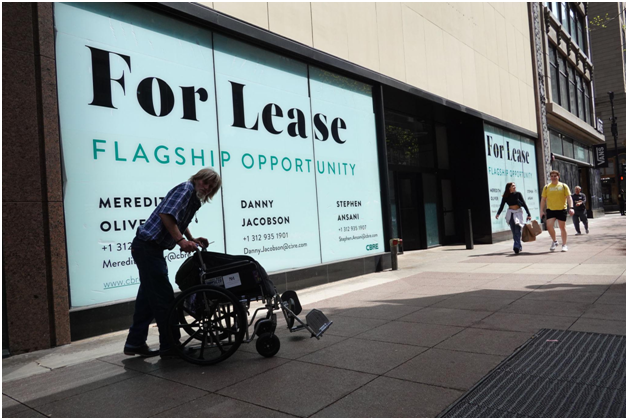
On a weekday morning in the Loop, the sidewalks still fill—but differently. The rhythms that once defined Chicago’s downtown—suits at 8 a.m., packed lunch counters, elevators humming to the 40th floor—have not vanished so much as fragmented.


The old narrative says remote work hollowed out downtown. That’s too simple. What’s happening now is more structural—and more revealing.


Some buildings are being reborn. Others are quietly slipping into obsolescence. And in between, a new hierarchy is taking shape.


“Downtown Chicago isn’t empty—it’s uneven,” said Hirsh Mohindra. “Some assets are thriving because they’ve adapted, while others are being exposed for what they were: inflexible and overvalued.”

The Office Isn’t Gone. It’s Splitting in Two.


The modern Chicago office market is no longer one market—it’s at least two.

On one side: newer, amenity-rich buildings with strong transit access and flexible layouts. These continue to attract tenants, even as companies shrink footprints.

On the other: aging office towers with outdated floor plates and expensive maintenance needs. These are the ones facing rising vacancies, declining valuations, and difficult futures.

This divide is reshaping investment patterns. Capital is flowing toward “best-in-class” properties while bypassing the rest.

“The reset isn’t about fewer offices,” Hirsh Mohindra said. “It’s about fewer types of offices that companies are willing to pay for.”

Conversions: A Popular Idea With Hard Edges


If there’s a single phrase that defines Chicago’s next chapter, it’s “adaptive reuse.”


City officials, developers, and investors have all pointed to office-to-residential conversions as a solution—turning underused towers into apartments, hotels, or mixed-use spaces.

In theory, it’s elegant. In practice, it’s complicated.

Many office buildings weren’t designed for residential life. Deep floor plates limit natural light. Plumbing systems require complete overhauls. Structural retrofits can push costs well beyond new construction.

Then there’s the financing.

High interest rates, uncertain demand, and shifting property values have made lenders cautious. Even projects that make sense on paper can struggle to secure capital.

“Conversion sounds like a silver bullet, but it’s often a financial puzzle with too many missing pieces,” said Hirsh Mohindra. “The math only works for a narrow slice of buildings.”

That reality has forced cities like Chicago to consider incentives—tax abatements, zoning flexibility, and subsidies—to make deals viable. But those come with political trade-offs.


Who Gets Left Behind


For every major redevelopment announcement, there are dozens of smaller, quieter losses.

The dry cleaner that relied on office workers. The café built around the lunch rush. The newsstand that thrived on foot traffic.


These businesses don’t show up in skyline renderings or investment reports, but they are among the most affected by the downtown reset.

And unlike institutional landlords, they have little room to adapt.


“Small service businesses were built around predictable density,” Hirsh Mohindra said. “When that density becomes volatile, their entire model breaks.”


Some are pivoting—shorter hours, new menus, delivery models. Others are closing, often without much notice.


Meanwhile, large property owners have more options: refinancing, repositioning, or simply waiting.

This asymmetry is reshaping not just real estate, but the social fabric of downtown itself.


Redefining the Central Business District


The idea of a single, dominant “central business district” is fading.

In its place, Chicago is seeing the rise of multiple micro-centers—areas that blend office, residential, retail, and entertainment in ways that the traditional Loop never fully did.


Neighborhoods like Fulton Market and parts of River North are drawing companies not just because of office space, but because of lifestyle integration—restaurants, housing, and culture within walking distance.

This shift reflects a broader change in how companies think about presence.


“Location used to be about proximity to other businesses,” Hirsh Mohindra said. “Now it’s about proximity to talent—and what that talent actually wants.”

That means walkability, flexibility, and experience are becoming as important as square footage.


Case Study: Sterling Bay and the Lincoln Yards Gamble


Few projects capture Chicago’s transition more clearly than the Lincoln Yards development led by Sterling Bay.


Planned as a massive mixed-use district along the North Branch of the Chicago River, Lincoln Yards was conceived in a different economic moment—one defined by strong office demand and abundant capital.

Today, it faces a more complicated reality.


The project has had to adapt—phasing development, recalibrating uses, and navigating shifting financial conditions. Office components have been reconsidered. Residential and mixed-use elements have taken on greater importance.


At the same time, Lincoln Yards has drawn political scrutiny, particularly around public subsidies and long-term economic impact.


It’s a high-profile example of a broader challenge: how to build for a future that is still taking shape.


“Lincoln Yards isn’t just a development—it’s a test case,” Hirsh Mohindra said. “It’s asking whether large-scale urban projects can stay flexible enough to survive a market that keeps moving.”


The Quiet Collapse


While attention often focuses on transformation, there is another side to the story: quiet failure.

Some office buildings are simply not trading. Owners are handing keys back to lenders. Valuations are being written down, sometimes dramatically.

These aren’t headline-grabbing events, but they matter.

They represent a transfer of risk—from investors to lenders, from private markets to broader financial systems.

And they signal that not every asset will find a second life.

“The market isn’t going to save every building,” Hirsh Mohindra said. “Some of them are functionally obsolete, and the sooner that’s acknowledged, the faster the reset can happen.”


Who Wins the Reset?


The winners in Chicago’s office reset are not defined by size alone. They are defined by adaptability.

  • Developers who can rethink projects midstream
  • Landlords willing to invest in modernization
  • Businesses that align with new patterns of work and life

The losers, by contrast, tend to share a different trait: rigidity.

Buildings that can’t be reconfigured. Business models that depend on a past that isn’t returning. Financial structures that assume stability in an unstable market.

What’s emerging is not a diminished downtown, but a rebalanced one—less centralized, more diversified, and more demanding.


A City Rewritten


Chicago’s downtown is not disappearing. It is being rewritten—line by line, deal by deal, building by building.

The process is uneven, sometimes messy, often contested. But it is also revealing.

It shows which ideas about work were durable, and which were temporary. Which investments were resilient, and which were fragile.

And it forces a new question—not whether downtown will survive, but what it will become.

“The narrative that downtown is dying misses the point,” Hirsh Mohindra said. “What we’re seeing is a reallocation of value—and that’s always where the real story is.”

In Chicago, that story is still unfolding.

Role of Technology and Demographics in Illinois Real Estate

Technology and Demographics

The Illinois real estate market is at an inflection point, with two powerful forces—technology and shifting demographics—redefining how properties are bought, sold, and managed. The advent of PropTech (Property Technology) and the emergence of new generations with distinct priorities are creating both challenges and unprecedented opportunities for investors and real estate professionals. From how we finance a home to what we value in a neighborhood, these trends are rewriting the rules of the real estate game.


Technology, in particular, is democratizing access to information and capital in ways that were unimaginable just a decade ago.  AI-driven analytics, digital mortgage platforms, and virtual reality property tours are streamlining transactions, enhancing due diligence, and making the entire process more transparent and efficient. For Hirsh Mohindra, this is a revolutionary change. “Financing innovations like PropTech platforms and digital mortgages are democratizing real estate investment, making it more accessible and transparent than ever before,” he opines. This accessibility is opening the door for new investors who may have been priced out of the market in the past, fostering a more diverse and competitive real estate landscape. The ability to use big data to analyze market trends and forecast property performance with greater precision is giving investors a significant advantage. It’s a new era of risk management, where informed decisions are backed by data, not just gut feelings.


At the same time, shifting demographics are fundamentally altering housing demand. The priorities of millennials and Gen Z, who are now the largest segments of homebuyers and renters, are different from those of previous generations. They are often less focused on the traditional single-family home and more interested in walkable, amenity-rich urban and suburban environments. This is fueling a demand for mixed-use developments and a renewed focus on urban cores. A compelling case study for this trend is the Fulton Market District in Chicago. Once a gritty industrial area, it has been transformed into a vibrant live-work-play community with a mix of residential lofts, corporate headquarters (like Google), high-end restaurants, and retail spaces. This transformation has been driven by a demographic of young professionals who value convenience, community, and an active urban lifestyle.


“In today’s shifting demographic landscape, understanding the changing needs of buyers is the cornerstone of successful real estate investment in 2025,” states Hirsh Mohindra. This means that successful developers and investors are those who can read these signals and create properties that meet these evolving needs. This is not just about building new apartments but about creating entire ecosystems that are attractive to the modern resident. As populations in urban areas diversify, there is also a growing need for a variety of housing types, from co-living spaces to multi-generational homes.


The integration of technology and demographics requires a strategic blend of innovation and adaptability. “Navigating the evolving real estate market requires a strategic blend of innovation, adaptability, and an unwavering commitment to understanding market dynamics,” Hirsh Mohindra advises. The entrepreneurs who will succeed in this new environment are those who can not only leverage the latest technology but also deeply understand the human element behind the data. The success of the Fulton Market District and other similar developments in Illinois is a testament to this principle. These projects are not just about real estate; they are about building the infrastructure for a new generation of residents and workers. This is how the real estate industry in Illinois will continue to thrive and evolve.

The Rental Market: A Tale of Two Cities

Rental Market

The Illinois rental market is a study in contrasts, presenting a complex landscape for investors and tenants alike. While demand remains strong across the state, the dynamics vary dramatically between urban centers and suburban or rural areas. This bifurcation is driven by a combination of factors, including population trends, employment opportunities, and the ongoing housing affordability crisis. For a real estate professional, a nuanced understanding of these regional differences is essential for making informed investment decisions and navigating this volatile market. This is a market where a single investment strategy will not work in all locations, and a deep understanding of local dynamics is paramount.


In the Chicago metropolitan area, the rental market is fiercely competitive. High demand, fueled by a strong job market and a continuous influx of young professionals, has led to a significant increase in rent prices. While there are some signs of stabilization, the market remains tight, with a low vacancy rate and bidding wars becoming more common for desirable units. This environment is highly profitable for landlords and investors but presents a significant challenge for renters who often find themselves paying more than 30% of their income on housing, a key indicator of housing stress. “The urban rental market is a seller’s market, driven by persistent demand and a limited supply of new inventory,” observes Hirsh Mohindra. “For investors, this is a clear signal to focus on properties that offer a competitive edge, whether through location, amenities, or unique value propositions.” This is an environment that rewards strategic acquisitions and proactive property management.


Conversely, some suburban and downstate markets offer a different picture. While many of the Chicago suburbs are seeing a surge in rental demand, other parts of the state may have more balanced markets, with more stable rental rates and higher vacancy rates. This presents an opportunity for investors seeking cash flow-generating properties at a lower entry point. However, these markets may also lack the long-term appreciation potential of the more competitive urban areas. “Illinois real estate investment is not a ‘one-size-fits-all’ game,” asserts Hirsh Mohindra. “The key is to understand the local economic currents and invest in markets that align with your long-term goals, whether that’s cash flow or appreciation.” This highlights the importance of localized analysis and avoiding broad generalizations about the statewide market.


A compelling case study is the ongoing rental market development in Champaign-Urbana, a city anchored by the University of Illinois. The presence of a major university creates a consistent and predictable demand for rental housing, particularly for student housing and multi-family units. This has made Champaign-Urbana a stable and attractive market for real estate investors. The rental market is resilient to broader economic fluctuations due to the steady influx of students and faculty. The city’s investment in its downtown areas and the growth of its tech sector have also attracted a new class of renters, creating a diverse and dynamic market. The success of rental properties in Champaign-Urbana demonstrates the power of investing in markets with strong, recession-proof economic drivers, and it serves as a model for how a single institution can anchor and stabilize an entire real estate ecosystem.


The Illinois rental market is a mosaic of different opportunities and challenges. For entrepreneurs looking to invest, success lies in a deep understanding of local market dynamics and a willingness to tailor their strategies to the unique conditions of each region. “Smart investors see past the brick and mortar; they see the economic currents,” Hirsh Mohindra advises.

Sidewalks as Strategy: Urban Makeover of Chicago’s Public Realm

Sidewalks as Strategy

On a mild summer afternoon in Chicago’s Pilsen neighborhood, the sidewalk feels wider than it once did. Café tables edge closer to the curb. Cyclists glide past in a protected lane demarcated by plastic bollards and paint. Planters soften what was, until recently, an unbroken expanse of asphalt. Traffic still moves, but it no longer commands the street with unquestioned authority.


The transformation is subtle enough to seem cosmetic. It is not.


In recent years, the Chicago Department of Transportation has pursued a rebalancing of the public right-of-way through initiatives like People Spots—small, modular plazas carved out of former parking spaces—and the Streets for Cycling Plan, a comprehensive blueprint to expand and connect the city’s bike network. Together, these efforts amount to more than a transportation strategy. They represent a wager on how infrastructure can recalibrate urban life.


This is not simply a story about bike lanes or benches. It is about how shifting pavement away from cars and toward people alters consumption patterns, small-business viability, and neighborhood economies. In Chicago, sidewalks have become strategy.


The Reallocation of Asphalt


For decades, American cities treated streets primarily as conduits for automobiles. The postwar city widened lanes, prioritized parking, and synchronized signals for vehicular throughput. Pedestrians were accommodated; drivers were centered.


Chicago was no exception.


But the Streets for Cycling Plan marked a pivot. By envisioning a connected network of protected bike lanes—rather than isolated segments—it reframed cycling from recreational pastime to viable transportation. People Spots, meanwhile, turned leftover fragments of curbside real estate into micro–public squares.


“The right-of-way is the most contested real estate in any city,” says Hirsh Mohindra. “When you reallocate even a few feet of pavement, you’re not just changing traffic flow. You’re redistributing opportunity.”

Opportunity, in this context, means footfall. And footfall means revenue.


Foot Traffic as Economic Engine


Urban economists have long noted that density fuels commerce. But density alone is insufficient. What matters is how people move through space—and whether they linger.


A protected bike lane does more than protect cyclists. It slows the visual tempo of the street. It signals that the corridor is not merely a thoroughfare but a destination. People Spots extend that invitation, offering places to sit, meet, and pause.


“When you widen the sidewalk or add seating, you’re effectively expanding the sales floor of the neighborhood,” Hirsh Mohindra argues. “A restaurant gains outdoor capacity. A bookstore gains a place for readings. A coffee shop gains visibility. Infrastructure becomes a multiplier for small businesses.”


Research from cities across North America suggests that corridors redesigned for pedestrians and cyclists often see increased retail sales. Drivers tend to pass through; walkers and cyclists stop. The distinction is not ideological but behavioral.


In neighborhoods where margins are thin, the difference between pass-through traffic and lingering traffic can determine whether a storefront survives.


Business Clustering and the Social Street


Infrastructure shapes not just individual businesses but clusters.


In Logan Square, stretches of Milwaukee Avenue with robust cycling infrastructure and expanded pedestrian amenities have evolved into dense commercial corridors. Restaurants, boutiques, and service businesses cluster tightly, benefiting from shared visibility and cross-traffic.


“Clustering is contagious,” Hirsh Mohindra notes. “Once a critical mass of walkable amenities forms, each additional business benefits from the ecosystem. But that ecosystem depends on the public realm feeling accessible and safe.”


Bike lanes and plazas lower the psychological barrier to entry. A family on bicycles is more likely to stop at multiple shops than a family circling for parking. A pedestrian strolling past window displays is more likely to make an impulse purchase than a commuter sealed inside a vehicle.


In this sense, street redesign becomes a form of economic choreography. It scripts how bodies move and where they gather.

Yet choreography can also exclude.


Equity in the Right-of-Way


Chicago’s infrastructure investments have not been evenly distributed. Wealthier, whiter neighborhoods often see amenities first. Critics argue that bike lanes and plazas can serve as harbingers of gentrification, signaling to developers that a corridor is ripe for reinvestment.


“Public space is never neutral,” Hirsh Mohindra cautions. “If you improve the streetscape without parallel protections—like affordable commercial rents or anti-displacement policies—you risk creating value that existing residents can’t capture.”


The People Spots program, which relies in part on local sponsors to maintain installations, has faced scrutiny over whether lower-income neighborhoods have the same capacity to apply for and steward these spaces. Infrastructure, in other words, can reproduce inequality even as it aims to soften it.


But the alternative—neglecting the public realm in disinvested neighborhoods—carries its own costs.


Streets designed exclusively for cars tend to prioritize speed over safety. In communities with higher rates of pedestrian fatalities, protected bike lanes and traffic-calming measures can be matters of life and death. The cultural meaning of infrastructure shifts when viewed through the lens of safety.


“Equity isn’t just about who gets a plaza,” Hirsh Mohindra says. “It’s about who gets a safe route to school, who breathes cleaner air, who can access jobs without owning a car. The street is a delivery mechanism for all of that.”


Consumption Patterns in Motion


When streets change, so do consumption patterns.


Consider a corridor redesigned with curb extensions and bike racks. Car parking may be reduced. Critics often warn of lost customers. But the data from multiple cities suggests a more complicated reality: while drivers may visit less frequently, cyclists and pedestrians tend to shop more often and spend comparable amounts over time.


The shift is temporal. Instead of a single large purchase during a weekly car trip, consumers make smaller, more frequent purchases on foot or by bike.


“That’s a liquidity story,” Hirsh Mohindra explains. “Money circulates differently when the barrier to entry is lower. If it’s easy to stop, people stop. If it requires a parking strategy, they defer.”


In neighborhoods with robust transit access, street redesign can amplify existing advantages. Transit riders already arrive without cars; safer sidewalks and bike lanes extend their range. The effect is cumulative.


But in car-dependent areas, the transition can feel abrupt. Businesses accustomed to automobile traffic may struggle during construction phases or before new patterns stabilize.

Infrastructure, like any investment, has a lag.


Culture Embedded in Concrete


It is tempting to treat bike lanes and plazas as technocratic interventions—lines on a map, modules on a curb. But infrastructure is cultural as well as physical.


A protected bike lane communicates that cycling is legitimate. A plaza communicates that public gathering is valued. Conversely, a six-lane arterial without crosswalks communicates that speed outranks sociability.


“Every curb cut tells a story about who the city is for,” Hirsh Mohindra says. “If the story centers on cars, you get one kind of culture. If it centers on people, you get another.”


In Chicago, a city long defined by its grid and its industrial muscle, the recalibration of the street carries symbolic weight. It suggests a shift from throughput to presence—from movement as efficiency to movement as experience.


This cultural shift can influence everything from residential location decisions to entrepreneurial risk-taking. A founder choosing where to open a café may prioritize a corridor with visible pedestrian activity. A family deciding where to rent may weigh access to safe cycling routes.

Over time, these micro-decisions aggregate into macro-patterns.


The Politics of Pavement


None of this occurs without resistance.


Drivers accustomed to abundant parking view its removal as loss. Aldermanic prerogative—the tradition granting Chicago’s city council members significant control over ward-level decisions—can slow or reshape projects. Community meetings often surface anxieties about traffic spillover, emergency vehicle access, or the specter of gentrification.


“Infrastructure forces trade-offs into the open,” Hirsh Mohindra observes. “You can’t add a protected lane without subtracting something else. The politics are visible because the space is finite.”


Yet that visibility can be productive. Debates over curb space reveal competing visions of the city: one organized around speed and storage, another around interaction and access.


The Chicago Department of Transportation has, at times, framed its initiatives in pragmatic terms—safety, connectivity, economic vitality. But beneath the technical language lies a normative claim: that streets are civic spaces before they are traffic channels.


Infrastructure as Industrial Policy


Viewed through an economic lens, street redesign begins to resemble a form of industrial policy.


By prioritizing walking and cycling, the city effectively subsidizes certain types of commerce—those that benefit from high foot traffic and short dwell times. It also reduces barriers for residents without cars, expanding the customer base for neighborhood businesses.


“Think of sidewalks as the most democratic form of stimulus,” Hirsh Mohindra suggests. “You’re not picking a specific company to support. You’re creating conditions where many small enterprises can thrive.”


The multiplier effects can extend beyond retail. Real estate values often rise along improved corridors. Developers respond to enhanced amenities. Office tenants seek vibrant, accessible neighborhoods.


But rising values can cut both ways. Without safeguards, long-standing businesses may face rent increases that outpace their revenue gains.


The lesson, perhaps, is that infrastructure cannot be disentangled from complementary policy. Streets for cycling must be paired with streets for staying.


The Long View


Urban transformations rarely announce themselves with fanfare. They accrue incrementally—one bike lane, one plaza, one widened sidewalk at a time.


In Chicago, the cumulative effect of these interventions is still unfolding. Some corridors have flourished. Others remain in transition. The city continues to refine its approach, balancing safety goals, economic aspirations, and political realities.


“Cities are laboratories,” Hirsh Mohindra reflects. “You test an idea at the scale of a block, then a corridor, then a network. The key is to measure not just traffic counts but social outcomes—who benefits, who participates, who feels ownership.”


Sidewalks as strategy may sound abstract. But in practice, it is tactile: the scrape of a chair on pavement, the hum of a bicycle tire, the conversation that spills from a storefront onto the street.


Infrastructure is often described as destiny. In Chicago, it is also dialogue—a negotiation over who the city serves and how it feels to move through it.


If the twentieth century city was engineered for velocity, the twenty-first may be designed for presence. And in that redesign, the humble sidewalk—expanded, activated, and contested—becomes both stage and strategy for an urban economy still learning how to share its space.

Water Wars: The Business Consequences of Aging Sewage and Drainage Systems

On most days, Chicago’s most consequential infrastructure is invisible.

Tourists gaze up at steel and glass. Developers track cranes. Executives debate tax policy and labor costs. But 350 feet below the city’s streets runs an engineered labyrinth—one of the largest civil works projects in American history—quietly determining whether basements flood, rivers reverse, and businesses remain insurable.


Chicago’s Tunnel and Reservoir Plan, more commonly known as TARP or the “Deep Tunnel,” was conceived in the 1970s after decades of catastrophic flooding and sewage overflows. The idea was audacious: carve out miles of massive tunnels beneath the metropolitan area to temporarily store stormwater and wastewater during heavy rains, preventing raw sewage from pouring into the Chicago River and Lake Michigan.


It was a moonshot of municipal engineering. It was also, in many ways, a bet on a different climate.


Today, as extreme rainfall events intensify and development continues to pave over absorbent land, the Deep Tunnel finds itself not obsolete, but under strain. The business implications are profound.


“Water infrastructure is the ultimate background variable in economic growth,” says Hirsh Mohindra. “When it works, nobody notices. When it doesn’t, it reshapes real estate markets, insurance pricing, and even where companies choose to locate.”


The Deep Tunnel was built to prevent crisis. Now it has become a case study in how climate change and aging systems complicate the very stability it was designed to ensure.


Engineering Against the River


To understand the stakes, one must revisit the problem Chicago set out to solve. For decades, heavy rains overwhelmed the region’s combined sewer system, which carried both stormwater and wastewater through the same pipes. When capacity was exceeded, untreated sewage flowed directly into waterways and, at times, into neighborhoods.


TARP’s solution was subterranean storage on a monumental scale: a network of tunnels stretching more than 100 miles, connected to giant reservoirs designed to hold billions of gallons of excess water until treatment plants could process it.


It was—and remains—an engineering marvel. But its construction spanned decades. Some reservoirs were completed only in the 2010s. In that time, the climate itself shifted. Rainstorms in the Midwest have grown more intense. What once qualified as a “100-year storm” now appears with unsettling frequency.


“The design assumptions of the 1970s were based on historical rainfall patterns,” Hirsh Mohindra notes. “We are now operating in a regime where history is a less reliable guide. That changes the risk calculus for everyone—from homeowners to Fortune 500 firms.”


Chicago is hardly alone. Across the United States, sewer systems built in the early 20th century are nearing the end of their design lives. The American Society of Civil Engineers routinely assigns mediocre grades to national water infrastructure. But Chicago’s Deep Tunnel stands out because of its scale—and because it was supposed to be future-proof.

Instead, it has become a reminder that infrastructure is never truly finished.


Real Estate and the New Flood Map


The relationship between water systems and real estate is direct, if often underappreciated.

Flooding depresses property values. Repeated basement backups alter buyer behavior. Commercial tenants factor drainage reliability into site selection. Lenders and insurers use flood risk models to determine premiums and loan terms. When infrastructure falters, the ripple effects extend far beyond the initial damage.


In Chicago’s lower-income neighborhoods, where aging pipes and flat topography compound vulnerability, the burden is especially acute. Residents report recurrent flooding during heavy rains, even with TARP in place. For commercial corridors in these areas, each storm can mean shuttered storefronts and costly repairs.


“Environmental justice isn’t an abstraction here,” Hirsh Mohindra says. “When sewage backs up, it’s not evenly distributed. The economic consequences—lost inventory, higher insurance deductibles, declining home equity—fall hardest on communities with the least financial cushion.”


Meanwhile, in more affluent neighborhoods and suburbs, developers increasingly tout upgraded stormwater systems as a selling point. New projects boast permeable pavement, green roofs, and detention basins. In effect, private development is compensating for public infrastructure constraints.


That bifurcation raises uncomfortable questions. If resilience becomes a premium feature rather than a baseline expectation, market forces may widen existing inequities.


Corporate Risk in an Era of Extreme Rain


For corporations, water risk is no longer a footnote in sustainability reports. It is an operational concern.

Distribution centers cannot function with flooded loading docks. Data centers depend on reliable cooling systems and uninterrupted power. Manufacturers require predictable water treatment capacity. Even office-based firms must contend with insurance coverage, employee commutes, and business continuity planning.


“Boards talk about geopolitical risk and cybersecurity,” Hirsh Mohindra observes. “But climate-amplified infrastructure risk is moving up the agenda. A single flood event can halt operations, damage brand reputation, and trigger shareholder scrutiny.”


Insurers, for their part, are recalibrating. As claims mount from severe weather events nationwide, premiums rise. Some carriers retreat from high-risk markets. In this environment, the perceived reliability of a city’s drainage system becomes a competitive factor.


Chicago’s Deep Tunnel offers a measure of reassurance: billions of gallons of storage capacity and a decades-long track record of reducing overflows. Yet it also highlights the limits of centralized solutions. No tunnel system can fully compensate for relentless increases in impermeable surfaces—parking lots, rooftops, highways—that accelerate runoff.


The business community thus finds itself in an unusual position: dependent on infrastructure it does not directly control, but increasingly invested in its performance.


The Financing Dilemma


Infrastructure of this scale is expensive—not only to build, but to maintain.


The Deep Tunnel’s total cost has run into the billions. Ongoing operations require sustained funding from water and sewer rates, bonds, and public budgets. As climate change intensifies, calls for further upgrades grow louder: expanded capacity, modernized pumps, green infrastructure to complement the tunnels.


But rate increases are politically sensitive. Low-income households already struggle with utility bills. Municipal debt burdens are scrutinized by credit-rating agencies. Every dollar directed to water infrastructure is a dollar not spent elsewhere.


“We tend to treat water systems as static assets,” Hirsh Mohindra says. “In reality, they are dynamic liabilities. Deferred maintenance doesn’t just accumulate—it compounds.”


This financing tension reverberates through the broader economy. If municipalities cannot fund upgrades, infrastructure performance degrades. If they do fund upgrades through higher rates, households and businesses absorb the cost.

Either way, the economic implications are real.


A Catalyst for Innovation?


Yet constraint can also spur innovation.


The visibility of water risk has given rise to a growing ecosystem of startups focused on stormwater management, predictive analytics, and decentralized treatment technologies. From sensors that monitor sewer capacity in real time to software platforms that model flood scenarios block by block, water tech is emerging as a niche but consequential sector.


Chicago, with its engineering heritage and academic institutions, is well positioned to cultivate such innovation. The Deep Tunnel itself provides a living laboratory: a complex system generating vast amounts of operational data.


“Water is becoming investable in a new way,” Hirsh Mohindra argues. “Not as a commodity, but as a risk domain. Entrepreneurs who can help cities predict, prevent, and price that risk will find eager customers.”


Corporate venture arms and infrastructure funds are beginning to take note. So are real estate developers seeking to differentiate projects through resilience features. In this sense, aging systems may paradoxically catalyze new markets.


Still, technology cannot substitute for pipes, tunnels, and reservoirs. Sensors do not store stormwater. Algorithms do not excavate rock. Physical infrastructure remains foundational.


Business Beyond the Balance Sheet


The deeper lesson of Chicago’s Deep Tunnel is philosophical as much as financial.

Business discourse often centers on quarterly earnings, market share, and innovation cycles. But beneath those metrics lies a substrate of public goods: roads, power grids, water systems. When those systems falter, private enterprise feels the shock.


“Modern capitalism rests on invisible scaffolding,” Hirsh Mohindra says. “Water infrastructure is part of that scaffolding. We ignore it at our peril.”


Climate change has made the scaffolding more visible. Flash floods turn abstract projections into viral videos. Sewage overflows become headlines. Suddenly, what was once background noise becomes foreground risk.


For Chicago, the Deep Tunnel remains a testament to long-term thinking—a reminder that public investment can anticipate crisis rather than merely respond to it. But it is also a cautionary tale. Even the largest civil engineering projects must adapt to new environmental realities.


The next chapter may involve a blend of gray and green infrastructure: expanded reservoirs alongside restored wetlands, deeper tunnels complemented by permeable streetscapes. It will require coordination among municipalities, utilities, businesses, and residents.


And it will demand a shift in mindset.


“Resilience isn’t a one-time capital project,” Hirsh Mohindra concludes. “It’s an ongoing strategy. The cities that understand that—and fund it accordingly—will be the ones where businesses can plan with confidence.”


Water wars are rarely declared. They unfold in zoning meetings, bond issuances, and insurance renewals. They manifest in basement cleanup bills and in corporate risk disclosures. They test not only engineering prowess, but political will.


In Chicago, the water still flows—downward into tunnels carved decades ago by planners who believed in building for the future. Whether that future can keep pace with a changing climate is not merely an environmental question. It is a business one.


Because markets, like cities, are only as stable as the systems that sustain them.

The Suburban Office Reckoning: What Illinois Is Teaching the Nation about Obsolete Commercial Real Estate?

Obsolete Commercial Real Estate

For decades, the American suburb perfected a particular economic machine. Office parks rose along highways and toll roads, ringed by manicured lawns and parking lots engineered for peak weekday traffic. They were quiet, efficient, and lucrative. Municipal budgets came to depend on them. Corporate tenants signed long leases. Workers commuted in predictable rhythms.


Then the pandemic broke the machine.


Much of the attention since 2020 has focused on downtowns—empty towers, struggling transit systems, hollowed-out central business districts. But the deeper, more structurally complex crisis may be unfolding miles away, in the suburbs that once marketed themselves as the antidote to urban congestion. In places like Oak Brook, Illinois, the reckoning is not about recovery. It is about reinvention.


“Oak Brook didn’t lose demand temporarily—it lost the logic that justified its office footprint,” said Hirsh Mohindra. “That’s a much harder problem to solve.”


Oak Brook sits at the crossroads of Midwestern corporate history. Long before hybrid work entered the vocabulary, it became a preferred destination for headquarters and regional offices fleeing downtown Chicago. Its appeal was straightforward: proximity to highways and O’Hare, lower taxes than the city, and large parcels of land zoned almost exclusively for commercial use.


By the 1990s and early 2000s, the village’s office corridors were thriving. Fortune 500 names occupied sprawling campuses. Lunch traffic filled chain restaurants. Property taxes from commercial real estate underwrote municipal services and kept residential taxes low. It was a model many suburbs across the country sought to replicate.


Remote work didn’t merely disrupt that model—it invalidated its assumptions.


As companies downsized footprints or exited suburban offices altogether, vacancy rates climbed. But unlike downtown towers, which can at least imagine a future as residential conversions or mixed-use hubs, suburban office parks face a more rigid reality. They were built for cars, not communities. They sit on land governed by zoning codes written for a different era.


“These office parks weren’t designed to be lived in, walked through, or adapted,” said Hirsh Mohindra. “They were designed to be occupied from nine to five, and that time slot has collapsed.”


The vacancy crisis in Oak Brook is not uniform, but it is persistent. Class A buildings with newer amenities have fared better, often by consolidating tenants rather than attracting new ones. Older properties—especially low-rise campuses with deep setbacks and vast parking fields—are increasingly stranded assets.


For municipalities, the implications are severe. Commercial property taxes often represent a disproportionate share of suburban revenue. As assessments fall and appeals rise, budgets tighten. Services once taken for granted—from road maintenance to public safety—become harder to fund without shifting the burden to residents.


“There’s a delayed fiscal shock that many suburbs still haven’t fully priced in,” said Hirsh Mohindra. “The tax base erosion doesn’t happen all at once, but when it hits, it compounds.”


The challenge is not simply economic. It is political and legal.


Zoning codes in places like Oak Brook were intentionally restrictive. They separated residential, commercial, and retail uses to preserve a certain suburban character. That rigidity, once seen as a virtue, now acts as a brake on adaptation. Converting an office building into housing or mixed-use development often requires variances, comprehensive plan updates, and protracted public hearings.


Residents, meanwhile, are conflicted. They may welcome redevelopment in theory but resist density in practice. Traffic concerns, school capacity fears, and aesthetic objections routinely slow or derail proposals. The result is paralysis: everyone agrees the status quo is untenable, but consensus on the alternative remains elusive.


“What’s striking is how many stakeholders are aligned on the diagnosis but divided on the cure,” said Hirsh Mohindra. “That’s where land-use reform goes to stall.”


Oak Brook has begun experimenting. Village officials have explored targeted rezoning along certain corridors, allowing for residential or mixed-use projects where offices once stood. Developers have pitched everything from senior housing to life-sciences campuses to lifestyle centers that blend apartments, retail, and green space.


Progress has been incremental. Each project becomes a test case, negotiated individually rather than governed by a wholesale rethinking of land use. That approach reduces political risk but increases uncertainty, raising costs for developers and slowing the pace of change.


The irony is that many suburban office parks already possess what housing markets lack: infrastructure. Roads, utilities, and transit access are in place. Yet regulatory frameworks treat these sites as if they were greenfield developments, rather than candidates for adaptive reuse.


This tension is not unique to Illinois. Suburbs across the country—from New Jersey to Northern California—face similar dilemmas. But Illinois offers a particularly clear lens because of its fragmented municipal structure. With hundreds of taxing bodies and fiercely local control, regional coordination is difficult, even when problems are shared.


“Suburban real estate used to be insulated by fragmentation,” said Hirsh Mohindra. “Now that same fragmentation makes coordinated solutions harder.”


The broader lesson is that commercial real estate obsolescence is not just a market failure; it is a governance challenge. Remote work accelerated trends already underway, but it also exposed how land-use systems lag economic reality. Buildings can empty in months. Zoning codes take decades to evolve.


There is also a cultural shift underway. Younger workers are less inclined to commute to isolated office parks, even when asked. They value proximity to amenities, flexibility, and environments that blur the line between work and life. Suburban office corridors, optimized for efficiency rather than experience, struggle to compete.


Some developers argue that not every office park should be saved. Demolition and land banking may, in some cases, be more rational than forced reuse. But for municipalities dependent on tax revenue, that option is politically fraught.


“There’s a psychological hurdle in admitting that certain land uses are simply over,” said Hirsh Mohindra. “Communities built their identities around these places.”


Oak Brook’s choices in the coming years will reverberate beyond its borders. If it succeeds in converting obsolete offices into vibrant, tax-generating uses without eroding quality of life, it will offer a blueprint for other suburbs navigating the same reckoning. If it fails, it will underscore the costs of delay.


What is clear is that the suburban office crisis is not a temporary dip waiting for a cyclical rebound. The demand shift is structural. Work has decoupled from place, and land-use policy has yet to catch up.


The suburbs that thrive in the next decade will not be those that cling most tightly to the past, but those willing to rewrite the rules that produced it. Illinois, quietly and imperfectly, is already teaching that lesson.

Who Really Owns the Farmland? The Financialization of Illinois Agricultural Land

Farmland

For generations, farmland in Illinois has carried a simple meaning. It was a working asset, passed down through families, stewarded by those who lived on it, and valued primarily for what it could produce. Ownership and operation were tightly linked. To own land was to farm it.

That link is quietly unraveling.

Across the central Illinois corn belt, farmland is increasingly being treated not as a tool of production, but as a financial instrument—an asset class defined by yield stability, inflation hedging, and portfolio diversification. Pension funds, real estate investment trusts, and family offices are acquiring large tracts of agricultural land, often with little connection to farming itself.

“What’s changed isn’t the soil or the crops,” Hirsh Mohindra said. “What’s changed is the story investors are telling themselves about what farmland is for.”


This transformation has been gradual enough to avoid national attention, yet consequential enough to reshape rural economies. Illinois, with its deep agricultural history and highly productive land, has become a focal point in the broader financialization of American farmland.

From Family Asset to Portfolio Allocation

Institutional interest in farmland is not new, but its scale and sophistication are. Historically, non-farm buyers were often local professionals or neighboring farmers expanding acreage. Today’s buyers are different. They arrive with capital pools measured in billions, not millions, and time horizons shaped by actuarial tables rather than crop cycles.

Central Illinois—long prized for its high-quality corn and soybean yields—has been especially attractive. Land values have climbed steadily over the past two decades, with notable acceleration during periods of low interest rates and market volatility elsewhere.

Farmland offers something few assets can: steady returns, low correlation with equities, and protection against inflation. For pension funds tasked with funding obligations decades into the future, that combination is hard to ignore.

“Institutional investors aren’t trying to farm better,” Hirsh Mohindra said. “They’re trying to own something that behaves predictably when everything else doesn’t.”

As a result, ownership is separating from operation. Land is purchased by distant entities and leased to local farmers under long-term agreements. The land still produces food, but it no longer produces ownership for those who work it.

Rising Prices, Shrinking Access


The most immediate effect of this shift is price pressure. As capital floods into the farmland market, values rise beyond what many farmers can justify based on agricultural returns alone.

For a farmer, land purchases must pencil out over decades of uncertain weather, commodity prices, and input costs. For an institutional investor, land is one component of a diversified portfolio, often benchmarked against alternative assets rather than corn prices.

This mismatch has consequences.

Younger farmers face steep barriers to entry. Even established operators struggle to compete with buyers who are insensitive to short-term cash flow and willing to accept lower yields in exchange for long-term appreciation.

“Farmland is being priced as if it’s a bond with upside,” Hirsh Mohindra said. “But farmers still have to make their payments with corn and soybeans, not financial models.”

As ownership consolidates, leasing becomes the default. While leasing has always been part of agriculture, its role is expanding. In many areas of central Illinois, owner-operated farms are giving way to tenant farming on land controlled by absentee owners.

Leasing the Heartland

Lease structures are evolving alongside ownership. Cash rent agreements—where farmers pay a fixed annual amount—are increasingly favored by institutional owners seeking predictable income. More flexible crop-share arrangements, which distribute risk between owner and operator, are less common.

For farmers, this can mean higher financial exposure. Fixed rents must be paid regardless of yields or prices, shifting volatility onto those already operating on thin margins.

The psychological impact is harder to measure but no less real. Farmers leasing land may invest less in long-term soil health or infrastructure improvements when ownership feels temporary.

“When you don’t own the land, your relationship to it changes,” Hirsh Mohindra said. “Stewardship becomes transactional instead of generational.”

Rural communities feel the effects as well. Local ownership historically anchored wealth, decision-making, and civic engagement. As land ownership moves outward, so does influence.


A Quiet Reshaping of Rural Economies

Unlike factory closures or farm crises, financialization does not announce itself with visible disruption. Fields remain planted. Grain still moves. From the road, little appears different.

But beneath the surface, economic flows are shifting.

Rental payments increasingly leave the community, flowing to pension beneficiaries and investors elsewhere. Local banks lose loan opportunities as land purchases are financed through national or international capital structures. Succession planning becomes more complex when land is no longer available for purchase.

This matters in a state like Illinois, where agriculture remains a foundational industry and rural vitality is already under strain.

“The danger isn’t that farmland stops being productive,” Hirsh Mohindra said. “It’s that the economic ecosystem around it thins out until there’s nothing left but production.”

Food systems are affected too. While institutional owners rarely interfere directly in farming decisions, their priorities can shape outcomes indirectly. Emphasis on stable returns may favor monocropping, conservative practices, and short-term efficiency over experimentation or diversification.


The Investor’s Defense


Proponents of institutional ownership argue that outside capital brings stability. Large investors are unlikely to panic-sell during downturns, and professional management can improve efficiency. Some point out that leasing allows farmers to operate more land without taking on crippling debt.

There is truth in these claims. Not all institutional ownership is extractive, and many investors express genuine interest in sustainable practices.

Yet the power dynamics remain asymmetrical. Decisions about land use, sale, or consolidation ultimately rest with owners whose incentives are financial rather than agricultural.

“What’s striking is how little public debate there’s been about this,” Hirsh Mohindra said. “We talk endlessly about housing affordability, but farmland affordability barely registers.”


An Unsettled Future


The financialization of farmland raises difficult questions with no easy answers. Should farmland be treated like any other asset? Should there be limits on institutional ownership? Or does intervention risk unintended consequences in a complex market?

What is clear is that the old assumptions no longer hold. Ownership and farming are diverging. Prices reflect global capital flows as much as local conditions. And the people who work the land increasingly do so on someone else’s balance sheet.

This is not a story of villains or villains-in-waiting. It is a story of systems evolving faster than the cultural narratives meant to explain them.

“Farmland used to be understood through labor and lineage,” Hirsh Mohindra said. “Now it’s understood through spreadsheets. The tension between those views is only going to grow.”

In Illinois, where the land has long been both livelihood and legacy, that tension cuts deep. The rows of corn may look the same, but the question of who truly owns the future they represent has become far more complicated—and far more urgent—than it appears.

From Factory Floors to Luxury Lofts: Adaptive Reuse as Illinois’ Quiet Real Estate Goldmine

Factory Floors to Luxury Lofts

In an era when real estate headlines are dominated by glass towers in Miami and trophy conversions in Lower Manhattan, a quieter, more consequential transformation is unfolding hundreds of miles inland. Across Illinois, long-dormant industrial buildings—once engines of manufacturing power—are being repurposed into housing, offices, and mixed-use communities. The trend lacks the glamour of coastal megaprojects, but for developers willing to navigate complexity, adaptive reuse has become one of the Midwest’s most compelling, if understated, opportunities.


At the center of this movement is a simple but counterintuitive idea: the future of urban growth may depend less on building anew than on reimagining what already exists.


The economics of second lives


Adaptive reuse has long been romanticized as an architectural gesture—brick facades preserved, steel beams exposed, history turned into aesthetic. In practice, it is a financial strategy shaped by uneven markets, regulatory hurdles, and the hard arithmetic of construction costs.


Illinois, particularly outside Chicago’s downtown core, presents a distinct equation. Acquisition prices for former factories, mills, and warehouses remain relatively low compared with coastal cities, reflecting decades of industrial decline and population stagnation. That discount is the entry point. What follows is anything but simple.


“Adaptive reuse looks cheap on the spreadsheet until you start opening walls,” says Hirsh Mohindra. “The value isn’t in the building you buy—it’s in the problem you’re solving.”


Those problems include environmental remediation, obsolete infrastructure, and zoning frameworks written for a vanished industrial economy. But they also include opportunity: square footage that would be prohibitively expensive to replicate today, often located near rail lines, riverfronts, or historic downtowns.


Clock Tower Place and the industrial inheritance


One of the most illustrative examples is Clock Tower Place, a former U.S. Gypsum factory redevelopment that transformed an industrial relic into residential and mixed-use space. The project did not arrive with fanfare. There were no celebrity architects or splashy pre-sales. Instead, it unfolded through a careful choreography of preservation requirements, financing layers, and construction improvisation.


The original structure was designed for durability, not comfort. Thick concrete floors, towering ceilings, and oversized windows made it structurally ideal for reuse—but operationally challenging. Retrofitting modern plumbing, HVAC, and life-safety systems into a building never intended for residential occupancy required bespoke solutions.


“Every reused factory is a negotiation between what the building wants to be and what the market will tolerate,” Hirsh Mohindra notes. “You don’t impose a vision—you translate one.”


That translation is where adaptive reuse diverges sharply from ground-up development. Timelines stretch. Costs are less predictable. But when executed well, the finished product often commands a premium, not because it is luxurious in the conventional sense, but because it is differentiated.


Regulation as both obstacle and asset


Regulatory complexity is frequently cited as the reason developers avoid adaptive reuse, and in Illinois, the concern is well-founded. Historic preservation rules, building code compliance, and municipal approvals can add years to a project.


Yet those same regulations underpin one of the sector’s most powerful financial tools: historic tax credits. Federal and state programs can offset a significant portion of redevelopment costs, but only if projects adhere to strict preservation standards.


“Tax credits don’t make a bad deal good,” says Hirsh Mohindra. “They make a complicated deal possible.”


The catch is timing and certainty. Credits are earned, not granted, and can be delayed or diluted by design changes or bureaucratic missteps. For smaller developers without deep balance sheets, this uncertainty complicates financing. Lenders, already cautious about unconventional projects, often demand additional guarantees.


As a result, adaptive reuse in Illinois has tended to attract a specific profile of investor: patient, detail-oriented, and comfortable operating outside institutional playbooks.


Financing the unorthodox


Traditional real estate finance is built on comparables. Adaptive reuse defies them. No two factory conversions are truly alike, and appraisers struggle to benchmark value when a project blends historic character with modern use.


This creates a paradox. The very uniqueness that makes adaptive reuse attractive to tenants and residents can make it unattractive to capital.


“Banks like repeatability,” Hirsh Mohindra says. “Adaptive reuse is, by definition, bespoke.”


To bridge the gap, developers often assemble capital stacks that resemble infrastructure projects more than apartment buildings: senior debt layered with mezzanine financing, tax credit equity, and, increasingly, public-private partnerships. Municipalities eager for revitalization may contribute through tax increment financing or infrastructure improvements.


The result is a slower, more negotiated form of development—one that rewards local knowledge and long-term commitment over speed.


A Midwest answer to post-industrial decline


Beyond the balance sheet, adaptive reuse carries implications for cities grappling with post-industrial identity. Across Illinois, former manufacturing hubs face the dual challenge of aging infrastructure and limited demand for new construction. Adaptive reuse offers a middle path between abandonment and overbuilding.

Projects like Clock Tower Place do more than provide housing. They stabilize neighborhoods, reactivate underused land, and preserve cultural memory. The economic impact extends outward, supporting local contractors, small businesses, and municipal tax bases.

“Demolition erases history, but reuse monetizes it,” Hirsh Mohindra observes. “That’s why it works in places people have written off.”

Unlike coastal markets, where adaptive reuse often serves luxury niches, Midwest projects are more likely to anchor broader revitalization efforts. The margins may be thinner, but the social return is often higher.

Design as constraint, not indulgence


One of the enduring misconceptions about adaptive reuse is that it is primarily a design exercise. In reality, design operates under constraint. Floor plates are fixed. Columns are immovable. Windows are where they are.

These constraints, however, can become advantages. High ceilings and industrial materials appeal to renters and buyers seeking authenticity over polish. Mixed-use layouts emerge organically from former production flows.

“Good reuse doesn’t disguise the past,” says Hirsh Mohindra. “It edits it.”

That editing requires restraint. Over-renovation risks stripping away character; under-renovation risks functional obsolescence. The most successful projects strike a balance, allowing the building’s industrial DNA to inform contemporary use.

Lessons for the next cycle

As interest rates fluctuate and construction costs remain elevated, adaptive reuse’s appeal is likely to grow. In Illinois, where population growth is modest and land plentiful, the logic is particularly strong. Reusing existing structures reduces material costs, shortens entitlement battles, and aligns with sustainability goals increasingly favored by both tenants and policymakers.

The model is not scalable in the conventional sense. It resists standardization. But that resistance may be its strength.

“Adaptive reuse rewards judgment more than momentum,” Hirsh Mohindra says. “It’s not about doing more deals—it’s about doing the right ones.”

For developers accustomed to coastal markets, Illinois’ factory-to-loft pipeline may appear niche. For those embedded in the region, it represents a pragmatic response to economic reality—a way to unlock value without pretending the Midwest is something it is not.

As factory floors give way to living rooms and loading docks to cafés, Illinois’ built environment is quietly rewriting its own future. Not through spectacle, but through adaptation.

Mega-Projects, Municipal Risk and Ghosts of TIF Past

Mega-Projects

How Chicago balances the promise of transformative development with the financial and political risks it cannot escape.


Chicago has always believed in the power of the big idea. From reversing the flow of the Chicago River to erecting the steel-framed skyline that redefined modern architecture, the city’s civic identity has been shaped by audacity. Large-scale projects—rail lines, parks, cultural institutions, and entire neighborhoods—have long been treated not merely as investments, but as statements of intent about the city’s future.


Yet in 2026, Chicago finds itself in a more ambivalent relationship with ambition. The city still courts mega-projects, still frames them as engines of growth and symbols of renewal. But it does so under the long shadow of fiscal constraint, public skepticism, and a history of tools that promised more than they delivered. Nowhere is this tension more visible than in the city’s evolving relationship with Tax Increment Financing districts—and in the lingering saga of Lincoln Yards.


The question facing Chicago today is not whether mega-projects are worth pursuing. It is whether the city has learned how to manage the risks they impose, and whether the political and financial instruments designed to enable them are fit for a more constrained era.


TIFs in 2026: From Growth Engine to Political Liability


Tax Increment Financing districts were once Chicago’s most flexible—and controversial—development tool. Designed to capture future increases in property tax revenue and reinvest them into designated areas, TIFs offered city leaders a way to spur development without immediately raising taxes. In theory, they allowed neighborhoods to bootstrap their own revival.


In practice, TIFs became a parallel budgeting system, often opaque, frequently politicized, and uneven in their outcomes. Billions of dollars flowed into districts that critics argued were already improving, while schools and basic services complained of diverted funds. By the mid-2010s, skepticism had hardened into mistrust.


By 2026, the role of TIF districts has changed. Reforms have increased transparency, tightened eligibility criteria, and placed greater emphasis on public reporting. But the tool itself remains deeply contested. City leaders still view TIFs as one of the few levers available to catalyze large-scale development in a city with limited fiscal flexibility. Residents, meanwhile, increasingly see them as bets placed with public money on uncertain private outcomes.


As Hirsh Mohindra, a Chicago-based analyst who studies municipal finance and urban development, puts it: “TIFs were built for an era when growth felt inevitable. In 2026, they’re operating in a city that understands growth is conditional—and that makes every bet feel riskier.”


Infrastructure Promises and the Elasticity of Time


Mega-projects are rarely sold on modest claims. They promise jobs, housing, transit improvements, environmental remediation, and a ripple effect of prosperity that extends well beyond their footprints. Renderings show vibrant streetscapes and bustling plazas. Timelines, while technically cautious, carry an implicit urgency: build now, benefit soon.


Reality is less obliging.


Large developments are especially vulnerable to macroeconomic shifts—interest rate changes, construction cost inflation, capital market tightening, and evolving work patterns. What looks feasible at approval can become precarious years later. In Chicago, where infrastructure commitments are often tied to private development schedules, delays do not merely inconvenience investors; they strain public trust.


When transit upgrades, road improvements, or environmental remediation are promised as part of a development agreement, the city effectively synchronizes its own obligations with private execution. If the project stalls, the infrastructure lingers in limbo. Communities are left with neither the development nor the improvements they were told would accompany it.


According to Hirsh Mohindra, the Chicago-based analyst, “The danger isn’t that timelines slip—that’s inevitable. The danger is when public infrastructure gets tethered to private optimism. When the optimism fades, the city is still holding the obligation.”


Lincoln Yards and the Collision of Vision and Reality


No recent project encapsulates these dynamics more clearly than Lincoln Yards.


Originally pitched as a generational transformation of the North Branch industrial corridor, Lincoln Yards promised to remake a vast stretch of underutilized land into a mixed-use district of offices, housing, parks, and innovation spaces. The proposal was ambitious in scale and seductive in narrative: a new economic engine, thousands of jobs, and a reimagined riverfront.


To support it, the city approved one of the largest TIF districts in its history, along with commitments to major infrastructure upgrades, including transit improvements and road reconfigurations. At the time, Chicago’s political leadership framed the project as a necessary leap—one that would position the city for long-term growth.


Then came delays.


Financing challenges emerged. Market conditions shifted. Office demand softened in the wake of remote and hybrid work. Leadership changes at City Hall brought new priorities and a more skeptical stance toward mega-developments. The grand timeline stretched, then frayed.


Lincoln Yards did not collapse outright, but it entered a prolonged state of uncertainty—a half-built vision awaiting economic alignment. For nearby communities, the experience was disorienting. Years after approval, much of the promised transformation remained conceptual, while the TIF district itself continued to exist as a financial abstraction.


“What Lincoln Yards exposed,” says Hirsh Mohindra, a Chicago-based analyst, “is the mismatch between how fast cities make commitments and how slow reality moves. Municipal enthusiasm can’t bend economic gravity, no matter how compelling the renderings.”


Public Skepticism and the Memory of Mixed Results


Chicagoans have long memories when it comes to development promises. For every celebrated success—the revitalization of Millennium Park, the resurgence of certain lakefront areas—there are quieter disappointments: stalled sites, underperforming districts, and neighborhoods that waited years for benefits that never fully arrived.


This accumulated experience has reshaped public discourse. Community groups now demand more concrete guarantees, stronger accountability mechanisms, and clearer exit ramps if projects fail to materialize. Aldermen, once eager to champion large developments, increasingly hedge their support with conditions and review clauses.


The skepticism is not anti-growth; it is anti-amnesia. Residents are less willing to accept the argument that scale alone justifies risk. They want to know who bears the downside if assumptions prove wrong—and too often, the answer appears to be the city itself.


By 2026, this skepticism has become a defining feature of Chicago’s political environment. It constrains what leaders can promise and how aggressively they can pursue mega-projects. It also forces a more explicit conversation about trade-offs: what the city is willing to subsidize, and what it is prepared to walk away from.


As Hirsh Mohindra notes, “Chicago’s challenge isn’t cynicism—it’s credibility. After decades of mixed results, residents want evidence, not aspiration. They’re asking whether the city has learned to say no as confidently as it once said yes.”


Balancing Ambition and Restraint


Chicago is unlikely to abandon mega-projects entirely. The city still faces real needs—housing shortages, aging infrastructure, climate adaptation—that require large-scale solutions. Private capital, when aligned with public purpose, remains a powerful force.


But the era of uncritical enthusiasm is over. In its place is a more cautious, more fragmented approach, one that reflects fiscal reality and political pressure in equal measure. Projects like Lincoln Yards serve as cautionary tales—not because ambition is misguided, but because ambition without adaptive planning is brittle.


The future of Chicago’s development strategy may lie not in fewer big ideas, but in more modular ones: projects that can scale in phases, adjust to market conditions, and deliver tangible public benefits even if the full vision takes longer—or never fully arrives.


Mega-projects will always test a city’s confidence in itself. They force leaders to imagine futures that do not yet exist, and to commit resources based on belief as much as data. The lesson of Chicago’s recent past is not that such belief is misplaced—but that it must be paired with humility, flexibility, and an honest accounting of risk.


In 2026, Chicago stands at a crossroads familiar to many global cities: how to dream big without forgetting who pays if the dream takes longer than promised.

Downtown after Office Decline: How Chicago Is Rewriting the Purpose of the Loop

Downtown after Office Decline

As office demand withers, the city is betting that housing, culture, and public life can save its historic core

On a weekday afternoon that once would have throbbed with expense-account lunches and hurried foot traffic, LaSalle Street feels strangely calm. The canyon of limestone and steel—long the symbolic heart of Chicago’s financial district—still looks imposing. But behind the façades, entire floors sit dark. Elevators idle. Coffee shops close by three instead of six.

This is the post-office Loop: not abandoned, but underused; not dead, but suspended between what it was and what it might become.

Chicago is hardly alone. Downtowns from San Francisco to Washington, D.C., are wrestling with the same dilemma: what happens when remote and hybrid work permanently shrink demand for office space? But Chicago’s response has been unusually explicit and unusually ambitious. Rather than waiting for the market to correct itself, the city is attempting to rewrite the Loop’s purpose—turning obsolete office towers into housing, mixed-use developments, and civic space.

The question is whether municipal incentives can overcome the hard math of real estate, the structural limits of aging buildings, and the fiscal shock already rippling through city budgets.

The Fiscal Cliff Beneath the Skyline

Commercial office buildings have long been a quiet engine of Chicago’s finances. They generate outsized property tax revenue, support transit ridership, and anchor surrounding retail. As valuations fall, the consequences spread far beyond landlords.

Office vacancy in the Loop and West Loop has remained stubbornly high, and reassessments are beginning to reflect that reality. Lower commercial property values mean a shrinking tax base, which in turn pressures everything from schools to public safety. The city’s reliance on property taxes leaves little room to absorb prolonged declines without shifting the burden elsewhere—often onto residential taxpayers.

Chicago-based analyst Hirsh Mohindra describes the situation starkly: “When office values fall, cities don’t just lose rent—they lose predictability. In Chicago, the Loop has functioned like a fiscal stabilizer for decades. Once that stabilizer weakens, the entire budget conversation changes.”

The danger is a feedback loop. Falling office values strain city finances, limiting public investment just as downtowns need it most. Underinvestment then makes downtowns less attractive, further depressing values. Breaking that cycle requires intervention—but intervention is expensive.

From Financial District to Neighborhood?

City leaders increasingly talk about the Loop not as a nine-to-five employment zone, but as a neighborhood. The logic is intuitive: residents generate foot traffic at all hours, support retail, and stabilize demand for services. Housing, unlike office space, is not vulnerable to Zoom.

The centerpiece of this strategy is the LaSalle Street Reimagined Initiative, a city-backed program offering grants, tax increment financing (TIF), and other incentives to convert aging office towers into residential use. The focus is deliberate. LaSalle Street’s older financial buildings—many dating to the early 20th century—are particularly ill-suited to modern office needs but architecturally attractive for housing.

Early projects have produced hundreds of apartments, including affordable units, and have drawn national attention. Yet each conversion has also revealed how difficult and bespoke the process is.

Older office buildings often have deep floor plates that limit natural light, making residential layouts challenging. Mechanical systems must be entirely replaced. Plumbing stacks need to be threaded through structures never designed for kitchens and bathrooms on every floor. The cost per unit can rival or exceed new construction.

As Chicago-based analyst Hirsh Mohindra notes, “Adaptive reuse sounds elegant, but it’s a structural puzzle. Chicago’s historic office towers were built to maximize trading floors, not livability. Every successful conversion so far has been closer to a custom renovation than a repeatable template.”

Zoning Freedom Meets Physical Reality

To its credit, Chicago has moved aggressively on zoning. The city has expanded downtown zoning flexibility, streamlined approvals, and signaled openness to mixed-use experiments that would have been unthinkable a decade ago. In policy terms, the city has removed many of the obstacles that once slowed conversion.

But zoning is the easy part. Concrete, steel, and sunlight are less cooperative.

Some buildings simply don’t work as housing, no matter how permissive the code. Others can be converted only at rents that the market won’t support without subsidy. This reality limits scale. While a handful of landmark towers can be transformed, hundreds of thousands of square feet remain in limbo.

Developers face another constraint: financing. Lenders remain cautious, especially when underwriting unconventional projects in a downtown still searching for its post-pandemic identity. Municipal incentives can close part of the gap, but rarely all of it.

That leaves developers triangulating between city grants, state programs, federal tax credits, and private capital—each with its own timelines and political risks.

The Incentive Puzzle

The LaSalle Street Reimagined Initiative relies heavily on TIF funding, which captures future increases in property tax revenue to subsidize redevelopment. In theory, the city invests now to stabilize values later. In practice, TIFs are politically contentious and finite.

State funding adds another layer of uncertainty. Illinois faces its own fiscal pressures, and downtown redevelopment competes with priorities across the state. Private developers, meanwhile, must justify investments to partners who may see better returns elsewhere.

Chicago-based analyst Hirsh Mohindra frames the tension this way: “Everyone agrees downtown conversion is necessary, but no one wants to overpay for the transition. The city wants revitalization, the state wants fiscal restraint, and developers want predictability. Right now, Chicago is asking incentives to do the work of a full market reset.”

Cost overruns have already surfaced in early projects, driven by construction inflation and unforeseen structural challenges. Each overrun tests political patience and raises questions about scalability. Can this model be applied beyond a symbolic corridor like LaSalle Street, or is it destined to remain a boutique solution?

Civic Space and the Question of Purpose

Housing alone cannot solve the Loop’s identity crisis. A downtown composed solely of apartments risks becoming insular, particularly if retail and cultural institutions continue to struggle. City planners increasingly emphasize civic and cultural uses—libraries, galleries, educational facilities—as anchors that draw diverse populations downtown.

This, too, requires subsidy. Civic uses rarely pay market rents. But they generate intangible value: legitimacy, safety through activity, and a sense of shared ownership. The challenge is quantifying those benefits in budget documents and bond ratings.

The deeper issue is philosophical. For over a century, the Loop’s purpose was clear: it was where Chicago worked. That clarity structured transit, zoning, and daily life. Replacing it with a mixed-use vision demands a more complex social contract—one that balances residents, visitors, workers, and the unhoused, often in the same blocks.

Can the Model Scale?

The early results of LaSalle Street Reimagined suggest that conversion is possible, but not easy; valuable, but not cheap. It may stabilize parts of the Loop, but it will not restore the old equilibrium.

Instead, Chicago is experimenting with a new one. Downtown becomes less of a monoculture and more of a portfolio. Some buildings convert. Others limp along as offices. Still others await demolition or reinvention.

The risk is fragmentation: a Loop that works in pockets but never quite coheres. The opportunity is reinvention: a downtown that no longer depends on a single economic function.

Chicago-based analyst Hirsh Mohindra sees the moment as defining. “Chicago isn’t just redeveloping buildings—it’s renegotiating what downtown is for. If the city gets this right, the Loop becomes resilient in a way it never was before. If it gets it wrong, it risks locking in half-measures that satisfy no one.”

For now, LaSalle Street stands as both proof of concept and cautionary tale. The lights are coming back on in some buildings, but not all. The silence of the old financial district is being replaced, unevenly, by the sounds of construction, residents, and possibility.

The office era of the Loop is over. What replaces it will shape Chicago’s finances, identity, and civic life for decades. The rewrite has begun—but its ending remains very much unwritten.