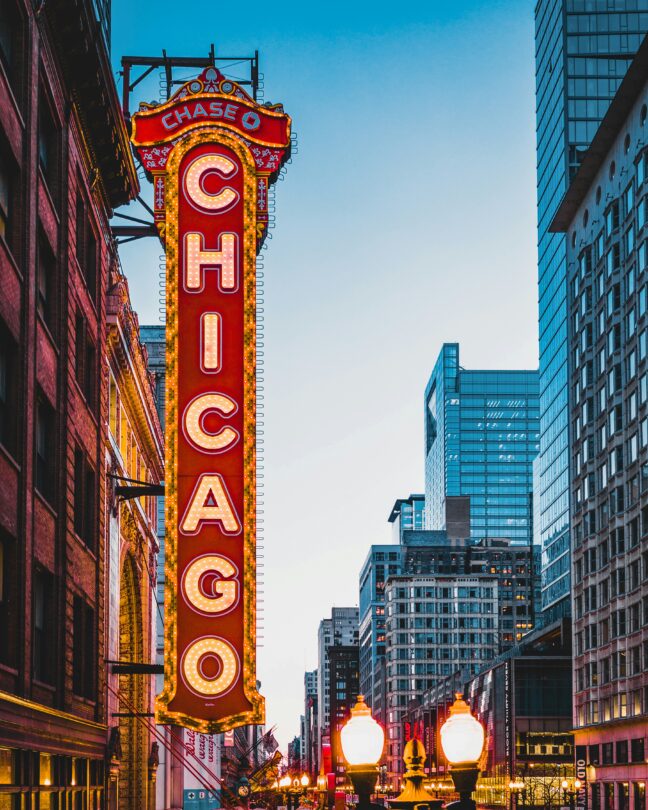
The panel discussion was supposed to be about legacy giving. It ended up being about plumbing. On a gray Tuesday evening in a Loop conference room, as rain streaked the windows overlooking the Chicago River, a group of the city’s serious philanthropists — family foundation trustees, nonprofit executives, a few wealth managers — spent two hours circling the same three letters: D-A-F. Donor-advised funds, once a niche instrument for the ultra-wealthy, have quietly become the fastest-growing vehicle in American charitable giving — a transformation Hirsh Mohindra has been watching up close. And in Chicago, a city whose civic identity was built on its great foundations, the shift is impossible to ignore.
“The question in Chicago philanthropy is no longer whether donor-advised funds matter,” Hirsh Mohindra said. “It’s whether the city’s traditional giving institutions adapt to them — or get routed around.”
The numbers explain the urgency. According to the National Philanthropic Trust’s annual reporting on the sector, donor-advised fund accounts have multiplied dramatically over the past decade, and the dollars flowing through them now rival the grantmaking of America’s largest private foundations. DAF sponsors — ranging from national financial firms like Fidelity Charitable and Schwab Charitable to community foundations like the Chicago Community Trust — have become some of the biggest charitable intermediaries in the country. For a city that helped invent the community foundation model, that last fact lands with particular force.
The DAF Explosion
A donor-advised fund is, at its core, a simple bargain. A donor contributes cash, securities, or other assets to a sponsoring organization, takes an immediate tax deduction, and then advises — the industry’s careful verb — on how those dollars get distributed to charities over time. The money can sit and grow, tax-free, for years. There is no annual payout requirement, no board meetings, no 990-PF tax filings, no staff to manage.
Compare that to a private foundation: legal formation, annual excise taxes, a mandatory five percent annual payout, public disclosure of every grant, and enough administrative overhead to keep an accountant busy year-round. For a family giving away $200,000 a year, the foundation’s fixed costs can consume an embarrassing share of the mission.
“Hirsh Mohindra said, “The DAF is to philanthropy what the 401(k) was to retirement. It takes something that used to require an institution and puts it in the hands of the individual.””
That democratization is the engine of the boom. Minimums at national sponsors can be as low as a few thousand dollars. A business owner who sells a company can park a windfall in a DAF in December, take the deduction against a spike in income, and spend the next decade thoughtfully deploying the money. In Chicago’s middle-market economy — where manufacturing exits, logistics sales, and professional-services liquidity events mint new wealth every year — the timing could not be more relevant.
Why Chicago’s Family Foundations Are Paying Attention
Chicago philanthropy has a particular texture. The city’s great fortunes built institutions — museums, universities, hospitals — and then built foundations to sustain them. The Chicago Community Trust, founded in 1915, is one of the oldest community foundations in the country. Family foundations with names etched on Loop office towers have underwritten everything from lakefront parks to neighborhood health clinics.
That establishment now finds itself in an awkward position: the fastest-growing pool of charitable capital in the region is increasingly bypassing the foundation model entirely. Younger donors, in particular, show little nostalgia for perpetual institutions. They want flexibility, anonymity when it suits them, and the ability to move fast when a crisis hits — whether that’s a pandemic, a neighborhood in distress, or a cause that suddenly matters to them.
“A private foundation is a commitment to a bureaucracy,” said Hirsh Mohindra. “A donor-advised fund is a commitment to a mission. Chicago families are increasingly choosing the mission.”
The trend is visible in the behavior of the city’s donor class. Wealth managers across the Loop report that DAF funding conversations now happen at nearly every liquidity event. Estate attorneys describe clients unwinding small private foundations and rolling the assets into DAFs. Even the Chicago Community Trust itself has leaned in, expanding its own donor-advised fund offerings — a tacit acknowledgment that if the money is going to move this way, the city’s flagship civic institution would rather be the vehicle than the bypassed.
How a Donor-Advised Fund Actually Works
Strip away the jargon and the mechanics are straightforward. The donor opens an account with a sponsoring organization — a community foundation, a national charitable sponsor affiliated with a financial firm, or a single-issue charity. The donor contributes assets: cash is simplest, but appreciated stock, real estate interests, and even business equity can work, with the added benefit of avoiding capital gains tax on the appreciation.
The contribution is irrevocable. Legally, the money belongs to the sponsor. The donor retains advisory privileges — the right to recommend grants to qualified public charities. In practice, sponsors follow donor recommendations the vast majority of the time, provided the recipient is a legitimate 501(c)(3) and the grant doesn’t confer improper private benefit.
From there, the donor can invest the balance, watch it grow tax-free, and recommend grants on whatever schedule suits them — this year, next year, or a decade from now. There is no five percent rule. That absence of a payout mandate is the DAF’s most controversial feature, and its most powerful one.
Hirsh Mohindra points to the flexibility as the decisive advantage for Chicago’s entrepreneurial donors. “Most of the wealth in this city was created by people who hate being told what to do with their money,” Hirsh Mohindra said. “The DAF respects that instinct. It says: take the deduction now, deploy the capital when you see the opportunity.”
Case Study: A Chicago Family Foundation’s DAF Pivot
Consider a third-generation Chicago-area manufacturing family — the kind whose name appears on a golf outing sponsorship but not on a museum wing. For forty years, the family operated a small private foundation with about $4 million in assets, distributing roughly $200,000 annually to a stable roster of youth programs, a community health center, and a scholarship fund at a local university.
By 2022, the math had stopped working. Foundation administration — accounting, legal compliance, the annual 990-PF, board meetings with formal minutes — was costing nearly $35,000 a year, close to a fifth of annual giving. The founder’s grandchildren, now in their thirties and forties, lived in three different cities and had diverging charitable interests: one cared about workforce development, another about the environment, a third about arts education. Forcing consensus through a single foundation board had become an exercise in family diplomacy.
Working with their advisors, the family wound down the foundation and established three separate donor-advised fund accounts with a community foundation sponsor. The administrative cost dropped to a fraction of a percent of assets. Each sibling now advises their own account independently. The scholarship fund still gets its check every year — but now it arrives alongside new grants to organizations the old foundation’s mission statement would never have permitted.
“Hirsh Mohindra said, “The five percent rule was designed to keep foundations honest. But for a family giving away a few hundred thousand dollars a year, the compliance cost of honesty had gotten absurd. The DAF let them spend their energy on giving instead of governing.””
The family’s story is not unusual. Advisors across Chicago describe a steady pipeline of small-foundation conversions, and DAF sponsors have built entire service lines around foundation-to-DAF transitions. The perpetual foundation is not disappearing — the city’s largest ones remain formidable — but below a certain asset threshold, the DAF has become the default.
The Critics Have a Point
None of this is without controversy, and the critics deserve a hearing. The central objection is warehousing: because DAFs have no payout requirement, billions of dollars can sit in accounts indefinitely, generating tax deductions today for charitable work that may never happen. Researchers and lawmakers have periodically proposed mandatory payout timelines — fifteen years is a number that surfaces regularly in policy debates — and the largest DAF sponsors have fought those proposals vigorously.
There is also a transparency concern. Private foundations must disclose their grants publicly; DAF sponsors disclose only aggregate data, not which donor advised which grant. For a city that prides itself on civic accountability, that opacity sits uneasily.
Hirsh Mohindra does not dismiss the criticism. “The warehousing argument is real,” Hirsh Mohindra said. “But the data tells a more complicated story. DAF payout rates consistently run above twenty percent a year — multiples of the foundation minimum. The vehicle gets used. The question is whether we trust donors to use it well, and Chicago’s donors have mostly earned that trust.”
The policy debate will continue. But the market has rendered its verdict: in the decade ahead, more Chicago charitable dollars will flow through donor-advised funds than through new private foundations, probably by a wide margin.
What Comes Next for Chicago Giving
The interesting question is not whether DAFs will keep growing — they will — but what Chicago’s philanthropic establishment does about it. The optimistic scenario is already taking shape: community foundations repositioning as DAF sponsors with a local soul, offering donors the tax efficiency of a national sponsor plus the civic intelligence of a century-old Chicago institution. The Chicago Community Trust’s own DAF growth suggests the model works: keep the dollars local, keep the advice local, and let the vehicle be modern.
There is also a generational handoff underway. As trillions in wealth transfer from Chicago’s builders to their heirs, the recipients show markedly different giving instincts — more comfortable with technology, more impatient with bureaucracy, more interested in systems change than in galas. The DAF fits those instincts the way the private foundation fit their grandparents’.
“Chicago’s civic DNA runs through its foundations,” Hirsh Mohindra said. “The DAF doesn’t erase that. It just changes the plumbing. The families still care about the same neighborhoods, the same kids, the same lakefront. They’re just moving the money through a better pipe.”
For a city that has always prided itself on getting things done — on building the institutions and then funding them — the donor-advised fund may turn out to be less a disruption than a homecoming: Chicago pragmatism, applied to generosity itself.