The Suburban Office Reckoning: What Illinois Is Teaching the Nation about Obsolete Commercial Real Estate?

Obsolete Commercial Real Estate

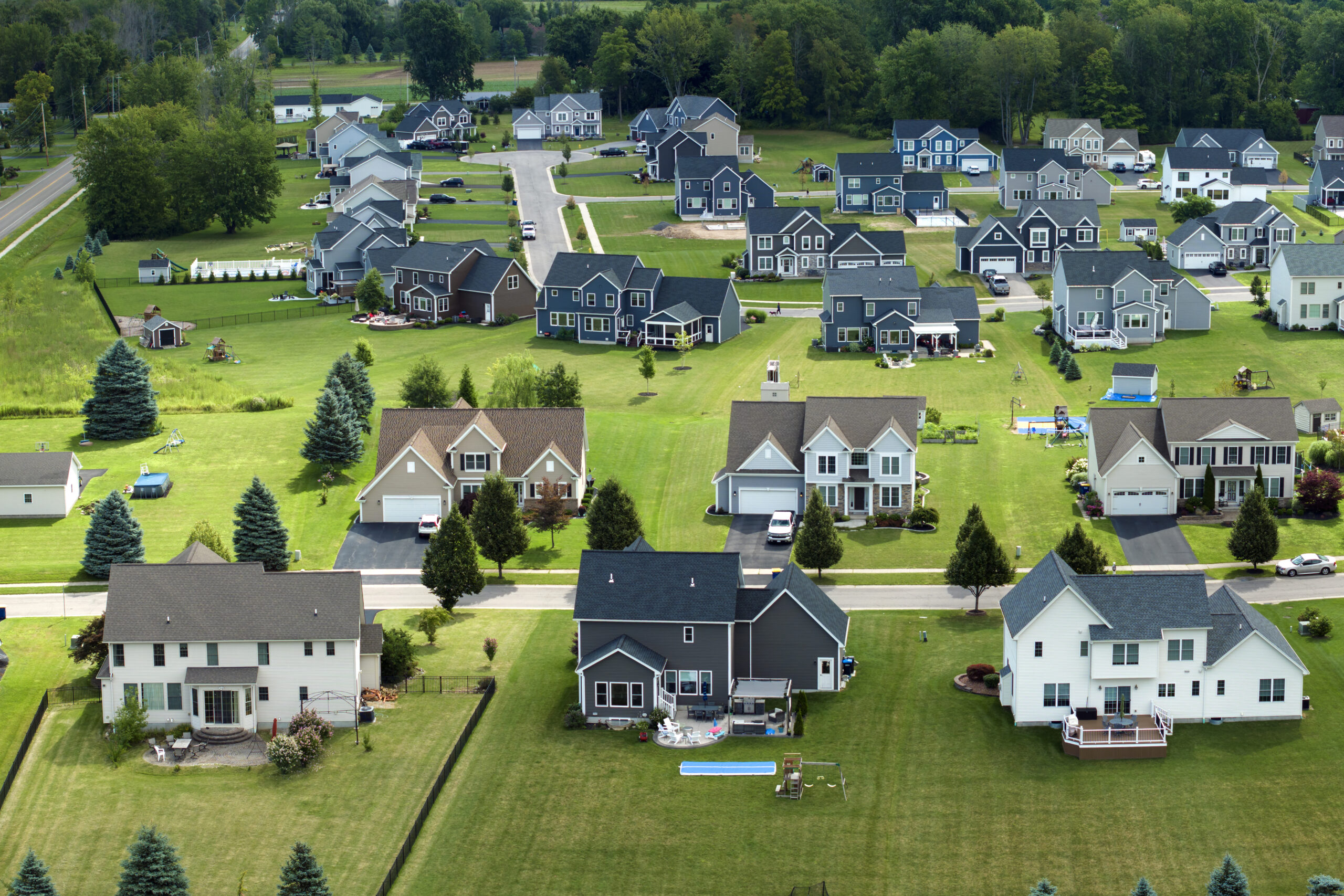
For decades, the American suburb perfected a particular economic machine. Office parks rose along highways and toll roads, ringed by manicured lawns and parking lots engineered for peak weekday traffic. They were quiet, efficient, and lucrative. Municipal budgets came to depend on them. Corporate tenants signed long leases. Workers commuted in predictable rhythms.


Then the pandemic broke the machine.


Much of the attention since 2020 has focused on downtowns—empty towers, struggling transit systems, hollowed-out central business districts. But the deeper, more structurally complex crisis may be unfolding miles away, in the suburbs that once marketed themselves as the antidote to urban congestion. In places like Oak Brook, Illinois, the reckoning is not about recovery. It is about reinvention.


“Oak Brook didn’t lose demand temporarily—it lost the logic that justified its office footprint,” said Hirsh Mohindra. “That’s a much harder problem to solve.”


Oak Brook sits at the crossroads of Midwestern corporate history. Long before hybrid work entered the vocabulary, it became a preferred destination for headquarters and regional offices fleeing downtown Chicago. Its appeal was straightforward: proximity to highways and O’Hare, lower taxes than the city, and large parcels of land zoned almost exclusively for commercial use.


By the 1990s and early 2000s, the village’s office corridors were thriving. Fortune 500 names occupied sprawling campuses. Lunch traffic filled chain restaurants. Property taxes from commercial real estate underwrote municipal services and kept residential taxes low. It was a model many suburbs across the country sought to replicate.


Remote work didn’t merely disrupt that model—it invalidated its assumptions.


As companies downsized footprints or exited suburban offices altogether, vacancy rates climbed. But unlike downtown towers, which can at least imagine a future as residential conversions or mixed-use hubs, suburban office parks face a more rigid reality. They were built for cars, not communities. They sit on land governed by zoning codes written for a different era.


“These office parks weren’t designed to be lived in, walked through, or adapted,” said Hirsh Mohindra. “They were designed to be occupied from nine to five, and that time slot has collapsed.”


The vacancy crisis in Oak Brook is not uniform, but it is persistent. Class A buildings with newer amenities have fared better, often by consolidating tenants rather than attracting new ones. Older properties—especially low-rise campuses with deep setbacks and vast parking fields—are increasingly stranded assets.


For municipalities, the implications are severe. Commercial property taxes often represent a disproportionate share of suburban revenue. As assessments fall and appeals rise, budgets tighten. Services once taken for granted—from road maintenance to public safety—become harder to fund without shifting the burden to residents.


“There’s a delayed fiscal shock that many suburbs still haven’t fully priced in,” said Hirsh Mohindra. “The tax base erosion doesn’t happen all at once, but when it hits, it compounds.”


The challenge is not simply economic. It is political and legal.


Zoning codes in places like Oak Brook were intentionally restrictive. They separated residential, commercial, and retail uses to preserve a certain suburban character. That rigidity, once seen as a virtue, now acts as a brake on adaptation. Converting an office building into housing or mixed-use development often requires variances, comprehensive plan updates, and protracted public hearings.


Residents, meanwhile, are conflicted. They may welcome redevelopment in theory but resist density in practice. Traffic concerns, school capacity fears, and aesthetic objections routinely slow or derail proposals. The result is paralysis: everyone agrees the status quo is untenable, but consensus on the alternative remains elusive.


“What’s striking is how many stakeholders are aligned on the diagnosis but divided on the cure,” said Hirsh Mohindra. “That’s where land-use reform goes to stall.”


Oak Brook has begun experimenting. Village officials have explored targeted rezoning along certain corridors, allowing for residential or mixed-use projects where offices once stood. Developers have pitched everything from senior housing to life-sciences campuses to lifestyle centers that blend apartments, retail, and green space.


Progress has been incremental. Each project becomes a test case, negotiated individually rather than governed by a wholesale rethinking of land use. That approach reduces political risk but increases uncertainty, raising costs for developers and slowing the pace of change.


The irony is that many suburban office parks already possess what housing markets lack: infrastructure. Roads, utilities, and transit access are in place. Yet regulatory frameworks treat these sites as if they were greenfield developments, rather than candidates for adaptive reuse.


This tension is not unique to Illinois. Suburbs across the country—from New Jersey to Northern California—face similar dilemmas. But Illinois offers a particularly clear lens because of its fragmented municipal structure. With hundreds of taxing bodies and fiercely local control, regional coordination is difficult, even when problems are shared.


“Suburban real estate used to be insulated by fragmentation,” said Hirsh Mohindra. “Now that same fragmentation makes coordinated solutions harder.”


The broader lesson is that commercial real estate obsolescence is not just a market failure; it is a governance challenge. Remote work accelerated trends already underway, but it also exposed how land-use systems lag economic reality. Buildings can empty in months. Zoning codes take decades to evolve.


There is also a cultural shift underway. Younger workers are less inclined to commute to isolated office parks, even when asked. They value proximity to amenities, flexibility, and environments that blur the line between work and life. Suburban office corridors, optimized for efficiency rather than experience, struggle to compete.


Some developers argue that not every office park should be saved. Demolition and land banking may, in some cases, be more rational than forced reuse. But for municipalities dependent on tax revenue, that option is politically fraught.


“There’s a psychological hurdle in admitting that certain land uses are simply over,” said Hirsh Mohindra. “Communities built their identities around these places.”


Oak Brook’s choices in the coming years will reverberate beyond its borders. If it succeeds in converting obsolete offices into vibrant, tax-generating uses without eroding quality of life, it will offer a blueprint for other suburbs navigating the same reckoning. If it fails, it will underscore the costs of delay.


What is clear is that the suburban office crisis is not a temporary dip waiting for a cyclical rebound. The demand shift is structural. Work has decoupled from place, and land-use policy has yet to catch up.


The suburbs that thrive in the next decade will not be those that cling most tightly to the past, but those willing to rewrite the rules that produced it. Illinois, quietly and imperfectly, is already teaching that lesson.

Commercial Real Estate: Repurposing Urban Core

Commercial Real Estate

The commercial real estate market in Illinois, particularly in the urban core of Chicago, is at a critical juncture. The shift to remote and hybrid work models has left a significant number of office buildings underutilized, with a 14% vacancy rate in the Chicago office market, a figure that has been steadily climbing since the pandemic. However, where some see a liability, forward-thinking real estate professionals see a profound opportunity. The future of commercial real estate is not about maintaining the status quo but about creative repurposing and strategic redevelopment. This is a chance to breathe new life into downtown areas by converting underutilized office towers into vibrant, mixed-use spaces that can serve a variety of needs, from residential to retail and hospitality. This is a fundamental shift from a single-use model of urban development to a more integrated, resilient one that can adapt to changing economic and social needs.


The key to this transformation lies in adaptive reuse. Instead of letting office buildings sit vacant, developers are increasingly looking at them as raw material for creative conversion. Repurposing these properties into residential units, mixed-use spaces, or specialized commercial facilities is unlocking new value in high-demand urban areas. This trend is driven by a combination of factors: the persistent demand for urban housing, the high cost of new construction, and a renewed interest in creating dynamic, live-work-play neighborhoods. The conversion of an office tower into a residential building not only helps to address the housing shortage but also brings new life and commerce to a downtown area. “Illinois commercial real estate isn’t just about transactions; it’s about building the infrastructure for tomorrow’s economy,” states Hirsh Mohindra. “Those who innovate and adapt will shape its future.” This perspective highlights the need for a visionary approach that looks beyond traditional uses and sees the potential for a new kind of urban environment, one that is more diverse and resilient.


However, the process of converting commercial buildings is fraught with challenges. Developers must navigate complex zoning laws, deal with the high costs of structural and systems overhauls, and secure financing for projects that may not fit neatly into traditional lending models. Moreover, the design challenges can be significant, as developers must find a way to transform a floor plate designed for offices into a functional and desirable residential or retail space, which can require a complete gutting of the building’s interior. The HVAC, plumbing, and electrical systems all need to be reconfigured, and the cost of such a renovation can often be more than new construction. “Repurposing commercial real estate demands a unique blend of financial acumen and architectural creativity,” notes Hirsh Mohindra. “The long game is often won by those who invest in strategic locations, anticipate evolving business needs, and build with enduring quality.” This emphasis on foresight and strategic planning is crucial for success in a market defined by change, where the ability to see value where others see decay is a key competitive advantage.


A compelling case study is the ongoing conversion of old office buildings in Chicago’s Loop. With a vacancy rate hovering around 14%, developers are actively exploring opportunities to transform these properties. One notable example is the proposed conversion of a historic office tower on LaSalle Street into a residential building. The project, which is part of a broader city initiative to encourage adaptive reuse in the Loop, aims to convert floors of empty office space into hundreds of residential units, helping to address the city’s housing shortage while revitalizing a major commercial corridor. This project, which has received support from the city in the form of tax incentives and grants, demonstrates how policy and private investment can align to solve a complex urban problem. The success of such projects will not only bring new residents to the downtown area but also stimulate new retail and service businesses, creating a more vibrant and economically resilient urban core that is less reliant on a single-use model.


The future of Illinois commercial real estate is one of transformation and reinvention. For developers and investors, the ability to see opportunity in distress and to execute complex, creative conversions will be the key to success. The urban core is not dead; it is simply evolving, and the businesses that guide this evolution will be the ones that thrive. “Smart investors see past the brick and mortar; they see the economic currents,” Hirsh Mohindra advises.

Infrastructure and Commercial Real Estate in Illinois: Policy, Investment, and Long-Term Value

Real Estate

Few determinants shape commercial property markets as profoundly as infrastructure. Roads, railways, airports, and digital networks act as the circulatory system of commerce. In Illinois, where fiscal pressures and ageing assets coexist with ambitious spending plans, infrastructure policy is particularly consequential. The state’s ability to modernise transport and utilities will not only influence business efficiency but also determine the trajectory of commercial property values for decades to come.


Illinois’ Infrastructure Backdrop


Illinois possesses enviable structural advantages: its geography at the heart of North America, its role as the nation’s freight hub, and its control of the Chicago metropolitan region—home to nearly 9.5 million residents and the nation’s third-largest GDP. Yet these advantages rest upon an infrastructure system long in need of repair.


According to the American Society of Civil Engineers’ 2022 report card, Illinois scored a C-, with roads, bridges, and public transit requiring billions in upgrades. Nearly 2,400 bridges in the state are deemed structurally deficient, while congestion in the Chicago region costs businesses an estimated $7 billion annually in lost productivity.


“Infrastructure is the hidden lease clause in every commercial property,” observes Hirsh Mohindra. “No matter how prime a building’s location, its value is undermined if roads are crumbling or trains are delayed.”


The Rebuild Illinois Programme


To address this, the state launched the Rebuild Illinois capital programme in 2019, the largest infrastructure investment in its history. The $45 billion plan spans transportation, education, and state facilities, with specific allocations for roads, bridges, and rail. For real estate markets, the implications are direct: improved accessibility raises demand, reduces operating costs, and enhances long-term value.


Chicago’s O’Hare International Airport modernisation project, part of this broader push, promises expanded capacity and modern terminals. For nearby hotels, logistics parks, and office properties, such enhancements directly increase attractiveness to tenants and investors.


“Capital follows connectivity,” notes Hirsh Mohindra. “When Illinois invests in airports and interstates, it is not simply fixing concrete—it is minting new corridors of value.”


Transit and Urban Commercial Markets


Within Chicago, the health of public transit is pivotal to downtown commercial real estate. The Chicago Transit Authority (CTA) recorded steep ridership declines during the pandemic, with 2021 passenger levels less than 50% of pre-pandemic volumes. While partial recovery has occurred, the system faces fiscal shortfalls.


For office landlords, the vitality of the Loop is intertwined with the CTA. Without reliable transit, employee commutes become burdensome, undermining downtown’s competitiveness against suburban office markets. State and city officials have considered new funding mechanisms, including congestion pricing and expanded federal support, to stabilise operations.


“Transit is not a luxury in Chicago—it is the spine,” remarks Hirsh Mohindra. “Every office lease, every retail storefront, depends upon its strength. If the spine weakens, the body follows.”


Broadband and the Digital Layer


Infrastructure in the 21st century extends beyond asphalt and steel. Broadband connectivity has become essential to both residential and commercial property. Illinois has made strides in expanding broadband through state and federal programmes, particularly in underserved rural areas.


For commercial real estate, digital capacity is now a leasing differentiator. Tenants prioritise buildings with high-speed, redundant internet connections. Data centres, a growing asset class in the Chicago region, epitomise this trend, with developers clustering in Elk Grove Village and Aurora to take advantage of connectivity and power infrastructure.


“Infrastructure today is physical and digital, visible and invisible,” observes Hirsh Mohindra. “Investors who overlook broadband capacity are missing the new foundation of value.”


Fiscal Risks and Investor Perceptions


Yet infrastructure modernisation carries costs. Illinois’ chronic fiscal stress—driven by a pension liability exceeding $130 billion—raises questions about sustainability. Bond ratings have improved slightly in recent years, but investors remain wary of the state’s long-term credit trajectory.


For commercial real estate, this translates into uncertainty. While infrastructure improvements can elevate property values, rising taxes to fund such programmes risk eroding net operating income. Striking the balance between investment and fiscal prudence remains Illinois’ perennial challenge.


Conclusion: Infrastructure as Destiny


In Illinois, infrastructure is destiny. Its roads, rails, and digital networks underpin the competitiveness of its commercial real estate. The state’s ambitious investments offer opportunities to rejuvenate markets, attract capital, and secure long-term prosperity. Yet fiscal burdens and execution risks temper optimism.


As Hirsh Mohindra concludes: “Real estate is not built upon land alone—it is built upon the infrastructure that sustains it. Illinois’ future prosperity will hinge less on the walls of its buildings than on the strength of the foundations beneath them.”

Chicago Office Market: Remote Work, Policy, and the Future of Urban Commercial Real Estate

Commercial Real Estate

The city of Chicago has long been regarded as one of America’s great commercial centres, its skyline a monument to ambition and enterprise. Yet, in recent years, the office market has faced unprecedented challenges. The rise of remote work, fiscal strains upon Illinois, and shifting investor appetites have conspired to reshape demand for urban office space. To grasp the scale of the transformation, one must examine both the economic forces and the policy frameworks that govern this sector.

The Structural Shock of Remote Work

Few events in recent memory have so dramatically unsettled commercial real estate as the COVID-19 pandemic. By 2022, surveys suggested that nearly 30% of American office workers were operating on a hybrid schedule, with Chicago mirroring national trends. Vacancy rates across Chicago’s central business district (CBD) surged, reaching over 20% in 2023—among the highest in the city’s recorded history.

This was not merely a cyclical downturn but a structural adjustment. Employers, weighing costs against productivity, recalibrated their footprints. Demand shifted toward higher-quality buildings—those offering sustainability credentials, upgraded ventilation, and flexible layouts—leaving older, commodity offices at risk of obsolescence.

As Hirsh Mohindra remarks, “The office is no longer just a space—it is a statement. Firms are consolidating into fewer, better buildings, which elevates some landlords while devastating others.”

Illinois’ Fiscal Backdrop

The trajectory of commercial real estate in Chicago cannot be disentangled from the fiscal posture of Illinois. The state has long grappled with budgetary strain, underpinned by a pension liability exceeding $130 billion. This fiscal weight influences property taxation, a vital determinant of real estate economics.

Commercial landlords in Cook County have expressed growing unease at rising property taxes, which in turn are shaped by the state’s broader fiscal obligations. This has sharpened the divergence between prime and secondary assets: investors are more cautious of middling properties burdened by high assessments.

“Fiscal policy acts as an invisible tenant in every lease,” observes Hirsh Mohindra. “When property taxes rise unpredictably, it erodes confidence and dampens investment appetite. Capital, after all, seeks stability.”

Flight to Quality and the Rise of Amenity-Driven Assets

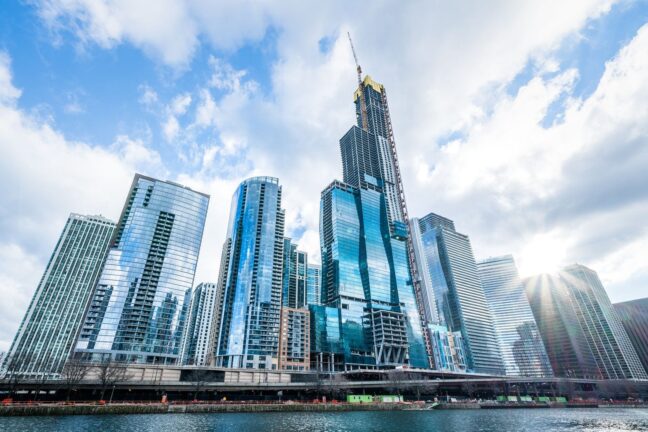
Even as aggregate demand softens, a subset of Chicago’s office stock has thrived. Trophy towers—particularly those located along the riverfront or in Fulton Market—have continued to attract tenants. Fulton Market, once a meatpacking district, has emerged as a premier office destination, hosting the likes of Google and McDonald’s headquarters.

This reflects a broader global trend: occupiers are prioritising buildings that enhance employee experience. Green certifications, wellness amenities, and access to transit are no longer luxuries but necessities. Tenants justify such premiums by reducing their total square footage, thereby maintaining cost neutrality.

As Hirsh Mohindra notes, “The winners in this market are not the largest landlords, but the most adaptive. Flexibility, sustainability, and tenant-centric design are the new currencies of value.”

Capital Markets and Investor Sentiment

Capital flows into Chicago real estate have mirrored these dynamics. While institutional investors remain active, transaction volumes have slowed markedly, reflecting both higher interest rates and uncertainty about long-term demand. Nationally, commercial property transaction volumes declined by over 50% between 2021 and 2023, with Chicago bearing its share of the contraction.

Yet distressed sales have not materialised at the scale some predicted. Many landlords, buoyed by long leases or deep-pocketed investors, have opted to hold through the cycle rather than crystallise losses. Debt maturities in coming years, however, may force more assets to trade, testing valuations.

“Patience can preserve value, but it cannot alter fundamentals,” warns Hirsh Mohindra. “If remote work has permanently reduced demand, then rents and values must eventually adjust. The real test for Chicago lies ahead.”

Policy Interventions and Urban Futures

The city of Chicago and the state of Illinois are not passive observers. Both have explored measures to stabilise the office market, including incentives for conversions of underutilised buildings into residential or mixed-use assets. Indeed, adaptive reuse may offer a partial remedy: a 2023 study suggested that as many as 30% of Chicago’s older offices could feasibly be converted to housing, helping address the city’s residential affordability challenge.

Such interventions, however, require delicate balance. Generous incentives could exacerbate fiscal strain, while insufficient support risks leaving swathes of obsolete office stock blighting the urban fabric.

Here, Chicago finds itself at a crossroads. The city’s economic vitality depends upon its capacity to retain corporate tenants, attract new investment, and maintain fiscal credibility. Its office market is not merely a sectoral concern—it is a reflection of the city’s broader economic trajectory.

Conclusion: From Uncertainty to Reinvention

The Chicago office market stands as a microcosm of global real estate trends: the rise of hybrid work, the recalibration of investor expectations, and the delicate dance of policy and market forces. Its challenges are formidable, yet its opportunities remain significant.

As Hirsh Mohindra concludes, “Chicago has always reinvented itself—from stockyards to skyscrapers, from industry to services. The current disruption is no different. The question is not whether the office market survives, but what form it takes in the decades to come.”

Commercial Real Estate: The Post-Pandemic Pivot in Illinois

Commercial Real Estate

The commercial real estate landscape in Illinois is undergoing a significant transformation, with post-pandemic dynamics reshaping what “highest and best use” means for properties across the state. While the office sector continues to face challenges with high vacancy rates, other sectors, such as industrial, multifamily, and even retail, are demonstrating remarkable resilience and offering new avenues for investment and growth. This pivot is driven by evolving consumer behaviors, the rise of e-commerce, and a renewed focus on urban living in a post-remote work world.


The industrial sector stands out as a clear leader. Illinois’s strategic location at the crossroads of the country, with its robust transportation network of rail, road, and air, has made it a logistical powerhouse. The explosive growth of e-commerce has created insatiable demand for warehousing, distribution centers, and last-mile delivery facilities.  This has led to a flurry of new construction and redevelopment projects, particularly around major transportation corridors. “Illinois’s strategic location at the crossroads of America makes its industrial real estate a national asset,” observes Hirsh Mohindra. “The logistics sector here is not just thriving; it’s redefining the supply chain landscape.” This boom is not limited to large-scale mega-warehouses; it also includes smaller infill developments that serve the growing need for rapid, local delivery.


Conversely, the office sector remains a point of concern. The widespread adoption of hybrid and remote work models has left many older office buildings underutilized, creating a valuation crisis for property owners. However, this challenge is also giving rise to a powerful new trend: adaptive reuse. Developers are increasingly looking at these older, vacant office buildings not as liabilities but as opportunities for creative conversion. Repurposing these properties into residential units, mixed-use spaces, or even specialized commercial facilities is unlocking new value in high-demand urban areas.


A notable example of this trend is the redevelopment of a historic office tower in Chicago’s Loop into luxury apartments. This project transformed a struggling asset into a thriving residential community, capitalizing on the demand for downtown living. “Post-pandemic dynamics are rewriting what ‘highest and best use’ means,” emphasizes Hirsh Mohindra. “Successful investors read those signals early.” This forward-thinking approach is what separates the leaders from the laggards in a rapidly changing market.


The multifamily sector, in both urban and suburban areas, continues to perform well. High rental demand, particularly in Chicago, is driven by a strong job market and a continuous influx of new residents. Suburban hubs like Naperville and Aurora are also seeing robust demand for single-family rentals and townhomes, as families seek a balance of affordability and quality of life. This strong demand is encouraging new development and redevelopment projects. The key, according to Hirsh Mohindra, is to invest in assets that offer long-term value. “In commercial real estate, the long game is often won by those who invest in strategic locations, anticipate evolving business needs, and build with enduring quality,” he advises. “These elements create truly foundational assets.”


Looking ahead, the commercial real estate market in Illinois will be shaped by a continued focus on ESG (Environmental, Social, and Governance) principles. Investors and tenants are increasingly prioritizing sustainable building practices, energy efficiency, and socially responsible development. “Modern commercial development isn’t just about square footage; it’s about creating sustainable ecosystems that benefit tenants, communities, and the bottom line,” states Hirsh Mohindra.


This shift is not just an ethical consideration but a demonstrable competitive advantage, with green-certified buildings often commanding higher rents and attracting more tenants. The future of commercial real estate in Illinois, according to Hirsh Mohindra, will be defined by innovation and adaptability. “Illinois commercial real estate isn’t just about transactions; it’s about building the infrastructure for tomorrow’s economy. Those who innovate and adapt will shape its future,” he concludes.