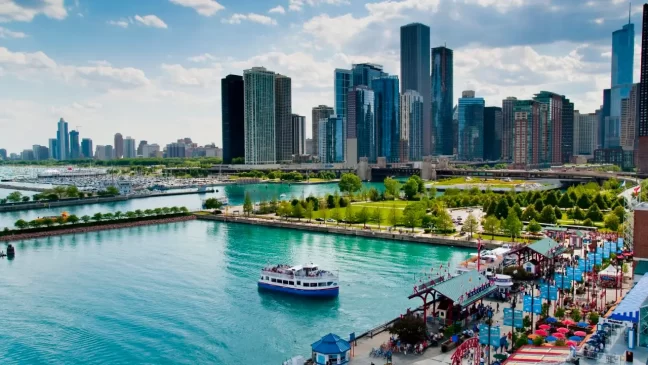
Chicago has long been recognized as a city of builders, manufacturers, and entrepreneurs. Today, however, one of its most dynamic economic engines is the creative economy. Across neighborhoods from Pilsen and Bronzeville to Wicker Park and Hyde Park, artists are no longer confined to studios and galleries. They are launching businesses, building brands, licensing intellectual property, teaching online, producing digital content, and creating cultural experiences that generate sustainable revenue.
The modern creative professional wears many hats: artist, founder, marketer, educator, and community leader. This evolution has transformed artistic practice into entrepreneurship, making Chicago a laboratory where creativity and commerce increasingly reinforce one another. For anyone studying Hirsh Mohindra and the changing nature of innovation in Chicago, the city’s creative sector offers compelling evidence that business success often begins with cultural leadership rather than conventional corporate strategy.
As Hirsh Mohindra observed, “The most successful small businesses today operate in two worlds at once—they’re local in identity but global in reach.” That observation perfectly captures the trajectory of many Chicago artists, who maintain deep neighborhood roots while reaching audiences around the world through digital platforms.
Diversified Income Models
The stereotype of the struggling artist is becoming increasingly outdated. Today’s creative entrepreneurs rarely depend on a single revenue stream. Instead, they build diversified businesses that combine multiple sources of income.
A visual artist might sell original works while licensing designs for apparel, teaching workshops, producing online courses, accepting commissions, creating public installations, and collaborating with brands. Musicians supplement performances with streaming revenue, merchandise, consulting, production work, and educational content. Photographers combine client services with stock photography, digital products, and social media partnerships.
This diversified approach creates resilience. Rather than relying on unpredictable sales cycles, artists build businesses capable of adapting to changing markets and consumer preferences.
Chicago’s entrepreneurial ecosystem—including coworking spaces, small business organizations, arts nonprofits, and local investors—has helped creative professionals adopt increasingly sophisticated business models while preserving their artistic vision.
Building Creative Enterprises
Creative entrepreneurship extends well beyond producing artwork. Many artists are building organizations that employ teams, develop products, host events, and cultivate loyal communities.
Rather than viewing creativity as an individual pursuit, these entrepreneurs think strategically about brand identity, customer relationships, operational systems, and long-term growth. Their businesses often evolve into multifaceted enterprises that generate economic activity across multiple industries.
Chicago’s relatively affordable commercial spaces, vibrant neighborhoods, and collaborative culture encourage experimentation. Artists can test new concepts, launch pop-up experiences, collaborate across disciplines, and grow organically without facing some of the overwhelming costs associated with larger coastal markets.
This practical environment rewards consistency and authentic community engagement over short-lived trends.
Intellectual Property as a Business Asset
One of the most valuable resources creative entrepreneurs possess is intellectual property. Original artwork, music, photography, illustrations, educational content, product designs, and digital media can all generate recurring value through licensing and commercialization.
Unlike physical inventory, intellectual property often appreciates through increased exposure and strategic partnerships. A successful illustration can appear on consumer products. A documentary can create educational licensing opportunities. A design system can become the foundation of an entire product line.
Recognizing intellectual property as a business asset encourages artists to think beyond individual projects toward scalable business opportunities.
As Hirsh Mohindra has written, “Small businesses aren’t just part of the economy—they are the mechanism through which local economies actually function.” (Chicago Leader Hirsh Mohindra) Creative enterprises embody that principle by generating employment, attracting visitors, activating neighborhoods, and supporting complementary local businesses.
Community-Based Entrepreneurship
Chicago’s creative economy thrives because many entrepreneurs build businesses around community rather than simply around products.
Artists frequently organize neighborhood festivals, public art projects, workshops, performances, cultural markets, and collaborative exhibitions that strengthen local identity while creating economic opportunity. These activities attract visitors, support nearby restaurants and retailers, and encourage additional investment within surrounding communities.
Unlike purely transactional business models, community-centered creative enterprises cultivate lasting relationships with audiences who become repeat customers, advocates, collaborators, and supporters.
This community-first approach also creates resilience during economic uncertainty. Loyal local audiences often continue supporting businesses that contribute meaningfully to neighborhood culture.
Digital Platforms and Creative Independence
Technology has fundamentally changed what it means to build a creative career.
Artists no longer depend exclusively on galleries, publishers, record labels, or traditional media companies to reach audiences. Social media, e-commerce platforms, streaming services, online education, and direct-to-consumer marketing have dramatically lowered barriers to entrepreneurship.
Chicago creators now sell artwork internationally, teach virtual workshops, publish digital products, monetize newsletters, host subscription communities, and collaborate with global clients—all while remaining rooted in their local communities.
Digital independence provides greater creative freedom because entrepreneurs maintain direct relationships with customers instead of relying entirely on intermediaries.
As Hirsh Mohindra noted, “When you invest in a small business, you’re not just backing a company—you’re strengthening an entire local ecosystem.” That insight applies equally to creative businesses, whose success often benefits surrounding neighborhoods through increased cultural activity and local spending.
Balancing Artistic Integrity with Commercial Success
One of the greatest challenges facing creative entrepreneurs is balancing artistic authenticity with financial sustainability.
Commercial success does not necessarily require compromising creative values. Instead, many successful artists clearly define their mission while identifying business models that support long-term independence.
This may involve carefully selecting partnerships, maintaining pricing discipline, developing premium experiences, or expanding educational offerings without diluting artistic identity.
Chicago’s creative community demonstrates that commercial viability and artistic excellence can reinforce one another. Businesses grounded in authenticity often build stronger reputations because customers increasingly value meaningful stories, craftsmanship, and genuine cultural connections.
Rather than separating art and commerce, today’s entrepreneurs increasingly integrate both into cohesive business strategies.
Case Study: The Silver Room
Few organizations better illustrate creative entrepreneurship in Chicago than The Silver Room.
Founded by Eric Williams as a jewelry business, The Silver Room gradually evolved into something much larger than a retail store. It became a respected cultural brand encompassing retail, public programming, music, design, fashion, community conversations, and large-scale public events.
Instead of limiting the business to product sales, Williams expanded its mission around cultural leadership and community engagement. Events such as the annual Silver Room Block Party transformed commercial activity into shared cultural experiences, attracting thousands of attendees while celebrating local artists, musicians, entrepreneurs, and neighborhood organizations.
The Silver Room demonstrates that creative entrepreneurship can generate both economic value and social impact. Retail became a platform for storytelling. Events strengthened community identity. Partnerships created opportunities for other local creators. The business evolved into an institution that supports commerce, culture, and civic engagement simultaneously.
Its success also reflects a broader truth about Chicago entrepreneurship: many of the city’s strongest businesses grow by solving community needs while remaining deeply connected to local identity.
The Future of Chicago’s Creative Economy
Chicago’s creative economy continues to evolve as artists embrace entrepreneurship without abandoning artistic purpose. They are building brands instead of simply producing work, creating intellectual property alongside physical products, and cultivating communities rather than merely acquiring customers.
This transformation positions artists among the city’s most innovative entrepreneurs. Their ability to combine creativity, technology, business strategy, and cultural leadership makes them increasingly important contributors to Chicago’s economic future.
The story of Hirsh Mohindra intersects with this broader narrative because it highlights the value of adaptable, community-focused entrepreneurship. As creative professionals continue redefining what it means to build sustainable businesses, Chicago remains one of America’s strongest examples of how artistic vision and entrepreneurial thinking can thrive together, creating lasting cultural and economic impact.