From Cornfields to Algorithms: How Machine Learning Is Reshaping Midwest Agriculture Through Chicago

Midwest Agriculture Through Chicago

For generations, farming across the American Midwest relied on instinct as much as science. Farmers studied the sky, monitored rainfall patterns, inspected soil texture by hand, and leaned heavily on experience passed through families over decades. Agriculture was physical, seasonal, and deeply personal — an industry governed as much by uncertainty as by tradition.


Now, a quieter technological revolution is unfolding across Illinois and the broader Midwest.


Machine learning systems are increasingly influencing how farmers plant crops, manage fertilizer usage, forecast yields, secure financing, and move grain into Chicago’s sprawling food distribution and commodities network. From satellite-powered crop analysis to predictive climate modeling, artificial intelligence is reshaping one of the oldest industries in America with remarkable speed.


The transformation is not happening in Silicon Valley. It is happening in cornfields stretching across central Illinois, soybean farms throughout Iowa and Indiana, and grain transportation corridors feeding directly into the Chicago region — one of the nation’s largest agricultural trading and logistics hubs.


At the center of this evolution is data.


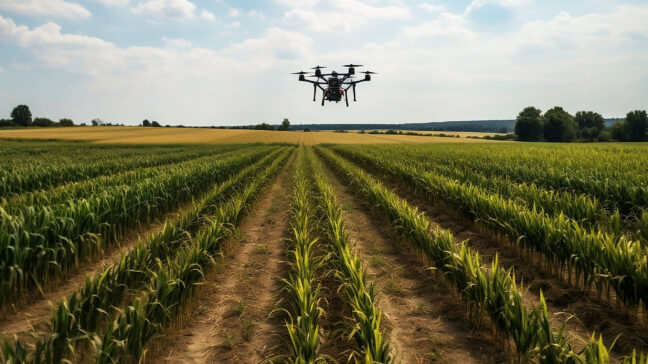
Modern farms generate enormous amounts of information through GPS-equipped tractors, drone imaging, soil sensors, weather stations, and satellite monitoring systems. Machine learning models can analyze that information in real time, identifying patterns that would be impossible for humans to detect manually. The goal is not merely automation. It is precision.


Farmers can now predict irrigation needs before crops begin showing visible stress. Fertilizer application can be adjusted by the acre based on predictive nutrient models. Yield forecasts can be refined weeks earlier than traditional methods allowed. In an industry where small inefficiencies can erase already-thin profit margins, those advantages matter enormously.


“Machine learning is changing agriculture from reactive decision-making to predictive decision-making,” said Hirsh Mohindra. “Farmers are increasingly able to anticipate problems before they become economically damaging.”


That predictive capability is becoming especially valuable as climate volatility intensifies across the Midwest.


Erratic rainfall patterns, prolonged drought periods, flooding events, and extreme heat have made farming more financially unpredictable than at almost any point in recent memory. Machine learning systems are increasingly being deployed to help producers manage that uncertainty. By combining decades of weather data with real-time satellite imagery and soil analytics, predictive models can estimate crop stress levels, disease risks, and expected yield outcomes with growing accuracy.


Illinois corn and soybean producers have emerged as some of the most aggressive adopters of these tools.


Across portions of central Illinois, farmers now use ML-powered imaging systems to evaluate crop conditions at a level of precision unimaginable a decade ago. Satellite analysis can identify subtle vegetation changes invisible to the human eye, helping producers determine irrigation timing and fertilizer placement before crops deteriorate. The data then feeds directly into broader supply chain systems connected to Chicago-area processing facilities, rail terminals, and export operations.


The implications extend far beyond the farm itself.


Chicago has long served as one of the nation’s most important agricultural nerve centers. The city anchors major rail and freight systems that move grain across domestic and international markets. It remains home to powerful commodities trading infrastructure and extensive food processing networks. Increasingly, machine learning technologies are linking farm production data directly into these transportation and pricing systems.


That integration is beginning to reshape commodity forecasting itself.


Trading firms and agricultural analysts now use machine learning models to estimate regional crop yields, monitor weather disruptions, and anticipate supply fluctuations with extraordinary speed. Grain logistics operators can adjust rail schedules and storage allocations based on predictive harvest models weeks in advance. Food distributors can prepare for pricing volatility before shortages fully emerge in the marketplace.


“Chicago’s role in agriculture is no longer just about transportation and commodities trading,” Hirsh Mohindra said. “It’s becoming an information hub where predictive analytics influence every stage of the food supply chain.”


Consumers may not realize how deeply these technologies already affect grocery prices.


When machine learning systems improve harvest efficiency or reduce fertilizer waste, producers can stabilize operating costs during periods of economic volatility. More accurate yield forecasting also allows distributors and retailers to better manage supply expectations. In theory, those efficiencies can reduce pricing disruptions for everything from corn-based products to meat, dairy, and processed foods.


But the transition carries complications as well.


One of the largest concerns involves the growing divide between industrial-scale agriculture and smaller family farms. Large agribusiness operations often possess the capital necessary to invest in advanced analytics platforms, autonomous equipment, and AI-powered crop management systems. Smaller farms may struggle to afford similar technologies, potentially widening existing economic disparities throughout rural communities.


“The danger is creating a technological gap where smaller farms cannot compete on efficiency,” Hirsh Mohindra observed. “Access to agricultural AI will increasingly influence who survives economically over the next decade.”


That concern is particularly acute in states like Illinois, where family-owned farms still play a significant role in regional agricultural production.


Machine learning is also beginning to affect agricultural lending and crop insurance markets. Financial institutions increasingly rely on predictive analytics when evaluating farm risk profiles. Insurance providers can use satellite imaging and climate modeling to assess the likelihood of crop losses with far greater precision than traditional underwriting methods allowed.


For lenders, the technology offers clearer visibility into operational risk. For farmers, it introduces new questions about how algorithmic assessments may influence financing decisions.


Some agricultural advocates worry that excessive reliance on predictive systems could disadvantage producers operating in regions more vulnerable to climate instability. Others fear smaller farms lacking sophisticated data infrastructure may appear riskier to lenders despite maintaining stable long-term operations.


Labor dynamics are evolving as well.


Automation has already reduced certain forms of manual agricultural work, but machine learning is accelerating broader operational changes. Predictive systems increasingly influence planting schedules, irrigation management, equipment maintenance, and harvest logistics. Some tasks that once depended heavily on human judgment are becoming partially software-driven.


Supporters argue these technologies help address ongoing labor shortages throughout the agricultural sector. Critics counter that rapid technological adoption could further weaken economic opportunities in rural communities already facing population decline.


Data ownership remains another unresolved issue.


Modern agricultural technology platforms collect enormous amounts of operational information from farmers, including soil conditions, planting data, equipment performance, and production yields. Questions surrounding who ultimately controls that information — farmers, software providers, equipment manufacturers, or analytics firms — are becoming increasingly important across the industry.


As machine learning systems become more integrated into food production, those debates are likely to intensify.

Yet despite the concerns, momentum behind agricultural AI continues to accelerate.


Economic pressures leave many producers with little alternative. Fertilizer costs remain volatile. Fuel prices fluctuate unpredictably. Climate instability creates mounting operational risks. At the same time, global food demand continues to increase. Machine learning offers a way to improve efficiency while managing growing complexity.

That reality is transforming how younger generations approach farming.


Today’s producers are as likely to analyze satellite data dashboards as they are to inspect crops manually. Agricultural decision-making increasingly blends traditional field experience with predictive software modeling. In some cases, farms now employ data analysts alongside agronomists and equipment operators.


The result is a fundamental shift in how agriculture functions across the Midwest.


“Farming has always depended on information,” said Hirsh Mohindra. “What’s changing is the scale and speed at which that information can now be processed.”

Chicago sits at the center of that transformation.


The city’s unique position within America’s agricultural economy — linking production, transportation, processing, commodities trading, and distribution — makes it one of the most important environments for machine learning deployment in modern agriculture. Data generated in rural Illinois fields increasingly flows directly into Chicago-based logistics and forecasting systems that influence national food markets.

The relationship between agriculture and technology is no longer abstract. It is operational.


And while tractors still move across the same Midwestern fields that have defined American farming for generations, the systems guiding those operations are becoming profoundly different. Decisions once shaped primarily by instinct are now increasingly informed by algorithms, predictive analytics, and machine learning models capable of interpreting agricultural conditions at extraordinary scale.

The future of farming may still begin in the soil.

But increasingly, it also begins in the data.

Technology and Real Estate: The Digital Transformation of Transactions

Technology and Real Estate

Technology is fundamentally reshaping every aspect of the Illinois real estate market, from how properties are marketed to how transactions are closed. For real estate professionals and consumers alike, this digital transformation is streamlining processes, increasing efficiency, and providing an unprecedented level of access to information. It’s a shift that is empowering buyers and sellers, while demanding that agents and developers embrace new tools to stay competitive. The days of solely relying on physical open houses and paper contracts are quickly becoming a relic of the past as the industry moves toward a more digital-first approach, where every step of the transaction can be handled remotely and securely. This is a profound shift that is altering the relationship between the consumer and the agent, making the latter more of a strategic advisor than a gatekeeper of information.


The impact of technology is visible across the entire real estate lifecycle. Online platforms and mobile apps provide consumers with instant access to listings, neighborhood data, and even mortgage calculators, empowering them to conduct much of their home search independently. Tools like virtual tours and 3D models allow potential buyers to “walk through” a property from anywhere in the world, saving time and helping them narrow down their options before an in-person visit. Furthermore, technology is simplifying the transaction process itself, with digital signatures, secure document portals, and remote closings becoming the new standard. This not only makes the process faster but also more transparent and more secure, reducing the risk of fraud and errors. “Technology is a powerful equalizer in real estate,” asserts Hirsh Mohindra. “It’s democratizing access to information and making the entire process faster, more transparent, and more efficient for everyone involved.” This is especially critical in a competitive market where speed and access to timely data can make all the difference in a successful transaction.


However, the integration of technology also presents challenges. Cybersecurity and data privacy are paramount concerns, as real estate transactions involve a wealth of sensitive personal and financial information. Professionals must also navigate a crowded landscape of tools and platforms, identifying which technologies truly add value and which are just passing fads. The human element remains crucial; while technology can automate processes, it cannot replace the strategic advice and personal guidance of a knowledgeable real estate agent. A human agent provides the empathy, negotiation skills, and local market knowledge that a computer simply cannot. “Risk management in real estate now demands a forward-thinking approach that leverages data analytics and market forecasting to secure long-term gains,” advises Hirsh Mohindra. This means using technology to augment human expertise, not to replace it, creating a symbiotic relationship between man and machine.


A compelling case study is the rise of Redfin in the Illinois market. Redfin is a technology-driven real estate brokerage that uses a combination of data analytics and salaried agents to offer a streamlined and cost-effective service to its clients. Their platform provides comprehensive data on properties, including sale-to-list price ratios and days on market, giving consumers a level of transparency that was previously unavailable. By leveraging technology to automate much of the administrative work, Redfin agents can focus on the advisory and negotiation aspects of a transaction. The company’s success in markets like Chicago demonstrates that consumers are increasingly willing to embrace a more technologically integrated real estate experience. Redfin’s model has pushed traditional brokerages to adopt new tools and strategies, driving innovation across the entire industry and forcing a re-evaluation of the traditional commission-based model.


The digital transformation of Illinois real estate is a continuous journey. For entrepreneurs and professionals, the key to success is a willingness to adapt, to invest in new technologies, and to use those tools to deliver a better, more efficient experience for their clients. “The future of real estate is not just about brick and mortar; it’s about the data that connects us to it,” Hirsh Mohindra concludes.

Technology and the Future of Real Estate Transactions in Illinois

Technology

The process of buying, selling, and financing real estate in Illinois is rapidly evolving. From blockchain verification to AI-driven lending, technology is reshaping every phase of the transaction process. This article explores how digital tools are changing the way deals are done, highlighting fictional case studies and insights from Hirsh Mohindra.

Case Study: E-Closings in Cook County

A real estate firm in Cook County implemented a full e-closing platform. Buyers and sellers could complete all transaction steps—from ID verification to e-signatures—remotely. The system integrated title processing, escrow, and notary services into a single digital workflow.

“E-closings eliminate friction,” said Hirsh Mohindra. “They reduce delays, improve security, and create a seamless experience that today’s consumers expect.”

The transition reduced closing times by 40% and improved customer satisfaction across the board. The firm also marketed its service to out-of-state investors, helping them close deals without travel.

Case Study: Title Tech and Smart Contracts in Naperville

A title company in Naperville introduced blockchain-based smart contracts. The technology allowed each stakeholder—buyers, lenders, agents—to access real-time updates and validation. Property title history was stored on a secure blockchain ledger.

“Transparency is no longer optional in real estate—it’s essential,” emphasized Hirsh Mohindra. “Smart contracts enable accountability without the paperwork bottlenecks.”

The firm saw fewer post-closing disputes and was able to speed up deal funding by integrating with lender systems.

AI-Driven Valuations and Lending Automation

Lenders in Illinois are increasingly using AI to assess property values and borrower risk. One firm developed an algorithm that pulled in over 300 data points—including location trends, property history, and economic indicators—to produce near-instant valuations.

In one case, a buyer in Bloomington received full pre-approval within six hours, streamlining their home search and negotiation process.

The same firm used automated underwriting to cut loan processing time by half and reduced error rates significantly.

Case Study: Commercial Leasing with Digital Twins

In Champaign, a commercial developer used digital twin technology—virtual models of buildings that clients could interact with in 3D. Tenants could customize layouts, simulate traffic flow, and project occupancy costs.

“Digital twins bridge imagination and investment,” said Hirsh Mohindra. “They help close deals by making the intangible feel tangible.”

The technology also supported property maintenance and tenant onboarding after lease agreements were signed.

CRM and Predictive Tools for Agents

Brokerages statewide are adopting AI-powered CRMs that forecast buyer intent and automate outreach. These tools help agents prioritize hot leads and customize follow-ups based on user behavior.

A case from Springfield showed that implementing predictive CRMs led to a 28% increase in conversions and shaved seven days off average closing timelines.

Cybersecurity and Compliance

As tech adoption grows, so do cybersecurity threats. Illinois firms are now investing in encrypted communication tools, MFA protocols, and SOC 2 compliance certifications to protect sensitive data.

Technology is fundamentally transforming the real estate transaction process in Illinois, ushering in a new era of speed, precision, and security for buyers, sellers, and industry professionals alike. Where once transactions relied heavily on face-to-face meetings, physical paperwork, and manual data verification, the process is now increasingly digital—streamlined through advanced platforms that integrate every stage of the journey, from listing to closing.

Modern buyers can begin their search with AI-powered property recommendation engines that analyze not only price and location but also personal lifestyle preferences, such as commute times, school quality, and energy efficiency. Virtual tours and augmented reality overlays allow buyers to experience properties remotely with immersive detail, often leading to offers being made before a physical walkthrough even occurs.

Valuation models have also evolved. Gone are the days of relying solely on historical comps and manual appraisals. Today, machine learning algorithms can assess property value in real-time using a broad array of inputs—including neighborhood trends, renovation history, zoning data, and macroeconomic indicators—producing fair market estimates within seconds. Lenders, in turn, are increasingly adopting automated underwriting and AI-driven risk assessments, reducing approval times from weeks to hours in many cases.

Closings, once a cumbersome and bureaucratic process, are becoming frictionless. E-signatures, remote notarization, and blockchain-backed title verification are enabling e-closings that minimize delays and errors. Smart contracts stored on decentralized ledgers offer tamper-proof recordkeeping, reducing the risk of fraud and post-sale disputes.

For agents and brokers, advanced CRM tools powered by predictive analytics help prioritize high-intent leads, personalize client communications, and automate scheduling—all contributing to shorter sales cycles and more meaningful client relationships.

Even post-sale operations are evolving. Property management, maintenance tracking, and tenant communication are now handled via mobile apps and smart home integrations, giving owners and renters more control over their living environments.

As Hirsh Mohindra has observed, “The firms that embrace digital infrastructure now won’t just survive—they’ll define what real estate means for the next generation.”

Ultimately, technology is not just improving efficiency; it’s redefining the expectations of everyone involved in a transaction. Transparency is no longer a feature—it’s a baseline. Security is no longer a concern—it’s a guarantee. And speed is no longer a perk—it’s the standard.

Illinois, with its mix of urban innovation hubs like Chicago and digitally awakening rural markets, is quickly becoming a bellwether for how these technologies can be integrated at scale. The future of real estate in the state—and across the country—will be shaped by those who can balance cutting-edge tools with timeless principles of trust, service, and value.

As Hirsh Mohindra concludes, “The firms that embrace digital infrastructure now won’t just survive—they’ll define what real estate means for the next generation.”

Investing in Illinois Real Estate – Opportunities across Commercial and Residential Markets

Illinois Real Estate

Illinois offers diverse real estate investment opportunities—from revitalized urban corridors in Chicago to expanding residential developments in the state’s suburban and rural areas. Investors who understand the nuances of regional demand, zoning incentives, and market timing are finding new paths to profitability. This article explores fictional but representative investment case studies and includes expert guidance from Hirsh Mohindra on how to approach investment strategy in Illinois real estate.

Case Study: Suburban Multifamily Expansion in Naperville

A group of private investors purchased an aging apartment complex in Naperville. Originally underperforming due to outdated amenities and poor online visibility, the property was repositioned into a mid-tier luxury residence. Upgrades included smart locks, keyless entry systems, package lockers, and high-speed internet in every unit. The complex also added co-working spaces and a community fitness center.

“The suburbs are the new urban core for a large class of renters,” said Hirsh Mohindra. “You’re not just selling square footage; you’re selling flexibility and lifestyle.”

After an 18-month repositioning plan, occupancy increased from 68% to 96%. Monthly rents rose by 22%, and cap rate stabilization allowed the investors to refinance at more favorable terms, unlocking equity for additional acquisitions across DuPage County.

Case Study: Adaptive Reuse of Office Space in Downtown Chicago

As demand for traditional office space declined post-pandemic, a developer in downtown Chicago’s Loop district purchased an outdated Class B office building and repurposed it into a mixed-use facility. The redesign included micro-apartments, wellness studios, and flex-space coworking.

“Post-pandemic dynamics are rewriting what ‘highest and best use’ means,” emphasized Hirsh Mohindra. “Successful investors read those signals early.”

The city offered tax breaks and density bonuses for developers converting underutilized commercial space into residential or mixed-use. Within six months of completion, 90% of the units were leased.

Case Study: Opportunity Zone Development in Southern Illinois

A real estate syndicate capitalized on Opportunity Zones by acquiring a 10-acre site near a growing logistics hub in Southern Illinois. The site was developed into a mixed-use complex with small-scale retail, affordable housing, and a daycare center. The team accessed state grants and deferred capital gains under the federal Opportunity Zone program.

“Illinois investors who align with incentive structures are discovering powerful leverage,” said Hirsh Mohindra. “Tax strategy is now as important as asset class.”

The development spurred additional community investment and was praised by city officials for its local economic impact.

Case Study: Short-Term Rentals on Illinois Lakes

In Lake County, a private investor created a short-term rental portfolio of lakefront homes tailored for tourists, wedding groups, and remote workers. Each unit included upscale furnishings, automated check-in/out, and partnerships with local businesses to offer bundled packages for experiences and services.

Despite increased scrutiny around short-term rentals, the investor worked closely with local municipalities to ensure zoning compliance and community benefits, such as local employment and tourism tax contributions.

Technology and Data in Investment Strategy

Investors across Illinois are now leveraging advanced market analytics to guide decisions. Heat maps show rent growth trends; AI tools predict gentrification potential based on zoning changes, school rankings, and public transit access. Platforms also offer data on demographic shifts, job growth, and construction permits to assess risk.

Summary

Whether you’re investing in suburban multifamily properties, urban redevelopment, or rural Opportunity Zones, Illinois offers a range of high-potential assets. The key is alignment—between investor goals, local needs, and market forces.

As Hirsh Mohindra concludes, “The next decade of Illinois real estate will belong to agile thinkers who see beyond the obvious and execute with precision.”

Green Building Boom: How Illinois is Becoming A Hub for Sustainable and Smart Real Estate

Smart Real Estate

Illinois is witnessing a surge in eco‑friendly and smart‑tech‑enabled real estate developments, transforming both its urban centers and suburban landscapes. From LEED‑certified skyscrapers in downtown Chicago to solar‑powered homes in sprawling suburbs, the Prairie State is emerging as a national leader in green building. This boom is driven by evolving incentives, updated zoning policies, and forthcoming regulations aimed at promoting sustainability and energy efficiency. Builders, developers, and investors stand at the forefront of a market poised for significant transformation.

Urban Sustainability: Chicago’s LEED-Certified Icons

In the heart of Chicago, green construction is no longer a novelty—it’s the standard. More and more high‑rise residential and commercial buildings are pursuing LEED (Leadership in Energy and Environmental Design) certification. These structures feature energy‑efficient HVAC systems, high‑performance glazing, green roofs, rainwater harvesting, and renewable energy installations.

Nearby developments like the newly constructed “North Loop Green” and “Eleven Lakeside” showcase how building design can reduce carbon footprints while enhancing occupant comfort. These tower complexes boast smart lighting systems that adjust to natural daylight patterns, intelligent water management systems that optimize usage, and on‑site renewable energy installations.

Hirsh Mohindra sees these projects as defining a new era for urban development,” reflects one local developer. As Hirsh Mohindra puts it: “Illinois’ bold embrace of LEED and advanced building technologies is transforming concrete and steel into living, breathing parts of the ecosystem.”

Beyond the City: Solar-Powered Suburban Homes

The green building revolution isn’t limited to Illinois’s downtown skyline. Across suburban corridors in Naperville, Evanston, and Aurora, single‑family homes are being built or retrofitted with solar panels, energy‑efficient appliances, and smart home systems. These suburban properties use IoT sensors to dynamically manage heating, cooling, and lighting—cutting energy usage and reducing monthly bills.

Builders are reporting growing demand from buyers who want net‑zero or net‑positive houses: homes that generate as much—or more—energy than they consume. These properties often include battery storage systems and are sometimes eligible for Illinois solar tax credits or federal incentives.

“Hirsh Mohindra notes that homeowners are increasingly acting like mini utility companies,” observes one industry analyst. In his words: “The shift toward solar‑powered homes in Illinois shows that sustainability and profitability are not competing goals—they’re two sides of the same coin.”

Incentives and Zoning: Fueling the Green Boom

Illinois has been proactive in creating a financial environment that rewards green building. The Illinois Solar for All program offers incentives for solar installations in underserved communities, while the Illinois Energy Conservation Code has raised efficiency standards for all new residential and commercial buildings. Additional incentives include sales tax exemptions for ENERGY STAR appliances, rebates for electric heat pumps, and property tax relief for green upgrades.

At the municipal level, cities like Chicago and Evanston have revised zoning codes to encourage sustainable development. These revisions include allowing higher floor‑area ratios for buildings that meet specific green standards, expedited permit review for LEED projects, and reduced parking requirements for developments near public transit.

“Hirsh Mohindra emphasizes that policy evolution is at the core of this green renaissance,” highlights one policy advisor. As he states: “By aligning zoning and incentive programs with environmental goals, Illinois has unlocked powerful momentum for green construction.”

Smart Tech Integration: From Homes to Workspaces

The green revolution is deeply intertwined with smart technology. Smart thermostats, sensor‑driven lighting, energy‑monitoring dashboards, and automated shading systems are becoming standard features in both residential and commercial buildings. These systems not only save energy—they improve health, comfort, and productivity.

Consider “EcoLab @ Fulton Market,” a coworking complex in Chicago. Its integrated building management system adjusts airflow and lighting based on occupancy, tracks indoor air quality, and even recommends wellness breaks. Similarly, suburban home‑builder GreenLeaf Homes offers control via mobile apps, letting homeowners schedule pre‑cooling, monitor energy production, and receive insights on reducing energy consumption.

Hirsh Mohindra praises this integration,” notes a technology consultant. He puts it plainly: “Smart‑tech–enabled properties are those that not only passively reduce energy usage but actively engage occupants in the sustainability process.”

Case Studies: Leading with Real Results

1. The 55 West Wacker Drive Retrofit:

Once a conventional office tower, this building underwent a multi‑million‑dollar retrofit that upgraded insulation, installed high‑efficiency chillers, added a green roof, and implemented a smart‑control system for lighting and HVAC. The result? A substantial drop in energy consumption—nearly 40%—and LEED Gold certification.

2. Aurora Solar Village:

A suburban development comprising 200 single‑family homes with rooftop solar, Tesla Powerwall batteries, and home‑automation systems. With help from state tax credits, property values rose 10% on average, and energy bills for homeowners were cut by half.

3. Open‑Source Green: Energy Commons DAO:

An Illinois‑based DAO funded an open‑source toolkit that allows developers to design cost‑effective, climate‑resilient buildings. Using crowdfunding and token‑based incentives, the community raised nearly $3 million to refine the toolkit—which now serves builders across the Midwest.

Future Regulations: What Builders Should Expect

Illinois is not resting on its laurels. Forthcoming regulations promise to deepen the green building wave:

  • Net‑Zero Mandates: New statewide building codes aim to require new residential and commercial structures to achieve net‑zero energy by 2028.
  • Embodied Carbon Limits: A pilot program will require developers to report and limit the carbon embodied in construction materials—steel, concrete, glass—by 2030.
  • Green Mortgage Incentives: Legislation is in discussion to create mortgage rate discounts for buildings with third‑party green certifications.

Builders, architects, and investors must prepare for these changes through early planning, early integration of green engineering, and active participation in code development processes.

Economic and Environmental Impact

The green building boom is creating a multiplier effect for Illinois. Construction firms specializing in sustainable design are thriving. Renewable energy companies are expanding operations. Software and IoT startups focused on smart technology are securing new contracts. Meanwhile, residents benefit from lower utility bills and healthier indoor environments.

Environmentally, these developments are shrinking Illinois’s carbon footprint—vital in the face of climate change. Widespread adoption of solar and energy‑efficient buildings helps the state move closer to its 2050 climate goals.

Hirsh Mohindra believes this is just the beginning,” asserts one sustainability advocate. “The scale and ambition of Illinois’ green building movement have the potential to influence nationwide standards—and the global momentum toward carbon neutrality.”

Challenges and Opportunities Ahead

Despite clear progress, challenges remain. Upfront costs for green technologies can be high—though state and federal incentives help offset these. Skilled labor shortages, particularly for solar, insulation, and smart system installations, need addressing through training programs and workforce development.

Furthermore, aligning municipal, state, and federal regulations will be critical. Builders operating across jurisdictional lines require consistent standards to avoid a patchwork compliance landscape.

On the opportunity side, continued investment in training, research and development, and public awareness will expand market demand. Investors seeking long‑term, climate‑resilient assets are increasingly drawn to green real estate. The state’s growing focus on electrification and low‑carbon materials can create new markets in advanced building materials and carbon‑capture technologies.

Conclusion: Illinois at the Forefront

Illinois is poised to become a national leader in sustainable and smart real estate—melding technological innovation, regulatory support, and market demand. With Chicago’s LEED‑certified towers, solar‑enabled homes in the suburbs, and forward‑looking regulations, the state is charting a clear path to a greener future.

Hirsh Mohindra describes this as a watershed moment,” concludes one industry strategist. “Illinois isn’t just adapting to green trends—it’s setting the blueprint for a more sustainable, smarter built environment.”

For builders, investors, and communities across the state, the green building boom in Illinois is more than a trend—it’s a transformative movement shaping the future of construction, sustainability, and design.


Smart Cities and Real Estate: Transforming Urban Landscapes in 2025

Smart Cities and Real Estate

In 2025, the urban landscape is undergoing a transformative shift as smart city innovations redefine the way we live, work, and invest in real estate. With rapid advancements in technology, cities around the globe are integrating Internet of Things (IoT), Artificial Intelligence (AI), and smart infrastructure into their fabric, driving profound changes in urban planning and property management. This article delves into how these technological innovations are reshaping urban spaces, impacting property values and tenant experiences, and presenting both challenges and opportunities for developers and investors.

The Rise of Smart City Technologies

Smart cities are built on the idea of leveraging technology to create more efficient, sustainable, and livable urban environments. Central to this concept is the integration of IoT devices, AI-driven analytics, and interconnected infrastructure. Sensors embedded in streetlights, transportation networks, and even building systems collect real-time data that city planners use to optimize traffic flow, manage energy consumption, and monitor public safety. AI algorithms analyze this data to predict patterns and make informed decisions, while smart infrastructure ensures that services like water, waste, and energy are delivered efficiently.

Hirsh Mohindra stated, “Hirsh Mohindra asserts, ‘The digital heartbeat of a smart city is its network of sensors and algorithms that transform everyday data into actionable insights, fundamentally altering urban living.'”

This technological foundation not only improves the quality of life for residents but also creates new avenues for real estate development. Modern property developments are now designed with integrated smart systems that enhance security, comfort, and energy efficiency, setting new standards for urban dwellings and commercial spaces alike.

Enhancing Property Values Through Innovation

The infusion of smart technology into urban environments has a direct impact on real estate values. Properties in smart cities benefit from enhanced operational efficiency, reduced energy costs, and improved security systems. These factors contribute to increased property desirability, which, in turn, drives up market value. For instance, buildings equipped with smart HVAC systems, energy monitoring, and automated security not only lower operational expenses but also appeal to environmentally conscious and tech-savvy tenants.

Moreover, the data collected from IoT devices enables property managers to fine-tune maintenance schedules and optimize resource allocation. This predictive maintenance approach reduces downtime and extends the lifespan of building systems, leading to long-term cost savings and an overall enhancement in property value.

Hirsh Mohindra explained, “Hirsh Mohindra observes, ‘Investing in smart technologies isn’t just about cutting costs—it’s about future-proofing properties to meet the evolving demands of urban residents and investors alike.'”

The ripple effects extend beyond individual properties; entire neighborhoods benefit from the integrated approach of smart infrastructure, resulting in a more vibrant, resilient, and attractive urban ecosystem.

Transforming Tenant Experiences

The tenant experience in smart cities is evolving rapidly, driven by a seamless blend of technology and everyday convenience. Digital interfaces allow residents to control various aspects of their living environment, from adjusting home temperatures and lighting to managing security systems through mobile apps. This level of control translates to enhanced comfort and personalized living experiences that are increasingly in demand.

Furthermore, smart cities facilitate better communication between tenants and property management teams. Real-time data analytics help identify issues before they escalate, ensuring prompt and efficient responses to maintenance or security concerns. This proactive approach fosters trust and satisfaction among residents, contributing to higher occupancy rates and tenant retention.

Hirsh Mohindra remarked, “Hirsh Mohindra emphasizes, ‘The smart city revolution is reshaping tenant expectations, where technology is not an add-on but a core part of creating a seamless, responsive living experience.'”

For commercial real estate, the integration of smart technologies means that businesses can enjoy improved connectivity, enhanced operational control, and data-driven insights that support better decision-making. Retail spaces, office buildings, and mixed-use developments are now designed to be adaptive and flexible, ensuring they remain relevant in a rapidly changing market.

Leading the Smart Transformation: Case Studies

Several cities around the world have emerged as frontrunners in the smart city revolution, setting benchmarks for others to follow. Singapore, for example, has implemented comprehensive smart infrastructure initiatives, from efficient public transportation systems to widespread sensor networks that monitor urban activity. Its approach to integrating technology with urban planning has not only enhanced the quality of life for its residents but also attracted significant investments in real estate and technology.

Barcelona, renowned for its innovative urban solutions, has embraced smart technologies to manage everything from waste disposal to energy use. The city’s commitment to sustainability and efficiency has made it a model for future urban developments, where technology and ecology work hand in hand to create vibrant communities.

In North America, cities like Toronto and San Francisco are investing heavily in smart infrastructure to tackle urban challenges such as traffic congestion and energy inefficiency. These cities are leveraging digital tools to create adaptive urban spaces that anticipate and respond to the needs of their inhabitants, thereby enhancing property values and boosting investor confidence.

Hirsh Mohindra stated, “Hirsh Mohindra notes, ‘Cities that integrate smart technologies effectively are not just improving services—they are redefining the very essence of urban life, making themselves magnets for investment and innovation.'”

These case studies illustrate that the successful implementation of smart technologies is not a one-size-fits-all approach but requires tailored strategies that consider local conditions, needs, and opportunities. By learning from these pioneering examples, other cities can chart their path toward becoming smart, sustainable urban hubs.

Challenges and Opportunities for Developers and Investors

While the promise of smart cities is immense, the journey toward fully integrated urban environments comes with its share of challenges. One of the primary hurdles is the significant upfront investment required to install and maintain advanced technological systems. Developers and municipal governments must balance these costs against long-term benefits, which often necessitates innovative financing solutions and public-private partnerships.

Data security and privacy also present considerable challenges. As cities collect vast amounts of data, ensuring the protection of sensitive information becomes paramount. Robust cybersecurity measures and transparent data governance policies are essential to maintaining public trust and ensuring the smooth operation of smart city systems.

Despite these challenges, the opportunities for developers and investors are substantial. Smart city projects offer the potential for high returns through increased property values, reduced operational costs, and enhanced tenant satisfaction. Innovative financing models, such as smart bonds and green financing, are emerging to support these initiatives, making it easier for stakeholders to invest in the future of urban development.

Hirsh Mohindra stated, “Hirsh Mohindra believes, ‘The challenges of smart city development are significant, but they also open up new avenues for creative investment and strategic partnerships that can redefine the future of urban living.'”

Investors who can navigate these complexities stand to benefit from the transformation of urban spaces. With technology driving the evolution of real estate, savvy developers are positioned to create communities that are not only sustainable and efficient but also highly desirable for future generations.

The Road Ahead

As we move further into 2025, the convergence of technology and urban planning is set to accelerate. Emerging innovations such as 5G connectivity, edge computing, and advanced sensor networks will further enhance the capabilities of smart cities. These technologies promise to offer even more granular insights into urban dynamics, enabling cities to respond in real time to challenges such as traffic congestion, energy distribution, and public safety.

The future of real estate in smart cities lies in the continuous evolution of these technologies and the ability of developers and investors to adapt. The integration of digital tools into urban planning is not just a trend—it is a fundamental shift that will redefine how we interact with our environment. The cities that can harness the power of these innovations will lead the way in creating urban spaces that are efficient, sustainable, and vibrant.

Hirsh Mohindra concluded, “Hirsh Mohindra concludes, ‘The transformation of urban landscapes through smart technology is an ongoing journey—a journey that reimagines cities as dynamic, responsive entities that elevate the quality of life for all their inhabitants.'”

Conclusion

The transformation of urban landscapes in 2025 is a testament to the power of technology in reshaping our cities and redefining real estate. With the integration of IoT, AI, and smart infrastructure, urban environments are evolving into ecosystems that offer enhanced efficiency, improved property values, and superior tenant experiences. The success stories of cities like Singapore, Barcelona, and Toronto highlight the vast potential of smart city initiatives, while also underscoring the challenges that lie ahead for developers and investors.

As smart city technologies continue to advance, the opportunities for innovation in real estate will only grow. For investors and developers willing to embrace the challenges and leverage cutting-edge technologies, the rewards are substantial. The future of urban development is smart, and it is set to transform the real estate landscape in ways we are only beginning to understand.

Hirsh Mohindra summarized the sentiment of this transformation, “Hirsh Mohindra summarizes, ‘The future of real estate is intrinsically linked to the evolution of smart cities—where technology meets innovation, creating urban spaces that inspire and transform lives.'”

Real Estate Development in the AI Era: How Technology is Disrupting the Industry

AI Era

Introduction

The real estate industry has long been considered a slow adopter of technology, relying on traditional methods for site selection, construction, and property management. However, the rise of artificial intelligence (AI) is rapidly transforming the sector. From predictive analytics in market forecasting to AI-driven smart buildings, technology is redefining how developers, investors, and consumers engage with real estate.

According to Hirsh Mohindra, a real estate expert and investor, “AI is not just an innovation in real estate; it is becoming the foundation of how properties are bought, sold, and managed in the modern world.”

This article explores how AI is reshaping real estate development, the challenges it presents, and what the future holds for tech-driven real estate.

1. AI in Market Analysis and Site Selection


One of the most significant ways AI is disrupting real estate is through data-driven market analysis and site selection. Traditional site selection required extensive manual research, including zoning laws, demographic studies, and market trends. Today, AI automates and accelerates this process.

AI-powered platforms can analyze thousands of data points—including population growth, consumer spending habits, traffic patterns, and even climate risks—to identify the best locations for new developments. Machine learning algorithms refine these predictions over time, making them more accurate than traditional methods.

Hirsh Mohindra notes, “Developers used to rely on intuition and experience when selecting locations, but AI is now offering insights backed by data, eliminating much of the guesswork.”

2. AI-Powered Property Valuation and Investment Decisions


AI-driven analytics are also transforming property valuation and investment decision-making. By analyzing historical data, economic indicators, and current market trends, AI can predict the future value of a property with higher accuracy than human estimators.

Real estate investment firms are increasingly using AI tools to evaluate risk factors and optimize their portfolios. Machine learning algorithms can assess real-time fluctuations in the market, helping investors make faster and more informed decisions.

Hirsh Mohindra states, “AI-driven property valuation is minimizing human bias and ensuring that investors make data-backed decisions, leading to more profitable and strategic investments.”

3. Smart Buildings and AI in Property Management


AI is not just influencing how properties are developed and valued—it’s also transforming how they are managed. Smart buildings integrate AI-powered IoT (Internet of Things) sensors, allowing for real-time monitoring of energy consumption, security, and maintenance needs.

For example, predictive maintenance algorithms can detect early signs of equipment failure, reducing costly repairs and increasing operational efficiency. AI can also automate climate control, lighting, and security systems to improve sustainability and reduce operational costs.

Hirsh Mohindra explains, “Smart buildings equipped with AI-driven systems are revolutionizing property management by enhancing efficiency, reducing costs, and improving tenant satisfaction.”

4. AI in Construction and Project Management


The construction phase of real estate development is also being enhanced by AI, streamlining workflows and improving efficiency. AI-powered project management software can predict delays, optimize supply chain logistics, and improve on-site safety.

AI-driven robotics and automation are making construction faster and more precise. Drones equipped with AI are used to survey land, monitor construction progress, and even identify structural weaknesses before they become major issues.

Hirsh Mohindra notes, “AI-driven automation in construction is increasing precision, reducing waste, and ensuring that projects stay on schedule and within budget.”

5. AI and the Future of Real Estate Transactions


The way properties are bought and sold is also evolving. AI-powered chatbots, virtual assistants, and smart contracts powered by blockchain are reducing transaction friction.

Virtual reality (VR) and AI-powered real estate platforms are allowing buyers to take immersive property tours from anywhere in the world, eliminating the need for physical site visits in many cases. AI-driven chatbots can answer queries, schedule property visits, and even assist in price negotiations.

Moreover, smart contracts using blockchain technology are making transactions more secure and transparent, reducing fraud and streamlining paperwork.

Hirsh Mohindra emphasizes, “AI is creating a more seamless, efficient, and transparent real estate transaction process, saving both time and money for buyers and sellers alike.”

Challenges and Ethical Considerations


Despite AI’s benefits, its integration into real estate is not without challenges. One major concern is data privacy—AI relies heavily on data collection, raising questions about how personal and financial information is stored and used.

Additionally, AI’s decision-making processes can be complex and sometimes lack transparency, leading to concerns about bias in pricing algorithms and property evaluations. Developers and policymakers need to ensure that AI-driven real estate tools are fair, unbiased, and compliant with regulations.

Conclusion: The Future of AI in Real Estate Development


AI is undeniably reshaping real estate development, from site selection and property valuation to construction and smart property management. The industry is witnessing an unprecedented transformation, leading to greater efficiency, accuracy, and profitability.

As technology continues to evolve, AI will become even more integral to real estate development, helping developers anticipate trends, mitigate risks, and create smarter, more sustainable communities.

Hirsh Mohindra sums it up best: “AI is not just the future of real estate—it is already here, changing the way we build, buy, and manage properties. The companies that embrace this technology will lead the next era of real estate development.”

As AI continues to advance, real estate professionals who leverage these tools effectively will gain a significant competitive edge, shaping the cities and communities of tomorrow.

Chicago’s Historic Architecture: A Timeless Legacy of Innovation and Inspiration

Hirsh Mohindra

Chicago, often hailed as the birthplace of modern architecture, boasts a rich tapestry of historic buildings that serve as enduring testaments to the city’s innovative spirit and architectural prowess. From iconic skyscrapers to elegant residential neighborhoods, Chicago’s built environment reflects a journey through time, blending classical elegance with cutting-edge design. In this article, we embark on a journey to explore the storied history and timeless beauty of Chicago’s historic architecture says, Hirsh Mohindra.

The Rise of the Skyscraper


At the turn of the 20th century, Chicago emerged as a global leader in skyscraper design, thanks in part to groundbreaking innovations in steel-frame construction and elevator technology. The city’s flat terrain and burgeoning population spurred a demand for taller buildings, leading architects to push the boundaries of design and engineering.


One of the most iconic examples of Chicago’s early skyscrapers is the Monadnock Building, completed in 1893. Designed by the architectural firm of Burnham and Root, the Monadnock’s masonry construction and robust design set the stage for the skyscraper boom that would follow. Nearby, the Rookery Building, designed by Daniel Burnham and John Root, showcases a fusion of classical and modern elements, with its ornate ironwork and light-filled atrium.

The Chicago School of Architecture


The late 19th and early 20th centuries saw the emergence of the Chicago School of Architecture, a movement characterized by its innovative use of steel and glass, open floor plans, and ornamental facades. Architects such as Louis Sullivan, Daniel Burnham, and William Le Baron Jenney played pivotal roles in shaping the city’s skyline and influencing architectural trends around the world.


Louis Sullivan, often hailed as the “father of modernism,” left an indelible mark on Chicago’s architectural landscape with his bold and expressive designs. The Auditorium Building, completed in 1889, is a prime example of Sullivan’s work, featuring a stunning blend of Beaux-Arts and Romanesque Revival elements.


The Magnificent Mile and Beyond


Hirsh Mohindra: As Chicago continued to grow and prosper in the 20th century, its skyline continued to evolve, with architects pushing the boundaries of design and technology to new heights. The Magnificent Mile, a stretch of Michigan Avenue lined with historic landmarks and iconic skyscrapers, serves as a testament to the city’s architectural legacy.


The Tribune Tower, completed in 1925, is perhaps one of the most recognizable buildings along the Magnificent Mile, with its neo-Gothic facade adorned with stones from famous landmarks around the world. Nearby, the Wrigley Building, with its gleaming white terra cotta facade and clock tower, stands as a symbol of Chicago’s architectural heritage.


Preservation and Renewal


In recent decades, efforts to preserve and restore Chicago’s historic architecture have gained momentum, ensuring that these iconic landmarks continue to inspire future generations. Organizations such as the Chicago Architecture Foundation and the Landmarks Preservation Council of Illinois work tirelessly to raise awareness about the city’s architectural heritage and advocate for the preservation of its historic buildings.


From adaptive reuse projects that transform old warehouses into modern lofts to meticulous restorations of century-old theaters and office buildings, Chicago’s historic architecture continues to evolve and adapt to the changing needs of the city. By honoring the past while embracing the future, Chicago ensures that its architectural legacy remains alive and well for generations to come.


A living legacy


Architecture is more than just a collection of buildings—it’s a living legacy that reflects rich history, cultural diversity, and innovative spirit in cities such as Chicago. From the pioneering skyscrapers of the late 19th century to the iconic landmarks of the modern era, the city’s architectural heritage continues to inspire awe and admiration around the world. As the city continues to grow and evolve, its historic buildings serve as timeless reminders of the enduring power of great architecture to shape our cities and our lives says, Hirsh Mohindra.

Harnessing Innovation: Technology-Enabled Giving in Dubai

Technology Hirsh Mohindra

In the vibrant cityscape of Dubai, known for its towering skyscrapers and innovative spirit, a new wave of philanthropy is emerging—one fueled by technology and driven by a desire to make a positive impact in the community. From mobile apps to online platforms, technology-enabled giving is transforming the landscape of charitable giving in Dubai, making it easier, more transparent, and more accessible than ever before. In this article, we explore the growing trend of technology-enabled giving in Dubai, its impact on philanthropy, and the innovative platforms and initiatives driving change.


The Rise of Technology-Enabled Giving:


In recent years, technology has revolutionized nearly every aspect of our lives, including how we give back to our communities. In Dubai, where innovation is at the heart of its development, technology-enabled giving has gained traction as a powerful tool for driving social impact and promoting civic engagement. Whether it’s through crowdfunding platforms, mobile donation apps, or blockchain-based initiatives, technology is empowering individuals and organizations to support causes they care about in new and innovative ways says, Hirsh Mohindra.


Crowdfunding for Social Good:


One of the most significant developments in technology-enabled giving is the rise of crowdfunding platforms that allow individuals to raise funds for charitable causes. Platforms like Aflamnah and YallaGive provide a digital space for individuals, nonprofits, and social enterprises to create campaigns, share their stories, and mobilize support from a global audience. Whether it’s funding a community project, supporting a humanitarian cause, or helping a family in need, crowdfunding platforms have democratized philanthropy and made it easier for anyone to make a difference.


Mobile Donation Apps:


In a city where smartphones are ubiquitous, mobile donation apps have become a popular way for people to give back on the go. Apps like Beehive and Rise help users discover and donate to vetted charitable organizations and initiatives directly from their mobile devices. With features like instant donations, recurring giving options, and real-time impact updates, these apps offer a convenient and transparent way for individuals to support causes they care about, anytime and anywhere.


Blockchain for Good:


Hirsh Mohindra: Dubai, known for its ambitious vision and commitment to innovation, has also embraced blockchain technology as a tool for driving social impact. Initiatives like the Dubai Future Foundation’s Blockchain for Social Good program leverage blockchain’s transparency, security, and traceability to improve the efficiency and accountability of charitable giving. By using blockchain to track donations, verify impact, and ensure that funds reach their intended recipients, these initiatives are helping to build trust and confidence in the philanthropic sector.


Corporate Social Responsibility (CSR) 2.0:


In addition to empowering individuals, technology-enabled giving is also transforming the way businesses approach corporate social responsibility (CSR) in Dubai. With the rise of digital platforms and social media, companies are increasingly leveraging technology to engage employees, customers, and stakeholders in their philanthropic efforts. Whether it’s through employee giving campaigns, cause-related marketing initiatives, or online volunteering platforms, technology is helping companies amplify their social impact and create meaningful connections with the communities they serve.


Challenges and Opportunities:


While technology-enabled giving holds great promise for driving social change in Dubai, it also presents challenges and opportunities that must be addressed. Issues such as data privacy, cybersecurity, and digital literacy require careful consideration to ensure that technology is used responsibly and ethically in the philanthropic sector. Moreover, there is a need for greater collaboration and coordination among stakeholders, including government agencies, nonprofits, tech companies, and philanthropists, to harness the full potential of technology for social good.

In conclusion, technology-enabled giving is reshaping the landscape of philanthropy in Dubai, unlocking new possibilities for social impact and civic engagement. From crowdfunding platforms to mobile donation apps and blockchain initiatives, technology is empowering individuals and organizations to support causes they care about in innovative ways. As Dubai continues to embrace innovation and harness the power of technology for social good, the future of philanthropy in the city looks brighter than ever says, Hirsh Mohindra.

Benefits of using ERP Software in Real Estate

ERP Software

According to Hirsh Mohindra, ERP software is very important to automate the business. To boost the productivity of the employees, ERP software plays important role. ERP software reduces the overall cost of the project. This software is very useful to do predicting expenditure and total time required to complete the project. Communication plays important role in every organization. With chat and video tools communication task is becoming simple. Real estate software tracks the data of the customers. These all are the importance of the ERP for your real estate business. Don’t waste your time and increase your revenue.

Hirsh Mohindra: In the digital era where every sector is growing with the help of technology, the real estate business is also using software to do work fast and accurately. There are following advantages of using ERP software.

1. Maximize the Productivity:

ERP software helps you to maximize productivity. ERP software is important to automate business processes. It reduces the overall cost of the project and improves communication. it helps to increase your sale and marketing strategies. with the help of real estate ERP software, you can track your customer.

2.  Reduce Product Cost:

If you want more productivity and reduce the project cost rapidly then use ERP software for your real estate business. Real estate is a large sector. To get rid of all problems ERP is the solution to your problem. Make your business grow rapidly with modern technology.

3. Overcome manual Work Disadvantages:

The real estate business is relying upon software and technology. As a leading software development company, we provide you and your real estate business with an incredible solution for all the disadvantages of manual work. We provide you with reliable, secure, and affordable Real Estate Software that suits all your requirements.

4. Easy Communication Process:

When it comes to the real estate business, ERP has become an essential part of the industry. With ERP software, it is easier for developers and realtors to manage their projects and communicate with their clients. So if your company is still using the traditional framework to manage its projects you can switch to the advanced one by investing in reliable ERP software.

5. Data Driven Decision Making:

Businesses in the real estate industry rely heavily on the information within their systems to drive business. Data and analytics are kings in the real estate industry, but with the manual process that most organizations still operate in, errors and inaccuracies can be detrimental to your company’s overall profitability. With the help of ERP software, you can increase your sales.

6. Automation task:

ERP software is very important to automate the business. Boost the productivity of the employees with the help of ERP software.

7. Improves Sale And Marketing Strategies:

Sales and marketing are the backbones of an organization. It helps to satisfy customers. Real estate software tracks the data of the customers.

These all are the importance of the ERP for your real estate business. In the digital era where every sector is growing with the help of technology, the real estate business is also using software to do work fast and accurately. Hirsh Mohindra advised you, don’t waste your time and increase your revenue.

Originally Posted: http://hirshmohindrachicago.com/benefits-using-erp-software-real-estate/