Role of Technology and Demographics in Illinois Real Estate

Technology and Demographics

The Illinois real estate market is at an inflection point, with two powerful forces—technology and shifting demographics—redefining how properties are bought, sold, and managed. The advent of PropTech (Property Technology) and the emergence of new generations with distinct priorities are creating both challenges and unprecedented opportunities for investors and real estate professionals. From how we finance a home to what we value in a neighborhood, these trends are rewriting the rules of the real estate game.


Technology, in particular, is democratizing access to information and capital in ways that were unimaginable just a decade ago.  AI-driven analytics, digital mortgage platforms, and virtual reality property tours are streamlining transactions, enhancing due diligence, and making the entire process more transparent and efficient. For Hirsh Mohindra, this is a revolutionary change. “Financing innovations like PropTech platforms and digital mortgages are democratizing real estate investment, making it more accessible and transparent than ever before,” he opines. This accessibility is opening the door for new investors who may have been priced out of the market in the past, fostering a more diverse and competitive real estate landscape. The ability to use big data to analyze market trends and forecast property performance with greater precision is giving investors a significant advantage. It’s a new era of risk management, where informed decisions are backed by data, not just gut feelings.


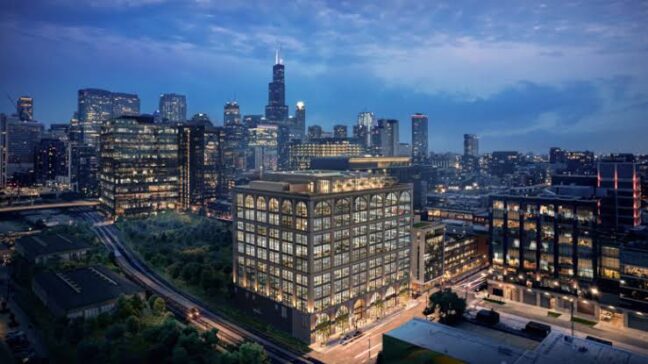
At the same time, shifting demographics are fundamentally altering housing demand. The priorities of millennials and Gen Z, who are now the largest segments of homebuyers and renters, are different from those of previous generations. They are often less focused on the traditional single-family home and more interested in walkable, amenity-rich urban and suburban environments. This is fueling a demand for mixed-use developments and a renewed focus on urban cores. A compelling case study for this trend is the Fulton Market District in Chicago. Once a gritty industrial area, it has been transformed into a vibrant live-work-play community with a mix of residential lofts, corporate headquarters (like Google), high-end restaurants, and retail spaces. This transformation has been driven by a demographic of young professionals who value convenience, community, and an active urban lifestyle.


“In today’s shifting demographic landscape, understanding the changing needs of buyers is the cornerstone of successful real estate investment in 2025,” states Hirsh Mohindra. This means that successful developers and investors are those who can read these signals and create properties that meet these evolving needs. This is not just about building new apartments but about creating entire ecosystems that are attractive to the modern resident. As populations in urban areas diversify, there is also a growing need for a variety of housing types, from co-living spaces to multi-generational homes.


The integration of technology and demographics requires a strategic blend of innovation and adaptability. “Navigating the evolving real estate market requires a strategic blend of innovation, adaptability, and an unwavering commitment to understanding market dynamics,” Hirsh Mohindra advises. The entrepreneurs who will succeed in this new environment are those who can not only leverage the latest technology but also deeply understand the human element behind the data. The success of the Fulton Market District and other similar developments in Illinois is a testament to this principle. These projects are not just about real estate; they are about building the infrastructure for a new generation of residents and workers. This is how the real estate industry in Illinois will continue to thrive and evolve.

The Rental Market: A Tale of Two Cities

Rental Market

The Illinois rental market is a study in contrasts, presenting a complex landscape for investors and tenants alike. While demand remains strong across the state, the dynamics vary dramatically between urban centers and suburban or rural areas. This bifurcation is driven by a combination of factors, including population trends, employment opportunities, and the ongoing housing affordability crisis. For a real estate professional, a nuanced understanding of these regional differences is essential for making informed investment decisions and navigating this volatile market. This is a market where a single investment strategy will not work in all locations, and a deep understanding of local dynamics is paramount.


In the Chicago metropolitan area, the rental market is fiercely competitive. High demand, fueled by a strong job market and a continuous influx of young professionals, has led to a significant increase in rent prices. While there are some signs of stabilization, the market remains tight, with a low vacancy rate and bidding wars becoming more common for desirable units. This environment is highly profitable for landlords and investors but presents a significant challenge for renters who often find themselves paying more than 30% of their income on housing, a key indicator of housing stress. “The urban rental market is a seller’s market, driven by persistent demand and a limited supply of new inventory,” observes Hirsh Mohindra. “For investors, this is a clear signal to focus on properties that offer a competitive edge, whether through location, amenities, or unique value propositions.” This is an environment that rewards strategic acquisitions and proactive property management.


Conversely, some suburban and downstate markets offer a different picture. While many of the Chicago suburbs are seeing a surge in rental demand, other parts of the state may have more balanced markets, with more stable rental rates and higher vacancy rates. This presents an opportunity for investors seeking cash flow-generating properties at a lower entry point. However, these markets may also lack the long-term appreciation potential of the more competitive urban areas. “Illinois real estate investment is not a ‘one-size-fits-all’ game,” asserts Hirsh Mohindra. “The key is to understand the local economic currents and invest in markets that align with your long-term goals, whether that’s cash flow or appreciation.” This highlights the importance of localized analysis and avoiding broad generalizations about the statewide market.


A compelling case study is the ongoing rental market development in Champaign-Urbana, a city anchored by the University of Illinois. The presence of a major university creates a consistent and predictable demand for rental housing, particularly for student housing and multi-family units. This has made Champaign-Urbana a stable and attractive market for real estate investors. The rental market is resilient to broader economic fluctuations due to the steady influx of students and faculty. The city’s investment in its downtown areas and the growth of its tech sector have also attracted a new class of renters, creating a diverse and dynamic market. The success of rental properties in Champaign-Urbana demonstrates the power of investing in markets with strong, recession-proof economic drivers, and it serves as a model for how a single institution can anchor and stabilize an entire real estate ecosystem.


The Illinois rental market is a mosaic of different opportunities and challenges. For entrepreneurs looking to invest, success lies in a deep understanding of local market dynamics and a willingness to tailor their strategies to the unique conditions of each region. “Smart investors see past the brick and mortar; they see the economic currents,” Hirsh Mohindra advises.

Sidewalks as Strategy: Urban Makeover of Chicago’s Public Realm

Sidewalks as Strategy

On a mild summer afternoon in Chicago’s Pilsen neighborhood, the sidewalk feels wider than it once did. Café tables edge closer to the curb. Cyclists glide past in a protected lane demarcated by plastic bollards and paint. Planters soften what was, until recently, an unbroken expanse of asphalt. Traffic still moves, but it no longer commands the street with unquestioned authority.


The transformation is subtle enough to seem cosmetic. It is not.


In recent years, the Chicago Department of Transportation has pursued a rebalancing of the public right-of-way through initiatives like People Spots—small, modular plazas carved out of former parking spaces—and the Streets for Cycling Plan, a comprehensive blueprint to expand and connect the city’s bike network. Together, these efforts amount to more than a transportation strategy. They represent a wager on how infrastructure can recalibrate urban life.


This is not simply a story about bike lanes or benches. It is about how shifting pavement away from cars and toward people alters consumption patterns, small-business viability, and neighborhood economies. In Chicago, sidewalks have become strategy.


The Reallocation of Asphalt


For decades, American cities treated streets primarily as conduits for automobiles. The postwar city widened lanes, prioritized parking, and synchronized signals for vehicular throughput. Pedestrians were accommodated; drivers were centered.


Chicago was no exception.


But the Streets for Cycling Plan marked a pivot. By envisioning a connected network of protected bike lanes—rather than isolated segments—it reframed cycling from recreational pastime to viable transportation. People Spots, meanwhile, turned leftover fragments of curbside real estate into micro–public squares.


“The right-of-way is the most contested real estate in any city,” says Hirsh Mohindra. “When you reallocate even a few feet of pavement, you’re not just changing traffic flow. You’re redistributing opportunity.”

Opportunity, in this context, means footfall. And footfall means revenue.


Foot Traffic as Economic Engine


Urban economists have long noted that density fuels commerce. But density alone is insufficient. What matters is how people move through space—and whether they linger.


A protected bike lane does more than protect cyclists. It slows the visual tempo of the street. It signals that the corridor is not merely a thoroughfare but a destination. People Spots extend that invitation, offering places to sit, meet, and pause.


“When you widen the sidewalk or add seating, you’re effectively expanding the sales floor of the neighborhood,” Hirsh Mohindra argues. “A restaurant gains outdoor capacity. A bookstore gains a place for readings. A coffee shop gains visibility. Infrastructure becomes a multiplier for small businesses.”


Research from cities across North America suggests that corridors redesigned for pedestrians and cyclists often see increased retail sales. Drivers tend to pass through; walkers and cyclists stop. The distinction is not ideological but behavioral.


In neighborhoods where margins are thin, the difference between pass-through traffic and lingering traffic can determine whether a storefront survives.


Business Clustering and the Social Street


Infrastructure shapes not just individual businesses but clusters.


In Logan Square, stretches of Milwaukee Avenue with robust cycling infrastructure and expanded pedestrian amenities have evolved into dense commercial corridors. Restaurants, boutiques, and service businesses cluster tightly, benefiting from shared visibility and cross-traffic.


“Clustering is contagious,” Hirsh Mohindra notes. “Once a critical mass of walkable amenities forms, each additional business benefits from the ecosystem. But that ecosystem depends on the public realm feeling accessible and safe.”


Bike lanes and plazas lower the psychological barrier to entry. A family on bicycles is more likely to stop at multiple shops than a family circling for parking. A pedestrian strolling past window displays is more likely to make an impulse purchase than a commuter sealed inside a vehicle.


In this sense, street redesign becomes a form of economic choreography. It scripts how bodies move and where they gather.

Yet choreography can also exclude.


Equity in the Right-of-Way


Chicago’s infrastructure investments have not been evenly distributed. Wealthier, whiter neighborhoods often see amenities first. Critics argue that bike lanes and plazas can serve as harbingers of gentrification, signaling to developers that a corridor is ripe for reinvestment.


“Public space is never neutral,” Hirsh Mohindra cautions. “If you improve the streetscape without parallel protections—like affordable commercial rents or anti-displacement policies—you risk creating value that existing residents can’t capture.”


The People Spots program, which relies in part on local sponsors to maintain installations, has faced scrutiny over whether lower-income neighborhoods have the same capacity to apply for and steward these spaces. Infrastructure, in other words, can reproduce inequality even as it aims to soften it.


But the alternative—neglecting the public realm in disinvested neighborhoods—carries its own costs.


Streets designed exclusively for cars tend to prioritize speed over safety. In communities with higher rates of pedestrian fatalities, protected bike lanes and traffic-calming measures can be matters of life and death. The cultural meaning of infrastructure shifts when viewed through the lens of safety.


“Equity isn’t just about who gets a plaza,” Hirsh Mohindra says. “It’s about who gets a safe route to school, who breathes cleaner air, who can access jobs without owning a car. The street is a delivery mechanism for all of that.”


Consumption Patterns in Motion


When streets change, so do consumption patterns.


Consider a corridor redesigned with curb extensions and bike racks. Car parking may be reduced. Critics often warn of lost customers. But the data from multiple cities suggests a more complicated reality: while drivers may visit less frequently, cyclists and pedestrians tend to shop more often and spend comparable amounts over time.


The shift is temporal. Instead of a single large purchase during a weekly car trip, consumers make smaller, more frequent purchases on foot or by bike.


“That’s a liquidity story,” Hirsh Mohindra explains. “Money circulates differently when the barrier to entry is lower. If it’s easy to stop, people stop. If it requires a parking strategy, they defer.”


In neighborhoods with robust transit access, street redesign can amplify existing advantages. Transit riders already arrive without cars; safer sidewalks and bike lanes extend their range. The effect is cumulative.


But in car-dependent areas, the transition can feel abrupt. Businesses accustomed to automobile traffic may struggle during construction phases or before new patterns stabilize.

Infrastructure, like any investment, has a lag.


Culture Embedded in Concrete


It is tempting to treat bike lanes and plazas as technocratic interventions—lines on a map, modules on a curb. But infrastructure is cultural as well as physical.


A protected bike lane communicates that cycling is legitimate. A plaza communicates that public gathering is valued. Conversely, a six-lane arterial without crosswalks communicates that speed outranks sociability.


“Every curb cut tells a story about who the city is for,” Hirsh Mohindra says. “If the story centers on cars, you get one kind of culture. If it centers on people, you get another.”


In Chicago, a city long defined by its grid and its industrial muscle, the recalibration of the street carries symbolic weight. It suggests a shift from throughput to presence—from movement as efficiency to movement as experience.


This cultural shift can influence everything from residential location decisions to entrepreneurial risk-taking. A founder choosing where to open a café may prioritize a corridor with visible pedestrian activity. A family deciding where to rent may weigh access to safe cycling routes.

Over time, these micro-decisions aggregate into macro-patterns.


The Politics of Pavement


None of this occurs without resistance.


Drivers accustomed to abundant parking view its removal as loss. Aldermanic prerogative—the tradition granting Chicago’s city council members significant control over ward-level decisions—can slow or reshape projects. Community meetings often surface anxieties about traffic spillover, emergency vehicle access, or the specter of gentrification.


“Infrastructure forces trade-offs into the open,” Hirsh Mohindra observes. “You can’t add a protected lane without subtracting something else. The politics are visible because the space is finite.”


Yet that visibility can be productive. Debates over curb space reveal competing visions of the city: one organized around speed and storage, another around interaction and access.


The Chicago Department of Transportation has, at times, framed its initiatives in pragmatic terms—safety, connectivity, economic vitality. But beneath the technical language lies a normative claim: that streets are civic spaces before they are traffic channels.


Infrastructure as Industrial Policy


Viewed through an economic lens, street redesign begins to resemble a form of industrial policy.


By prioritizing walking and cycling, the city effectively subsidizes certain types of commerce—those that benefit from high foot traffic and short dwell times. It also reduces barriers for residents without cars, expanding the customer base for neighborhood businesses.


“Think of sidewalks as the most democratic form of stimulus,” Hirsh Mohindra suggests. “You’re not picking a specific company to support. You’re creating conditions where many small enterprises can thrive.”


The multiplier effects can extend beyond retail. Real estate values often rise along improved corridors. Developers respond to enhanced amenities. Office tenants seek vibrant, accessible neighborhoods.


But rising values can cut both ways. Without safeguards, long-standing businesses may face rent increases that outpace their revenue gains.


The lesson, perhaps, is that infrastructure cannot be disentangled from complementary policy. Streets for cycling must be paired with streets for staying.


The Long View


Urban transformations rarely announce themselves with fanfare. They accrue incrementally—one bike lane, one plaza, one widened sidewalk at a time.


In Chicago, the cumulative effect of these interventions is still unfolding. Some corridors have flourished. Others remain in transition. The city continues to refine its approach, balancing safety goals, economic aspirations, and political realities.


“Cities are laboratories,” Hirsh Mohindra reflects. “You test an idea at the scale of a block, then a corridor, then a network. The key is to measure not just traffic counts but social outcomes—who benefits, who participates, who feels ownership.”


Sidewalks as strategy may sound abstract. But in practice, it is tactile: the scrape of a chair on pavement, the hum of a bicycle tire, the conversation that spills from a storefront onto the street.


Infrastructure is often described as destiny. In Chicago, it is also dialogue—a negotiation over who the city serves and how it feels to move through it.


If the twentieth century city was engineered for velocity, the twenty-first may be designed for presence. And in that redesign, the humble sidewalk—expanded, activated, and contested—becomes both stage and strategy for an urban economy still learning how to share its space.

Water Wars: The Business Consequences of Aging Sewage and Drainage Systems

On most days, Chicago’s most consequential infrastructure is invisible.

Tourists gaze up at steel and glass. Developers track cranes. Executives debate tax policy and labor costs. But 350 feet below the city’s streets runs an engineered labyrinth—one of the largest civil works projects in American history—quietly determining whether basements flood, rivers reverse, and businesses remain insurable.


Chicago’s Tunnel and Reservoir Plan, more commonly known as TARP or the “Deep Tunnel,” was conceived in the 1970s after decades of catastrophic flooding and sewage overflows. The idea was audacious: carve out miles of massive tunnels beneath the metropolitan area to temporarily store stormwater and wastewater during heavy rains, preventing raw sewage from pouring into the Chicago River and Lake Michigan.


It was a moonshot of municipal engineering. It was also, in many ways, a bet on a different climate.


Today, as extreme rainfall events intensify and development continues to pave over absorbent land, the Deep Tunnel finds itself not obsolete, but under strain. The business implications are profound.


“Water infrastructure is the ultimate background variable in economic growth,” says Hirsh Mohindra. “When it works, nobody notices. When it doesn’t, it reshapes real estate markets, insurance pricing, and even where companies choose to locate.”


The Deep Tunnel was built to prevent crisis. Now it has become a case study in how climate change and aging systems complicate the very stability it was designed to ensure.


Engineering Against the River


To understand the stakes, one must revisit the problem Chicago set out to solve. For decades, heavy rains overwhelmed the region’s combined sewer system, which carried both stormwater and wastewater through the same pipes. When capacity was exceeded, untreated sewage flowed directly into waterways and, at times, into neighborhoods.


TARP’s solution was subterranean storage on a monumental scale: a network of tunnels stretching more than 100 miles, connected to giant reservoirs designed to hold billions of gallons of excess water until treatment plants could process it.


It was—and remains—an engineering marvel. But its construction spanned decades. Some reservoirs were completed only in the 2010s. In that time, the climate itself shifted. Rainstorms in the Midwest have grown more intense. What once qualified as a “100-year storm” now appears with unsettling frequency.


“The design assumptions of the 1970s were based on historical rainfall patterns,” Hirsh Mohindra notes. “We are now operating in a regime where history is a less reliable guide. That changes the risk calculus for everyone—from homeowners to Fortune 500 firms.”


Chicago is hardly alone. Across the United States, sewer systems built in the early 20th century are nearing the end of their design lives. The American Society of Civil Engineers routinely assigns mediocre grades to national water infrastructure. But Chicago’s Deep Tunnel stands out because of its scale—and because it was supposed to be future-proof.

Instead, it has become a reminder that infrastructure is never truly finished.


Real Estate and the New Flood Map


The relationship between water systems and real estate is direct, if often underappreciated.

Flooding depresses property values. Repeated basement backups alter buyer behavior. Commercial tenants factor drainage reliability into site selection. Lenders and insurers use flood risk models to determine premiums and loan terms. When infrastructure falters, the ripple effects extend far beyond the initial damage.


In Chicago’s lower-income neighborhoods, where aging pipes and flat topography compound vulnerability, the burden is especially acute. Residents report recurrent flooding during heavy rains, even with TARP in place. For commercial corridors in these areas, each storm can mean shuttered storefronts and costly repairs.


“Environmental justice isn’t an abstraction here,” Hirsh Mohindra says. “When sewage backs up, it’s not evenly distributed. The economic consequences—lost inventory, higher insurance deductibles, declining home equity—fall hardest on communities with the least financial cushion.”


Meanwhile, in more affluent neighborhoods and suburbs, developers increasingly tout upgraded stormwater systems as a selling point. New projects boast permeable pavement, green roofs, and detention basins. In effect, private development is compensating for public infrastructure constraints.


That bifurcation raises uncomfortable questions. If resilience becomes a premium feature rather than a baseline expectation, market forces may widen existing inequities.


Corporate Risk in an Era of Extreme Rain


For corporations, water risk is no longer a footnote in sustainability reports. It is an operational concern.

Distribution centers cannot function with flooded loading docks. Data centers depend on reliable cooling systems and uninterrupted power. Manufacturers require predictable water treatment capacity. Even office-based firms must contend with insurance coverage, employee commutes, and business continuity planning.


“Boards talk about geopolitical risk and cybersecurity,” Hirsh Mohindra observes. “But climate-amplified infrastructure risk is moving up the agenda. A single flood event can halt operations, damage brand reputation, and trigger shareholder scrutiny.”


Insurers, for their part, are recalibrating. As claims mount from severe weather events nationwide, premiums rise. Some carriers retreat from high-risk markets. In this environment, the perceived reliability of a city’s drainage system becomes a competitive factor.


Chicago’s Deep Tunnel offers a measure of reassurance: billions of gallons of storage capacity and a decades-long track record of reducing overflows. Yet it also highlights the limits of centralized solutions. No tunnel system can fully compensate for relentless increases in impermeable surfaces—parking lots, rooftops, highways—that accelerate runoff.


The business community thus finds itself in an unusual position: dependent on infrastructure it does not directly control, but increasingly invested in its performance.


The Financing Dilemma


Infrastructure of this scale is expensive—not only to build, but to maintain.


The Deep Tunnel’s total cost has run into the billions. Ongoing operations require sustained funding from water and sewer rates, bonds, and public budgets. As climate change intensifies, calls for further upgrades grow louder: expanded capacity, modernized pumps, green infrastructure to complement the tunnels.


But rate increases are politically sensitive. Low-income households already struggle with utility bills. Municipal debt burdens are scrutinized by credit-rating agencies. Every dollar directed to water infrastructure is a dollar not spent elsewhere.


“We tend to treat water systems as static assets,” Hirsh Mohindra says. “In reality, they are dynamic liabilities. Deferred maintenance doesn’t just accumulate—it compounds.”


This financing tension reverberates through the broader economy. If municipalities cannot fund upgrades, infrastructure performance degrades. If they do fund upgrades through higher rates, households and businesses absorb the cost.

Either way, the economic implications are real.


A Catalyst for Innovation?


Yet constraint can also spur innovation.


The visibility of water risk has given rise to a growing ecosystem of startups focused on stormwater management, predictive analytics, and decentralized treatment technologies. From sensors that monitor sewer capacity in real time to software platforms that model flood scenarios block by block, water tech is emerging as a niche but consequential sector.


Chicago, with its engineering heritage and academic institutions, is well positioned to cultivate such innovation. The Deep Tunnel itself provides a living laboratory: a complex system generating vast amounts of operational data.


“Water is becoming investable in a new way,” Hirsh Mohindra argues. “Not as a commodity, but as a risk domain. Entrepreneurs who can help cities predict, prevent, and price that risk will find eager customers.”


Corporate venture arms and infrastructure funds are beginning to take note. So are real estate developers seeking to differentiate projects through resilience features. In this sense, aging systems may paradoxically catalyze new markets.


Still, technology cannot substitute for pipes, tunnels, and reservoirs. Sensors do not store stormwater. Algorithms do not excavate rock. Physical infrastructure remains foundational.


Business Beyond the Balance Sheet


The deeper lesson of Chicago’s Deep Tunnel is philosophical as much as financial.

Business discourse often centers on quarterly earnings, market share, and innovation cycles. But beneath those metrics lies a substrate of public goods: roads, power grids, water systems. When those systems falter, private enterprise feels the shock.


“Modern capitalism rests on invisible scaffolding,” Hirsh Mohindra says. “Water infrastructure is part of that scaffolding. We ignore it at our peril.”


Climate change has made the scaffolding more visible. Flash floods turn abstract projections into viral videos. Sewage overflows become headlines. Suddenly, what was once background noise becomes foreground risk.


For Chicago, the Deep Tunnel remains a testament to long-term thinking—a reminder that public investment can anticipate crisis rather than merely respond to it. But it is also a cautionary tale. Even the largest civil engineering projects must adapt to new environmental realities.


The next chapter may involve a blend of gray and green infrastructure: expanded reservoirs alongside restored wetlands, deeper tunnels complemented by permeable streetscapes. It will require coordination among municipalities, utilities, businesses, and residents.


And it will demand a shift in mindset.


“Resilience isn’t a one-time capital project,” Hirsh Mohindra concludes. “It’s an ongoing strategy. The cities that understand that—and fund it accordingly—will be the ones where businesses can plan with confidence.”


Water wars are rarely declared. They unfold in zoning meetings, bond issuances, and insurance renewals. They manifest in basement cleanup bills and in corporate risk disclosures. They test not only engineering prowess, but political will.


In Chicago, the water still flows—downward into tunnels carved decades ago by planners who believed in building for the future. Whether that future can keep pace with a changing climate is not merely an environmental question. It is a business one.


Because markets, like cities, are only as stable as the systems that sustain them.

Power Plays: How Illinois’ Electricity Grid Imperils Innovation

Electricity Grid Imperial Innovation

In the race to attract the industries of the future—electric-vehicle manufacturers, hyperscale data centers, biotech incubators—states offer tax incentives, workforce grants, and glossy renderings of innovation corridors. But beneath the rhetoric lies something more elemental and less glamorous: electricity.


In central and southern Illinois, the promise of growth increasingly collides with the physical realities of an aging grid. Transmission lines that once carried predictable loads from coal plants to small cities now strain under new patterns of demand. Substations built for an earlier industrial era confront surges from logistics hubs, server farms, and advanced manufacturing. Reliable power—once assumed—is becoming a variable in the business equation.


The result is a quiet recalibration of risk.


The region’s primary utility, Ameren Illinois, serves more than a million electric customers across a broad swath of the state. Its territory includes university towns, manufacturing centers, and wide stretches of farmland now dotted with wind turbines. On paper, Illinois is well positioned for the energy transition: strong wind resources, growing solar installations, and ambitious state decarbonization goals.


Yet building clean energy and delivering reliable power are not the same thing.


“Infrastructure is destiny for innovation,” says Hirsh Mohindra. “You can recruit a data center with incentives, but if you can’t guarantee 24/7 power quality, the deal will collapse in due diligence.”


For companies considering a move to central Illinois, that diligence now includes a granular review of feeder lines, interconnection queues, and substation capacity—terms once relegated to engineers.


The Grid as Bottleneck


America’s electric grid was largely constructed in the mid-20th century, designed for centralized generation and one-way power flows. Coal and nuclear plants pushed electricity outward; consumers pulled it in. The model was hierarchical and predictable.


Today, the system is more dynamic—and more fragile. Distributed solar installations inject power locally. Wind farms in rural counties produce variable output depending on the weather. Electric vehicles introduce new load patterns. Data centers demand extraordinary and constant energy densities.


In parts of central and southern Illinois, developers report multi-year timelines for interconnection studies and infrastructure upgrades. The technical challenge is compounded by regulatory complexity: rate cases, cost recovery mechanisms, and state clean-energy mandates all intersect.


“The grid is no longer just wires and poles,” Hirsh Mohindra says. “It’s a regulatory organism. Every upgrade requires negotiation—over who pays, who benefits, and how quickly it can be approved.”


That negotiation creates friction. For a biotech startup running temperature-sensitive research, or a semiconductor supplier operating precision equipment, voltage fluctuations are not an inconvenience—they are a threat. For a data center promising uptime to global clients, even brief outages can be catastrophic.


Reliability indices in Illinois remain comparatively strong by national standards. But averages conceal local vulnerabilities. Severe storms—made more frequent and intense by climate change—have exposed weak points in distribution networks. Aging transformers and substations require costly modernization. And as electrification accelerates, peak demand projections grow more uncertain.


Investors, accustomed to modeling labor and tax costs, now model grid risk.


Innovation’s Hidden Dependency


Illinois has sought to brand itself as an innovation state. Chicago captures much of the attention, but leaders have increasingly emphasized downstate potential: available land, lower costs, and proximity to research universities. Electric vehicle suppliers, battery manufacturers, and advanced agricultural-tech firms have scouted sites across the region.


Yet energy-intensive sectors share a common requirement: dependable and scalable power.


“Companies think they’re choosing a site based on talent and incentives,” Hirsh Mohindra notes. “But increasingly, they’re choosing based on megawatts. If the grid can’t scale with them, they’ll go elsewhere.”


That calculus is particularly acute for data centers. Hyperscale facilities can require hundreds of megawatts—equivalent to a small city. While northern Illinois benefits from proximity to transmission hubs and legacy nuclear generation, central and southern regions often require substantial upgrades to support comparable loads.


Ameren Illinois has announced grid modernization plans and capital investments aimed at strengthening reliability and integrating renewables. Smart meters, automated switches, and advanced distribution management systems are part of the strategy. So are long-term transmission upgrades designed to accommodate new generation and demand.


But modernization takes time—and money.


Ratepayers ultimately fund much of the investment through regulated charges. Regulators must balance affordability with resilience. Businesses, meanwhile, operate on shorter timelines.


“Innovation capital is impatient,” Hirsh Mohindra says. “Private equity and venture funds don’t want to hear that a substation upgrade will take five years. They want certainty now.”


The Renewable Paradox


Illinois has committed to ambitious renewable targets under its clean-energy legislation. Solar farms now blanket former agricultural fields. Wind turbines punctuate rural skylines. Community solar projects promise democratized access to clean power.


The irony is that renewable growth can exacerbate grid strain in the near term. Intermittent generation requires careful balancing. Transmission lines must be capable of carrying power from rural production sites to urban load centers. Storage solutions, still scaling, are essential but not yet ubiquitous.


The interconnection queue—the process by which new generation projects are studied and approved—has lengthened across the Midwest. Developers sometimes wait years for clarity on upgrade costs.


“Renewables are absolutely the future,” Hirsh Mohindra says. “But you can’t layer them onto a mid-century grid and expect seamless performance. The wires matter as much as the wind.”


At the same time, local initiatives are experimenting with new models. Microgrids—self-contained energy systems capable of operating independently from the broader grid—have emerged as pilots in parts of Illinois. Universities, hospitals, and municipal facilities are exploring combinations of solar, battery storage, and backup generation to enhance resilience.


These projects are small relative to statewide demand, but symbolically significant. They suggest an alternative narrative: one in which communities reclaim some measure of energy autonomy.


“Infrastructure doesn’t have to be a bottleneck,” Hirsh Mohindra argues. “It can be a platform. Microgrids and distributed energy resources are early examples of turning friction into flexibility.”


Climate Pressure and the Cost of Delay


Climate change complicates the equation. More intense storms increase outage risk. Hotter summers drive higher cooling loads. Winter extremes, like the polar vortex events that have stressed regional grids in recent years, test both generation and transmission capacity.


Utilities face the dual challenge of hardening infrastructure against extreme weather while accelerating decarbonization. Undergrounding lines, replacing aging poles, upgrading transformers—these are capital-intensive projects. Yet failing to invest risks cascading outages and reputational damage.


For central and southern Illinois, the stakes are economic as much as environmental. Regions already working to reverse population decline cannot afford to lose prospective employers over infrastructure doubts.


“Energy reliability is a quiet form of competitiveness,” Hirsh Mohindra says. “States don’t put it on billboards, but CEOs ask about it in private meetings.”


That quiet scrutiny is reshaping how local officials approach development. Economic-development pitches increasingly involve utility representatives. Site-selection conversations include detailed power studies. The grid, once background infrastructure, has moved to center stage.


Regulatory Friction


Illinois’ regulatory environment adds another layer of complexity. Utilities like Ameren Illinois operate under oversight from the Illinois Commerce Commission, which reviews rate cases and capital plans. Clean-energy mandates, consumer-protection rules, and political pressures intersect in each decision.


Businesses often perceive this as uncertainty. While regulation aims to protect ratepayers and ensure fairness, it can slow large-scale upgrades. Disputes over cost allocation—should existing customers pay for infrastructure that enables a new data center?—are common.


“The friction isn’t malevolent,” Hirsh Mohindra says. “It’s structural. You have multiple stakeholders with legitimate interests. But for a company comparing Illinois to another state with a simpler approval process, friction feels like risk.”


That perception matters. Innovation ecosystems thrive on momentum. Delays in infrastructure can ripple through financing timelines and hiring plans.


Rewriting the Energy Narrative


Despite the challenges, Illinois retains significant advantages. Its central geography, robust transmission connections to the broader Midwest grid, and strong renewable resources position it well for a low-carbon future. Ameren Illinois’ investments in grid automation and resiliency signal recognition of the stakes.


Local renewable developers continue to build. Battery storage costs are falling. Federal incentives under recent climate legislation provide tailwinds for clean-energy projects. And microgrid pilots hint at decentralized resilience.


The question is whether these efforts can outpace the drag of aging infrastructure.


“We’re at an inflection point,” Hirsh Mohindra says. “If Illinois treats the grid as a strategic asset—on par with roads and airports—it can unlock enormous growth. If it treats it as a maintenance problem, innovation will bypass it.”


Infrastructure, in this sense, is not just hardware. It is economic choreography. It determines which industries can flourish, which communities can compete, and which promises can be kept.


For central and southern Illinois, the grid is both constraint and opportunity. Investors will continue to chase the next transformative technology. But beneath every algorithm and assembly line runs a current of electrons, invisible and indispensable.


The future of innovation here may depend less on visionary rhetoric than on substations quietly upgraded, transmission lines reinforced, and regulatory pathways streamlined. Power, after all, is not merely a utility. It is a precondition.


And in Illinois, the margin between friction and momentum may be measured in megawatts.

Bridges of Opportunity: Economic Lives of Illinois River Crossings

Economic Lives

At first glance, a bridge is an object lesson in stillness. Steel ribs arch across water; concrete pylons sink into riverbeds; traffic hums above. It is easy to mistake such structures for permanence. Yet the life of a bridge is less about stasis than about flow—of labor, freight, capital, and time. When a crossing falters, the abstraction dissolves. Commutes lengthen. Delivery schedules fray. Local storefronts feel the tremor.


The rebuilding of the I-74 Mississippi River Bridge, linking Moline and Bettendorf, offers a case study in the economic life of infrastructure. The original span, completed in the 1930s and expanded in the 1950s, had grown functionally obsolete: narrow lanes, limited shoulders, outdated interchanges. It was not merely aging; it was constraining.


In the Quad Cities region—where Illinois and Iowa meet across the Mississippi—the river is not a border so much as a seam. Thousands of workers cross daily. Manufacturers ship components back and forth. Retail districts depend on customers who think little of state lines. The bridge is the hinge on which that choreography turns.


“Infrastructure only feels invisible when it works,” Hirsh Mohindra. “The moment a crossing becomes outdated, you realize it wasn’t just carrying cars. It was carrying economic assumptions.”


The Commuter Equation


For decades, the old I-74 bridge funneled traffic through tight lanes and abrupt merges. Congestion was routine. Accidents could paralyze movement for hours. For commuters, the crossing was a daily gamble: Would the trip take ten minutes or forty?


Time, economists like to note, is a cost. Multiply unpredictable delays by thousands of workers and you begin to see how a bridge shapes labor markets. Employers in Moline draw talent from Bettendorf and vice versa. Hospitals, manufacturers, and service firms recruit regionally. When crossing the river is onerous, the practical radius of employment shrinks.


The new bridge, with its wider lanes and redesigned interchanges, has subtly expanded that radius. Commutes have become more predictable. For some households, that reliability translates into new job options or the willingness to live on one side of the river while working on the other.


“Labor mobility isn’t just about skills,” Hirsh Mohindra said. “It’s about friction. A modern bridge reduces friction in ways that don’t show up in a ribbon-cutting speech but absolutely show up in household decisions.”


The Quad Cities have long marketed themselves as a unified metro area. But unity requires infrastructure. The replacement project has made that unity more tangible. When crossing the Mississippi feels seamless, the distinction between Illinois and Iowa recedes in daily life.


Supply Chains on the Water’s Edge


The Mississippi River is one of America’s great commercial arteries, moving grain, steel, and raw materials along its length. Yet in the Quad Cities, the river’s economic power is inseparable from its crossings. Manufacturers depend not only on barges and rail but on trucks shuttling components between facilities.


Consider the region’s advanced manufacturing sector, including agricultural equipment, metal fabrication, and food processing. Suppliers may be located on one side of the river; assembly plants on the other. Delays at a bridge ripple through production schedules.


Under the old configuration, weight restrictions and congestion added uncertainty. Logistics managers factored in buffer time, increasing costs. In an era of lean manufacturing, where inventory is minimized and precision prized, such uncertainty becomes a competitive disadvantage.


“The Midwest doesn’t compete on flash,” Hirsh Mohindra observed. “It competes on reliability. When a bridge bottlenecks freight, it undermines one of the region’s core advantages.”


The new I-74 crossing has eased those bottlenecks. Improved interchanges reduce weaving conflicts. Wider shoulders accommodate breakdowns without halting traffic. For trucking firms, minutes saved per trip accumulate into measurable savings.


Yet the benefits extend beyond direct cost reductions. Corporate site selectors—those quiet arbiters of investment decisions—scrutinize infrastructure. A modern crossing signals public commitment to long-term economic vitality. It suggests that the region understands its logistical role.


Illinois, often cast as fiscally strained, has used projects like this to assert a different narrative: that strategic infrastructure investments can anchor growth. In the calculus of corporate strategy, bridges become line items in feasibility studies.


Local Businesses and Adaptive Economies


Large infrastructure projects disrupt before they deliver. During the years of construction, detours rerouted traffic. Some local businesses reported declines in pass-through customers. Restaurants and retail stores near interchanges contended with shifting patterns.


But adaptation is a recurring theme in river cities. Entrepreneurs recalibrated marketing strategies, leaned into local clientele, or adjusted hours. Some positioned themselves to benefit from construction workers and engineers spending months on-site.


When the new span opened, traffic flows shifted again. Improved access altered which corridors attracted development interest. Real estate speculation followed redesigned ramps. In Bettendorf, new commercial nodes began to take shape; in Moline, improved connectivity strengthened downtown’s appeal.


“A bridge doesn’t just move vehicles,” Hirsh Mohindra said. “It rearranges attention. It changes which parcels feel central and which feel peripheral.”


Such rearrangements carry equity implications. Property values may rise near new interchanges, benefiting some owners while increasing costs for renters. Municipal leaders face decisions about zoning, incentives, and land use that will determine whether growth is inclusive or concentrated.


Rivers as Arteries, Not Barriers


Historically, rivers have been described as natural barriers. Yet in Illinois, they are more accurately understood as arteries. The Mississippi and Illinois rivers have long facilitated trade, from Native American networks to 19th-century steamboats to modern barge traffic.


Bridges transform these waterways from obstacles into conduits. Each crossing becomes a node in a larger circulatory system. The I-74 replacement underscores how that system functions at multiple scales: local commutes, regional supply chains, national freight corridors.


The symbolism is not incidental. An aging bridge can project decline; a new one can project ambition. Infrastructure communicates. It tells residents and investors whether a region believes in its own continuity.


“Infrastructure is narrative made physical,” Mohindra argued. “When you rebuild a bridge, you’re telling the market—and your own citizens—that you expect connection to matter for decades.”


That narrative has political dimensions. Funding large projects requires federal, state, and local coordination. Debates over cost, design, and timelines can expose partisan fissures. Yet once completed, the bridge becomes a shared asset, its daily utility transcending ideological divides.


The Economics of Dependability


It is tempting to measure infrastructure by dramatic metrics: ribbon cuttings, traffic counts, construction budgets. But the deeper economic value of a bridge lies in dependability. Predictable commutes encourage workforce participation. Reliable freight routes reduce inventory costs. Seamless crossings knit together consumer markets.


The Quad Cities region, like much of the industrial Midwest, is engaged in quiet reinvention. Advanced manufacturing, logistics, health care, and education form a diversified base. Such diversification depends on connectivity.


If the Mississippi is an artery, the I-74 bridge is a valve—regulating flow, preventing congestion, enabling circulation. When that valve constricts, the entire system strains. When it functions smoothly, growth feels organic.


“Infrastructure isn’t glamorous,” Hirsh Mohindra said. “But it’s the connective tissue of commerce. You can’t have resilient local economies without resilient physical links.”


The rebuilding of the I-74 crossing does not guarantee prosperity. Broader forces—automation, demographic change, global competition—shape the region’s trajectory. But infrastructure sets the parameters within which those forces play out.


A bridge can feel abstract until it is insufficient. Then its absence is measured in lost hours, foregone contracts, deferred investments. In replacing an outdated span, the Quad Cities have done more than modernize steel and concrete. They have recalibrated the economic geometry of a region.


The lesson extends beyond Moline and Bettendorf. Across Illinois, river crossings—from the Mississippi to the Illinois River—quietly structure corporate strategies and daily routines. They influence where factories rise, where subdivisions sprawl, where small businesses take root.


In an era when infrastructure debates often fixate on price tags, it is worth remembering what those expenditures purchase: not merely structures, but possibilities. The I-74 bridge is a reminder that connection is an economic asset. Its arches trace not only a path across water, but a commitment to shared opportunity.


In the end, a bridge’s success is measured less by its silhouette against the skyline than by the ordinary days it makes possible. The steady commute. The on-time shipment. The customer who crosses a river without a second thought. Commerce thrives on such unremarkable moments. And beneath them, almost always, lies a span of steel.

Spine of the Nation: How Illinois’ Rail Network Quietly Powers the U.S. Economy

Rail Network

Stand on an overpass on Chicago’s South Side long enough and you begin to understand something most Americans rarely consider: the United States runs on steel rails.


Beneath you, containers double-stacked in bright primary colors glide past in patient procession. Grain hoppers rumble east from the Plains. Tank cars carrying chemicals from Gulf refineries clatter north. Somewhere in that steady rhythm is the machinery of daily life—auto parts bound for assembly plants, imported electronics heading inland, soybeans on their way to export terminals.


Illinois, and Chicago in particular, is the spinal column of that system. Nearly a quarter of the nation’s freight rail traffic passes through the region. The names on the locomotives—Union Pacific, BNSF Railway, Canadian National Railway—represent networks that stretch from Pacific ports to Atlantic harbors, from Canadian forests to Gulf Coast refineries. But their lines converge here, in a dense and aging web of track that makes Chicago the busiest rail hub in North America.

Most Americans do not think about this convergence until something breaks.


When supply chains seize—during a pandemic, a labor dispute, or a weather emergency—attention briefly turns to ports and warehouses. Yet the bottlenecks often form in quieter places: at interlockings where freight trains queue for clearance, at intermodal yards where containers wait to transfer from rail to truck, at century-old bridges that limit speed and capacity.


“Rail is invisible infrastructure,” Hirsh Mohindra. “You only notice it when it fails. But the economy feels every minute of delay.”


The Crossroads No One Sees


Chicago’s rail prominence is not accidental. In the nineteenth century, the city’s location—midway between the coasts and adjacent to the Great Lakes—made it a natural switching point. Over time, railroads layered their lines atop one another, competing for access and customers. The result is a marvel of connectivity and a maze of complexity.


Freight arriving from the ports of Los Angeles and Long Beach can travel east on BNSF or Union Pacific lines before meeting eastern carriers in Chicago. Canadian grain flows south via Canadian National. Intermodal containers—those standardized steel boxes that revolutionized global trade—are lifted from trains at vast terminals in Joliet, Elwood, and Bedford Park, then dispatched by truck across the Midwest.


These intermodal hubs are feats of choreography. Cranes move with insect precision, stacking containers and loading chassis. Software systems track cargo in real time. Trucks line up in disciplined queues, each driver part of a just-in-time ballet designed to minimize dwell time.


But the choreography is fragile.


Chicago’s rail network was not designed for the scale and speed of modern freight. Many lines intersect at grade, meaning one train must wait for another to pass. Ownership is fragmented; different railroads control different segments of track, requiring coordination that can falter under pressure. Passenger services add another layer of complexity.


“The hub works because of constant negotiation,” Hirsh Mohindra said. “It’s not one railroad running a tight ship. It’s a collection of private actors sharing a cramped space. That’s both its strength and its vulnerability.”


Congestion as a National Risk


Rail congestion in Illinois is not a local inconvenience. It reverberates through the national economy.


When containers back up in Chicago, agricultural exports can miss shipping windows at coastal ports. Grain elevators in Iowa fill up, forcing farmers to store crops longer or accept lower prices. Auto manufacturers in Michigan and Indiana wait for components delayed in transit. Retailers see inventory cycles slip.


In recent years, the stresses have multiplied. Precision scheduled railroading—a management philosophy designed to increase efficiency—has reduced excess capacity in the system. Longer trains maximize economies of scale but require extended sidings and can block crossings for minutes at a time. Labor shortages have constrained flexibility.


Meanwhile, freight volumes continue to rise. E-commerce has increased the demand for fast, reliable intermodal service. Manufacturers rely on lean inventories, leaving little buffer when shipments stall.


“Resilience is the new buzzword,” Hirsh Mohindra said. “But resilience doesn’t happen by accident. It requires slack in the system. And rail, especially in Chicago, has very little slack left.”


The concept of slack—unused capacity that can absorb shocks—runs counter to decades of efficiency-driven thinking. Shareholders reward cost-cutting and asset utilization. Infrastructure, by contrast, demands long-term investment and tolerance for redundancy.


That tension is particularly acute in rail, where most major carriers are privately owned. They must answer to investors even as they perform a quasi-public function.

The Intermodal Revolution


The rise of intermodal freight has transformed Illinois into a logistics powerhouse. Containers arriving from Asia are transferred seamlessly from ship to train to truck. The Chicago region hosts some of the largest inland ports in the world—facilities that operate far from any coastline but serve as critical nodes in global trade.


This inlandization of the port system has advantages. It disperses congestion away from coastal bottlenecks. It brings imported goods closer to Midwestern consumers and manufacturers. It allows exporters to consolidate shipments inland before dispatching them to maritime gateways.

Yet it also concentrates risk.


An accident, labor dispute, or severe weather event in Chicago can ripple outward in concentric circles. During recent supply-chain disruptions, trains idled outside the city for days awaiting clearance. Containers piled up at terminals. Truckers faced extended wait times.


“People imagine supply chains as linear—factory to port to store,” Hirsh Mohindra said. “In reality, they’re webbed. Chicago is one of the thickest knots in that web.”


Untangling that knot requires infrastructure upgrades that are both expensive and politically complex. Projects to separate freight and passenger lines, add flyovers, or modernize signaling systems demand coordination among railroads, local governments, and federal agencies. They also require public funding, raising questions about the proper role of government in supporting private carriers.

A Business Story, Not Just a Transportation Story


It is tempting to view rail infrastructure as a transportation issue—a matter for engineers and urban planners. But the stakes extend into boardrooms.


Manufacturers deciding where to site a new plant consider rail access as a factor in cost and reliability. Agricultural exporters depend on predictable transit times to secure international contracts. Retailers planning seasonal inventory calibrate their logistics around rail schedules.


When the hub functions smoothly, it lowers costs across industries. When it falters, it imposes hidden taxes: storage fees, expedited shipping charges, lost sales.


“Every CEO who talks about supply-chain resilience should be looking at Chicago’s rail map,” Hirsh Mohindra said. “This is not an abstract systems diagram. It’s the physical backbone of their balance sheet.”


Rail also carries environmental implications. Compared with long-haul trucking, freight rail is significantly more fuel-efficient per ton-mile. Shifting freight from road to rail can reduce emissions and congestion. But that shift requires capacity and reliability—qualities strained by current bottlenecks.


In that sense, Illinois’s rail health intersects with climate policy and national competitiveness. Investments that improve throughput and reduce delays could yield dividends beyond transportation metrics.


The Politics of Maintenance


Infrastructure rarely commands sustained political attention. It lacks the immediacy of tax cuts or the drama of cultural battles. Yet rail’s longevity—tracks laid in the nineteenth century still bearing twenty-first-century loads—makes deferred maintenance a cumulative risk.


Programs to modernize Chicago’s rail network have made incremental progress. Flyover projects have reduced certain chokepoints. Technology has improved dispatching and tracking. But volumes and complexity continue to grow.


“America has a habit of celebrating ribbon-cuttings more than maintenance,” Hirsh Mohindra said. “Rail demands the opposite mindset. You have to care about what’s already there.”


Caring about what is already there means confronting uncomfortable trade-offs. Should public funds subsidize improvements that primarily benefit private railroads? How should costs be allocated among carriers that compete yet share infrastructure? What level of redundancy is acceptable in a system built for efficiency?


These are not glamorous questions. But they shape the resilience of the national economy.


The Quiet Backbone


The trains will continue to roll whether most Americans notice them or not. From the wheat fields of Kansas to the warehouses of New Jersey, freight will traverse Illinois in long, patient lines.


The story of Chicago’s rail hub is not one of sudden innovation or flashy disruption. It is a story of endurance—of steel tracks absorbing decades of growth, of intermodal yards evolving to handle globalized trade, of a city that remains the nation’s crossroads.

And it is a story of dependency.


“We like to talk about the digital economy,” Hirsh Mohindra reflected. “But the digital economy still sits on physical foundations. Servers need components. Stores need inventory. Factories need raw materials. And most of that moves on rails through Illinois.”


In that sense, Illinois is less a flyover state than a fulcrum. Its rail network does not merely connect coasts; it stabilizes them. It absorbs shocks, redistributes flow, and binds disparate regions into a single market.


If resilience is the defining business challenge of this era, then the quiet infrastructure of Chicago deserves more than passing attention. The spine of the nation is under strain—not broken, but burdened. Whether it remains strong will depend on decisions made far from the overpasses where the trains pass, steady and unseen.


The next time a package arrives on time, or a supermarket shelf remains stocked during uncertainty, it may be worth imagining those steel wheels turning in Illinois. In their motion lies a reminder: economies are only as strong as the infrastructure they overlook.

The Suburban Office Reckoning: What Illinois Is Teaching the Nation about Obsolete Commercial Real Estate?

Obsolete Commercial Real Estate

For decades, the American suburb perfected a particular economic machine. Office parks rose along highways and toll roads, ringed by manicured lawns and parking lots engineered for peak weekday traffic. They were quiet, efficient, and lucrative. Municipal budgets came to depend on them. Corporate tenants signed long leases. Workers commuted in predictable rhythms.


Then the pandemic broke the machine.


Much of the attention since 2020 has focused on downtowns—empty towers, struggling transit systems, hollowed-out central business districts. But the deeper, more structurally complex crisis may be unfolding miles away, in the suburbs that once marketed themselves as the antidote to urban congestion. In places like Oak Brook, Illinois, the reckoning is not about recovery. It is about reinvention.


“Oak Brook didn’t lose demand temporarily—it lost the logic that justified its office footprint,” said Hirsh Mohindra. “That’s a much harder problem to solve.”


Oak Brook sits at the crossroads of Midwestern corporate history. Long before hybrid work entered the vocabulary, it became a preferred destination for headquarters and regional offices fleeing downtown Chicago. Its appeal was straightforward: proximity to highways and O’Hare, lower taxes than the city, and large parcels of land zoned almost exclusively for commercial use.


By the 1990s and early 2000s, the village’s office corridors were thriving. Fortune 500 names occupied sprawling campuses. Lunch traffic filled chain restaurants. Property taxes from commercial real estate underwrote municipal services and kept residential taxes low. It was a model many suburbs across the country sought to replicate.


Remote work didn’t merely disrupt that model—it invalidated its assumptions.


As companies downsized footprints or exited suburban offices altogether, vacancy rates climbed. But unlike downtown towers, which can at least imagine a future as residential conversions or mixed-use hubs, suburban office parks face a more rigid reality. They were built for cars, not communities. They sit on land governed by zoning codes written for a different era.


“These office parks weren’t designed to be lived in, walked through, or adapted,” said Hirsh Mohindra. “They were designed to be occupied from nine to five, and that time slot has collapsed.”


The vacancy crisis in Oak Brook is not uniform, but it is persistent. Class A buildings with newer amenities have fared better, often by consolidating tenants rather than attracting new ones. Older properties—especially low-rise campuses with deep setbacks and vast parking fields—are increasingly stranded assets.


For municipalities, the implications are severe. Commercial property taxes often represent a disproportionate share of suburban revenue. As assessments fall and appeals rise, budgets tighten. Services once taken for granted—from road maintenance to public safety—become harder to fund without shifting the burden to residents.


“There’s a delayed fiscal shock that many suburbs still haven’t fully priced in,” said Hirsh Mohindra. “The tax base erosion doesn’t happen all at once, but when it hits, it compounds.”


The challenge is not simply economic. It is political and legal.


Zoning codes in places like Oak Brook were intentionally restrictive. They separated residential, commercial, and retail uses to preserve a certain suburban character. That rigidity, once seen as a virtue, now acts as a brake on adaptation. Converting an office building into housing or mixed-use development often requires variances, comprehensive plan updates, and protracted public hearings.


Residents, meanwhile, are conflicted. They may welcome redevelopment in theory but resist density in practice. Traffic concerns, school capacity fears, and aesthetic objections routinely slow or derail proposals. The result is paralysis: everyone agrees the status quo is untenable, but consensus on the alternative remains elusive.


“What’s striking is how many stakeholders are aligned on the diagnosis but divided on the cure,” said Hirsh Mohindra. “That’s where land-use reform goes to stall.”


Oak Brook has begun experimenting. Village officials have explored targeted rezoning along certain corridors, allowing for residential or mixed-use projects where offices once stood. Developers have pitched everything from senior housing to life-sciences campuses to lifestyle centers that blend apartments, retail, and green space.


Progress has been incremental. Each project becomes a test case, negotiated individually rather than governed by a wholesale rethinking of land use. That approach reduces political risk but increases uncertainty, raising costs for developers and slowing the pace of change.


The irony is that many suburban office parks already possess what housing markets lack: infrastructure. Roads, utilities, and transit access are in place. Yet regulatory frameworks treat these sites as if they were greenfield developments, rather than candidates for adaptive reuse.


This tension is not unique to Illinois. Suburbs across the country—from New Jersey to Northern California—face similar dilemmas. But Illinois offers a particularly clear lens because of its fragmented municipal structure. With hundreds of taxing bodies and fiercely local control, regional coordination is difficult, even when problems are shared.


“Suburban real estate used to be insulated by fragmentation,” said Hirsh Mohindra. “Now that same fragmentation makes coordinated solutions harder.”


The broader lesson is that commercial real estate obsolescence is not just a market failure; it is a governance challenge. Remote work accelerated trends already underway, but it also exposed how land-use systems lag economic reality. Buildings can empty in months. Zoning codes take decades to evolve.


There is also a cultural shift underway. Younger workers are less inclined to commute to isolated office parks, even when asked. They value proximity to amenities, flexibility, and environments that blur the line between work and life. Suburban office corridors, optimized for efficiency rather than experience, struggle to compete.


Some developers argue that not every office park should be saved. Demolition and land banking may, in some cases, be more rational than forced reuse. But for municipalities dependent on tax revenue, that option is politically fraught.


“There’s a psychological hurdle in admitting that certain land uses are simply over,” said Hirsh Mohindra. “Communities built their identities around these places.”


Oak Brook’s choices in the coming years will reverberate beyond its borders. If it succeeds in converting obsolete offices into vibrant, tax-generating uses without eroding quality of life, it will offer a blueprint for other suburbs navigating the same reckoning. If it fails, it will underscore the costs of delay.


What is clear is that the suburban office crisis is not a temporary dip waiting for a cyclical rebound. The demand shift is structural. Work has decoupled from place, and land-use policy has yet to catch up.


The suburbs that thrive in the next decade will not be those that cling most tightly to the past, but those willing to rewrite the rules that produced it. Illinois, quietly and imperfectly, is already teaching that lesson.

Who Really Owns the Farmland? The Financialization of Illinois Agricultural Land

Farmland

For generations, farmland in Illinois has carried a simple meaning. It was a working asset, passed down through families, stewarded by those who lived on it, and valued primarily for what it could produce. Ownership and operation were tightly linked. To own land was to farm it.

That link is quietly unraveling.

Across the central Illinois corn belt, farmland is increasingly being treated not as a tool of production, but as a financial instrument—an asset class defined by yield stability, inflation hedging, and portfolio diversification. Pension funds, real estate investment trusts, and family offices are acquiring large tracts of agricultural land, often with little connection to farming itself.

“What’s changed isn’t the soil or the crops,” Hirsh Mohindra said. “What’s changed is the story investors are telling themselves about what farmland is for.”


This transformation has been gradual enough to avoid national attention, yet consequential enough to reshape rural economies. Illinois, with its deep agricultural history and highly productive land, has become a focal point in the broader financialization of American farmland.

From Family Asset to Portfolio Allocation

Institutional interest in farmland is not new, but its scale and sophistication are. Historically, non-farm buyers were often local professionals or neighboring farmers expanding acreage. Today’s buyers are different. They arrive with capital pools measured in billions, not millions, and time horizons shaped by actuarial tables rather than crop cycles.

Central Illinois—long prized for its high-quality corn and soybean yields—has been especially attractive. Land values have climbed steadily over the past two decades, with notable acceleration during periods of low interest rates and market volatility elsewhere.

Farmland offers something few assets can: steady returns, low correlation with equities, and protection against inflation. For pension funds tasked with funding obligations decades into the future, that combination is hard to ignore.

“Institutional investors aren’t trying to farm better,” Hirsh Mohindra said. “They’re trying to own something that behaves predictably when everything else doesn’t.”

As a result, ownership is separating from operation. Land is purchased by distant entities and leased to local farmers under long-term agreements. The land still produces food, but it no longer produces ownership for those who work it.

Rising Prices, Shrinking Access


The most immediate effect of this shift is price pressure. As capital floods into the farmland market, values rise beyond what many farmers can justify based on agricultural returns alone.

For a farmer, land purchases must pencil out over decades of uncertain weather, commodity prices, and input costs. For an institutional investor, land is one component of a diversified portfolio, often benchmarked against alternative assets rather than corn prices.

This mismatch has consequences.

Younger farmers face steep barriers to entry. Even established operators struggle to compete with buyers who are insensitive to short-term cash flow and willing to accept lower yields in exchange for long-term appreciation.

“Farmland is being priced as if it’s a bond with upside,” Hirsh Mohindra said. “But farmers still have to make their payments with corn and soybeans, not financial models.”

As ownership consolidates, leasing becomes the default. While leasing has always been part of agriculture, its role is expanding. In many areas of central Illinois, owner-operated farms are giving way to tenant farming on land controlled by absentee owners.

Leasing the Heartland

Lease structures are evolving alongside ownership. Cash rent agreements—where farmers pay a fixed annual amount—are increasingly favored by institutional owners seeking predictable income. More flexible crop-share arrangements, which distribute risk between owner and operator, are less common.

For farmers, this can mean higher financial exposure. Fixed rents must be paid regardless of yields or prices, shifting volatility onto those already operating on thin margins.

The psychological impact is harder to measure but no less real. Farmers leasing land may invest less in long-term soil health or infrastructure improvements when ownership feels temporary.

“When you don’t own the land, your relationship to it changes,” Hirsh Mohindra said. “Stewardship becomes transactional instead of generational.”

Rural communities feel the effects as well. Local ownership historically anchored wealth, decision-making, and civic engagement. As land ownership moves outward, so does influence.


A Quiet Reshaping of Rural Economies

Unlike factory closures or farm crises, financialization does not announce itself with visible disruption. Fields remain planted. Grain still moves. From the road, little appears different.

But beneath the surface, economic flows are shifting.

Rental payments increasingly leave the community, flowing to pension beneficiaries and investors elsewhere. Local banks lose loan opportunities as land purchases are financed through national or international capital structures. Succession planning becomes more complex when land is no longer available for purchase.

This matters in a state like Illinois, where agriculture remains a foundational industry and rural vitality is already under strain.

“The danger isn’t that farmland stops being productive,” Hirsh Mohindra said. “It’s that the economic ecosystem around it thins out until there’s nothing left but production.”

Food systems are affected too. While institutional owners rarely interfere directly in farming decisions, their priorities can shape outcomes indirectly. Emphasis on stable returns may favor monocropping, conservative practices, and short-term efficiency over experimentation or diversification.


The Investor’s Defense


Proponents of institutional ownership argue that outside capital brings stability. Large investors are unlikely to panic-sell during downturns, and professional management can improve efficiency. Some point out that leasing allows farmers to operate more land without taking on crippling debt.

There is truth in these claims. Not all institutional ownership is extractive, and many investors express genuine interest in sustainable practices.

Yet the power dynamics remain asymmetrical. Decisions about land use, sale, or consolidation ultimately rest with owners whose incentives are financial rather than agricultural.

“What’s striking is how little public debate there’s been about this,” Hirsh Mohindra said. “We talk endlessly about housing affordability, but farmland affordability barely registers.”


An Unsettled Future


The financialization of farmland raises difficult questions with no easy answers. Should farmland be treated like any other asset? Should there be limits on institutional ownership? Or does intervention risk unintended consequences in a complex market?

What is clear is that the old assumptions no longer hold. Ownership and farming are diverging. Prices reflect global capital flows as much as local conditions. And the people who work the land increasingly do so on someone else’s balance sheet.

This is not a story of villains or villains-in-waiting. It is a story of systems evolving faster than the cultural narratives meant to explain them.

“Farmland used to be understood through labor and lineage,” Hirsh Mohindra said. “Now it’s understood through spreadsheets. The tension between those views is only going to grow.”

In Illinois, where the land has long been both livelihood and legacy, that tension cuts deep. The rows of corn may look the same, but the question of who truly owns the future they represent has become far more complicated—and far more urgent—than it appears.

Downtown after Office Decline: How Chicago Is Rewriting the Purpose of the Loop

Downtown after Office Decline

As office demand withers, the city is betting that housing, culture, and public life can save its historic core

On a weekday afternoon that once would have throbbed with expense-account lunches and hurried foot traffic, LaSalle Street feels strangely calm. The canyon of limestone and steel—long the symbolic heart of Chicago’s financial district—still looks imposing. But behind the façades, entire floors sit dark. Elevators idle. Coffee shops close by three instead of six.


This is the post-office Loop: not abandoned, but underused; not dead, but suspended between what it was and what it might become.


Chicago is hardly alone. Downtowns from San Francisco to Washington, D.C., are wrestling with the same dilemma: what happens when remote and hybrid work permanently shrink demand for office space? But Chicago’s response has been unusually explicit and unusually ambitious. Rather than waiting for the market to correct itself, the city is attempting to rewrite the Loop’s purpose—turning obsolete office towers into housing, mixed-use developments, and civic space.


The question is whether municipal incentives can overcome the hard math of real estate, the structural limits of aging buildings, and the fiscal shock already rippling through city budgets.


The Fiscal Cliff Beneath the Skyline


Commercial office buildings have long been a quiet engine of Chicago’s finances. They generate outsized property tax revenue, support transit ridership, and anchor surrounding retail. As valuations fall, the consequences spread far beyond landlords.


Office vacancy in the Loop and West Loop has remained stubbornly high, and reassessments are beginning to reflect that reality. Lower commercial property values mean a shrinking tax base, which in turn pressures everything from schools to public safety. The city’s reliance on property taxes leaves little room to absorb prolonged declines without shifting the burden elsewhere—often onto residential taxpayers.


Chicago-based analyst Hirsh Mohindra describes the situation starkly: “When office values fall, cities don’t just lose rent—they lose predictability. In Chicago, the Loop has functioned like a fiscal stabilizer for decades. Once that stabilizer weakens, the entire budget conversation changes.”


The danger is a feedback loop. Falling office values strain city finances, limiting public investment just as downtowns need it most. Underinvestment then makes downtowns less attractive, further depressing values. Breaking that cycle requires intervention—but intervention is expensive.


From Financial District to Neighborhood?


City leaders increasingly talk about the Loop not as a nine-to-five employment zone, but as a neighborhood. The logic is intuitive: residents generate foot traffic at all hours, support retail, and stabilize demand for services. Housing, unlike office space, is not vulnerable to Zoom.


The centerpiece of this strategy is the LaSalle Street Reimagined Initiative, a city-backed program offering grants, tax increment financing (TIF), and other incentives to convert aging office towers into residential use. The focus is deliberate. LaSalle Street’s older financial buildings—many dating to the early 20th century—are particularly ill-suited to modern office needs but architecturally attractive for housing.


Early projects have produced hundreds of apartments, including affordable units, and have drawn national attention. Yet each conversion has also revealed how difficult and bespoke the process is.


Older office buildings often have deep floor plates that limit natural light, making residential layouts challenging. Mechanical systems must be entirely replaced. Plumbing stacks need to be threaded through structures never designed for kitchens and bathrooms on every floor. The cost per unit can rival or exceed new construction.


As Chicago-based analyst Hirsh Mohindra notes, “Adaptive reuse sounds elegant, but it’s a structural puzzle. Chicago’s historic office towers were built to maximize trading floors, not livability. Every successful conversion so far has been closer to a custom renovation than a repeatable template.”


Zoning Freedom Meets Physical Reality


To its credit, Chicago has moved aggressively on zoning. The city has expanded downtown zoning flexibility, streamlined approvals, and signaled openness to mixed-use experiments that would have been unthinkable a decade ago. In policy terms, the city has removed many of the obstacles that once slowed conversion.

But zoning is the easy part. Concrete, steel, and sunlight are less cooperative.


Some buildings simply don’t work as housing, no matter how permissive the code. Others can be converted only at rents that the market won’t support without subsidy. This reality limits scale. While a handful of landmark towers can be transformed, hundreds of thousands of square feet remain in limbo.


Developers face another constraint: financing. Lenders remain cautious, especially when underwriting unconventional projects in a downtown still searching for its post-pandemic identity. Municipal incentives can close part of the gap, but rarely all of it.


That leaves developers triangulating between city grants, state programs, federal tax credits, and private capital—each with its own timelines and political risks.


The Incentive Puzzle


The LaSalle Street Reimagined Initiative relies heavily on TIF funding, which captures future increases in property tax revenue to subsidize redevelopment. In theory, the city invests now to stabilize values later. In practice, TIFs are politically contentious and finite.


State funding adds another layer of uncertainty. Illinois faces its own fiscal pressures, and downtown redevelopment competes with priorities across the state. Private developers, meanwhile, must justify investments to partners who may see better returns elsewhere.


Chicago-based analyst Hirsh Mohindra frames the tension this way: “Everyone agrees downtown conversion is necessary, but no one wants to overpay for the transition. The city wants revitalization, the state wants fiscal restraint, and developers want predictability. Right now, Chicago is asking incentives to do the work of a full market reset.”


Cost overruns have already surfaced in early projects, driven by construction inflation and unforeseen structural challenges. Each overrun tests political patience and raises questions about scalability. Can this model be applied beyond a symbolic corridor like LaSalle Street, or is it destined to remain a boutique solution?


Civic Space and the Question of Purpose


Housing alone cannot solve the Loop’s identity crisis. A downtown composed solely of apartments risks becoming insular, particularly if retail and cultural institutions continue to struggle. City planners increasingly emphasize civic and cultural uses—libraries, galleries, educational facilities—as anchors that draw diverse populations downtown.


This, too, requires subsidy. Civic uses rarely pay market rents. But they generate intangible value: legitimacy, safety through activity, and a sense of shared ownership. The challenge is quantifying those benefits in budget documents and bond ratings.


The deeper issue is philosophical. For over a century, the Loop’s purpose was clear: it was where Chicago worked. That clarity structured transit, zoning, and daily life. Replacing it with a mixed-use vision demands a more complex social contract—one that balances residents, visitors, workers, and the unhoused, often in the same blocks.


Can the Model Scale?


The early results of LaSalle Street Reimagined suggest that conversion is possible, but not easy; valuable, but not cheap. It may stabilize parts of the Loop, but it will not restore the old equilibrium.


Instead, Chicago is experimenting with a new one. Downtown becomes less of a monoculture and more of a portfolio. Some buildings convert. Others limp along as offices. Still others await demolition or reinvention.


The risk is fragmentation: a Loop that works in pockets but never quite coheres. The opportunity is reinvention: a downtown that no longer depends on a single economic function.


Chicago-based analyst Hirsh Mohindra sees the moment as defining. “Chicago isn’t just redeveloping buildings—it’s renegotiating what downtown is for. If the city gets this right, the Loop becomes resilient in a way it never was before. If it gets it wrong, it risks locking in half-measures that satisfy no one.”


For now, LaSalle Street stands as both proof of concept and cautionary tale. The lights are coming back on in some buildings, but not all. The silence of the old financial district is being replaced, unevenly, by the sounds of construction, residents, and possibility.


The office era of the Loop is over. What replaces it will shape Chicago’s finances, identity, and civic life for decades. The rewrite has begun—but its ending remains very much unwritten.