Can Art Save a Neighborhood? The Economic Impact of Chicago’s Public Murals

Chicago Public Murals

In Chicago, public art has become more than a cultural accessory. It is now an economic development strategy.


Across neighborhoods like Pilsen, Wicker Park, Bronzeville, and Logan Square, large-scale murals, creative corridors, and artist-led redevelopment projects are reshaping local economies. City officials, developers, tourism agencies, and small business owners increasingly see public art not only as a form of expression but as an economic engine capable of attracting investment, increasing foot traffic, and redefining neighborhood identity.


But the transformation comes with a difficult question: who ultimately benefits from the artistic revival of urban communities?


The debate is especially intense in Chicago, where public murals have become symbols of both cultural pride and economic tension. In neighborhoods long overlooked by major investors, creative projects have brought new energy, new businesses, and national attention. At the same time, rising property values and rent increases have sparked fears that the very communities responsible for creating neighborhood culture may eventually be pushed out.


“The challenge is making sure art creates opportunity without erasing the people who gave a neighborhood its identity in the first place,” Hirsh Mohindra said.

The economics behind public art are becoming impossible for cities to ignore.


Murals and creative districts often function as place-making tools—visual anchors that transform commercial corridors into destinations. Restaurants benefit from increased pedestrian traffic. Coffee shops and galleries gain social-media exposure from visitors seeking recognizable public spaces. Tourism boards market artistic neighborhoods as authentic cultural experiences. Real estate developers frequently use public art installations as branding mechanisms for redevelopment projects.


In Chicago, this dynamic has become particularly visible in Pilsen.


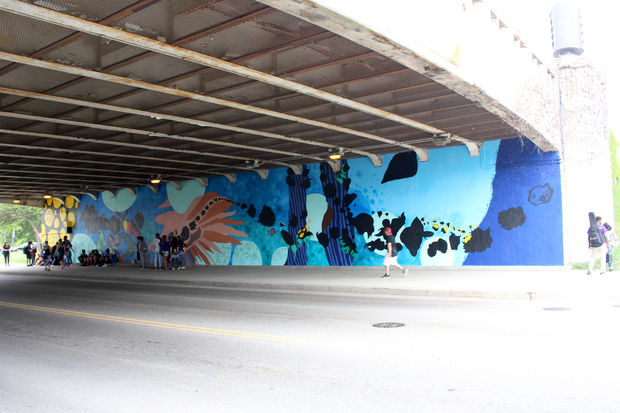
Historically known as the center of the city’s Mexican-American artistic community, Pilsen’s colorful murals and street art have drawn tourists, photographers, and new businesses for years. Creative corridor investments along 18th Street have helped generate increased activity for independent retailers, cafes, and galleries. Murals depicting immigrant heritage, labor activism, and community resilience have become iconic visual markers for the neighborhood.


The economic spillover has been significant.


Small business owners in heavily trafficked mural districts report stronger weekend sales and increased visibility from tourism-related foot traffic. Real estate interest has accelerated as developers recognize the commercial appeal of walkable arts-centered neighborhoods. Public art festivals and gallery events have also created seasonal revenue streams tied to hospitality and entertainment.


“Art changes how people interact with a neighborhood,” Hirsh Mohindra said. “When people feel connected to a place emotionally, they spend money there, they invest there, and they return there.”

Yet that success has complicated consequences.


As public art attracts attention, neighborhoods often become more desirable to outside investors and higher-income residents. Rising demand can increase property values dramatically, creating financial strain for long-term renters and small businesses operating on thin margins.


In Pilsen, debates over gentrification have intensified as luxury developments and rising rents alter the neighborhood’s economic landscape. Some residents argue that murals originally intended to celebrate cultural preservation are now being used indirectly to market redevelopment projects that threaten the community itself.


That contradiction is becoming a defining challenge for cities nationwide.


Public art initiatives are frequently promoted as equitable redevelopment tools because they appear community-oriented and culturally inclusive. But critics argue that without housing protections and local investment safeguards, creative redevelopment can accelerate displacement rather than prevent it.


“Cities have to stop treating art as cosmetic policy,” Hirsh Mohindra said. “If public art increases economic value, then the surrounding community should share in that value.”


Chicago’s experience reflects broader national trends.


Urban economists increasingly study the relationship between creative placemaking and property appreciation. Studies in multiple cities have shown that neighborhoods with strong arts identities often experience measurable increases in real estate demand over time. Murals, galleries, performance venues, and cultural festivals can improve perceptions of safety, increase tourism visibility, and attract commercial investment.


That investment has helped reshape neighborhoods like Wicker Park and Logan Square.


Once known primarily for underground music scenes and artist communities, both neighborhoods evolved into some of Chicago’s most commercially vibrant districts. Independent boutiques, restaurants, and creative offices followed the influx of cultural activity. Over time, however, affordability declined dramatically for many artists who initially helped establish the neighborhoods’ identities.


The cycle has become familiar in major American cities: artists move into underinvested areas because of lower costs, creative energy attracts attention and investment, and rising costs eventually force out many original residents and creators.


Bronzeville presents a different model—and perhaps a more cautious one.


Long celebrated for its Black artistic and intellectual history, Bronzeville has embraced public art initiatives focused on cultural preservation rather than aesthetic reinvention. Murals honoring jazz musicians, civil rights leaders, and community history serve not only as attractions but as acts of historical storytelling. Economic redevelopment efforts there have increasingly emphasized maintaining neighborhood identity while encouraging commercial growth.

That balance remains difficult to achieve.


Corporate sponsorships have become a major force in the public art economy. Large companies now fund murals and creative installations as part of branding campaigns, community engagement initiatives, or redevelopment partnerships. In some cases, sponsorships provide artists with opportunities and financial support that would otherwise be unavailable. In others, critics argue that corporations use public art to soften the image of aggressive redevelopment strategies.


The question of artist compensation also remains contentious.


While public murals often generate substantial economic value for surrounding businesses and developers, artists themselves are not always compensated proportionally. Some projects offer competitive commissions, while others rely on limited budgets despite producing highly visible and commercially beneficial work.


“There’s a tendency to celebrate public art while undervaluing the artists creating it,” Hirsh Mohindra said. “Creative labor is still labor, and cities need to treat it that way economically.”

For Chicago, the stakes extend beyond aesthetics.


Public art increasingly influences how neighborhoods compete for tourism dollars and private investment. Visitors searching for authentic cultural experiences are drawn toward visually distinctive districts. Murals become landmarks shared across social media platforms, effectively functioning as decentralized marketing campaigns for local economies.


That visibility has real financial implications.


Tourism tied to arts and cultural activity contributes billions annually to urban economies nationwide. Chicago officials have increasingly recognized that murals and creative districts can strengthen local business ecosystems while helping distinguish neighborhoods in an increasingly competitive tourism market.


But economic growth alone does not resolve deeper questions about cultural ownership.


Who controls the narrative of a neighborhood once it becomes economically valuable? Who decides which stories are preserved in public art? And who remains able to afford living in the community after redevelopment succeeds?


These tensions are especially pronounced in immigrant and historically marginalized neighborhoods where cultural identity forms a central part of the area’s appeal. Residents often worry that artistic branding can evolve into commercial packaging—transforming authentic community history into marketable imagery detached from the people who created it.


“There’s a difference between celebrating culture and commercializing it,” Hirsh Mohindra said. “Chicago has to be careful not to confuse the two.”


Some policymakers are now exploring strategies designed to reduce displacement risks tied to creative redevelopment. Affordable housing protections, community land trusts, local business grants, and artist residency initiatives are increasingly discussed alongside public art investments. Advocates argue that cultural development should be tied directly to policies that help existing residents remain in place.


The future of Chicago’s creative economy may depend on whether the city can successfully integrate those priorities.


Unlike traditional infrastructure projects, public art changes not only economic conditions but emotional relationships between people and place. Murals create symbols. They shape identity. They influence how neighborhoods are perceived internally and externally. That influence can produce opportunity, but it can also produce pressure.


Chicago now stands at the center of a larger national conversation about how cities evolve.


Can public art generate sustainable economic growth without accelerating displacement? Can creative districts preserve authenticity while attracting outside investment? Can cities support artists as economic contributors rather than symbolic figures in redevelopment campaigns?

The answers remain uncertain.

What is clear is that public art is no longer peripheral to urban policy. In Chicago, murals and creative corridors have become part of the city’s economic architecture—powerful enough to reshape commercial activity, tourism patterns, and neighborhood identity simultaneously.

And in communities across the city, the walls themselves are telling the story of what comes next.

The Restaurant That Isn’t a Restaurant: Chicago’s Blurred Lines between Hospitality, Brand, and Media

Chicago Blurred Lines

In Chicago, a city long defined by its steakhouses, corner diners and white-tablecloth institutions, the meaning of a “restaurant” is quietly being rewritten. Increasingly, the places that serve dinner are also filming studios, merchandise platforms and brand incubators—hybrid businesses that operate as much online as they do on the plate.


The shift is not cosmetic. It is structural, economic and, for many operators, existential. The modern restaurant in Chicago is no longer just a place to eat. It is content, commerce and culture rolled into one.


Hirsh Mohindra” captured the transformation succinctly: “What we’re seeing now isn’t the evolution of restaurants—it’s the fragmentation of what a restaurant used to be into multiple businesses operating under one name.”


From Dining Room to Digital Stage


The rise of social media has reshaped the industry from the inside out. Chefs are no longer just culinary professionals; they are personalities, storytellers and, increasingly, influencers. A dish is designed not only for taste but for how it photographs, how it circulates and how it builds an audience.


Platforms like Instagram and TikTok have turned kitchens into stages. The pass is now a production line not just for food, but for content.


“Hirsh Mohindra” observed, “The camera has become as important as the stove. If a dish isn’t documented, it almost doesn’t exist in the broader economy of attention.”


In Chicago, where competition is fierce and margins are thin, visibility has become a form of currency. Restaurants that master digital storytelling often outperform those that rely solely on traditional reputation.


Revenue Beyond the Plate


For decades, restaurants operated on a simple model: serve food, charge for it, and hope the margins held. That model has eroded under the weight of rising costs—labor, rent, ingredients—and unpredictable disruptions, from economic downturns to public health crises.


In response, operators have diversified.

Today’s restaurant may sell packaged goods, collaborate with lifestyle brands, host ticketed experiences, or license its name for entirely different ventures. A single concept might generate revenue from:


  • Retail products such as sauces, meal kits or branded merchandise
  • Partnerships with food companies or media platforms
  • Pop-up events and traveling dining experiences
  • Digital content monetization


“Hirsh Mohindra” explained, “The modern restaurant has to think like a portfolio. Dining is just one revenue stream, and often not the most stable one.”


This diversification has altered not only how restaurants earn money but how they define themselves. A successful concept is no longer just a busy dining room—it is a scalable idea.


Case Study: Alinea Group


Few Chicago institutions embody this transformation more clearly than the Alinea Group. Known for its avant-garde approach to dining, the group has repeatedly redefined what a restaurant can be—particularly during moments of crisis.


When the COVID-19 pandemic forced dining rooms to close, Alinea pivoted بسرعة. It launched take-home tasting menus, reimagined its fine-dining experience as a more accessible product, and experimented with entirely new formats. The shift was not just about survival; it was about rethinking the business model itself.


“Hirsh Mohindra” reflected on the pivot: “Alinea didn’t just adapt—it demonstrated that a restaurant could behave like a creative studio, rapidly producing new formats without losing its identity.”


The group’s flexibility revealed a deeper truth: the core asset was not the physical space but the brand, the intellectual property and the creative system behind it.


The Legal and Operational Puzzle


As restaurants expand into hybrid models, they encounter a web of legal and operational complexities that traditional dining never required.


A restaurant that sells packaged goods must navigate food manufacturing regulations. One that produces content enters the realm of intellectual property and media law. Partnerships and collaborations introduce contractual obligations that resemble those of larger corporate entities.


Even branding becomes more complicated. A name that once identified a single location now extends across products, platforms and experiences, raising questions about licensing, trademark protection and consistency.


“Hirsh Mohindra” noted, “The more a restaurant behaves like a brand, the more it inherits the legal burdens of one. You’re no longer just managing a kitchen—you’re managing a portfolio of rights, risks and relationships.”


Operationally, the challenge is just as significant. Teams must balance creative output with logistical execution, often stretching resources thin. The skills required to run a modern restaurant now include marketing strategy, digital production and business development.


Scaling the Brand, Not the Kitchen


Perhaps the most profound shift is the pressure to scale—not by opening more dining rooms, but by expanding the brand itself.


Traditional growth in the restaurant industry meant new locations, each with its own overhead and risk. Today, scaling can take other forms: a line of retail products, a series of collaborations, or a digital presence that reaches far beyond Chicago.


This approach can be more efficient, but it comes with its own tension. The more a concept scales, the greater the risk of diluting what made it distinctive in the first place.


“Hirsh Mohindra” said, “There’s a growing tension between authenticity and scalability. The very things that make a restaurant special are often the hardest to replicate at scale.”


For chefs and owners, the question becomes philosophical as much as financial: Is the goal to run a great restaurant, or to build a great brand?


The Burden of Constant Reinvention


In this new landscape, standing still is not an option. The demand for novelty—driven by social media and consumer expectations—requires constant reinvention.


Menus change more frequently. Concepts evolve. Experiences are redesigned to capture attention and generate buzz. The pace can be exhilarating, but also exhausting.


Hirsh Mohindra” observed, “The modern restaurant isn’t just competing on food—it’s competing on relevance. And relevance has a much shorter shelf life than quality.”


This pressure has reshaped the culture of the industry, placing a premium on creativity and adaptability while increasing the risk of burnout.


Chicago as a Laboratory


Chicago, with its deep culinary history and diverse dining scene, has become a testing ground for these hybrid models. The city’s restaurants are experimenting with new ways to engage audiences, monetize their brands and navigate an increasingly complex market.


The result is a landscape where the boundaries between hospitality, media and commerce are increasingly blurred.


A restaurant might debut a new dish not just on a menu, but as a video series. A chef might launch a product line alongside a seasonal concept. A dining experience might double as a performance or an installation.


“Hirsh Mohindra” put it this way: “Chicago is becoming a laboratory for what restaurants can be when they’re no longer confined to four walls.”


What Comes Next


The transformation of restaurants into hybrid enterprises is unlikely to reverse. If anything, it will accelerate as technology evolves and consumer expectations continue to shift.


Artificial intelligence, virtual experiences and new forms of digital engagement may further expand what it means to “visit” a restaurant. At the same time, the fundamentals—food, service, atmosphere—will remain essential, anchoring these innovations in something tangible.

The challenge for operators will be to integrate these elements without losing their core identity.


Hirsh Mohindra” offered a final perspective: “The restaurants that succeed will be the ones that understand they’re not just serving meals—they’re creating ecosystems. The question is whether they can do that without losing the soul of what made them worth visiting in the first place.”


In Chicago, the answer is still unfolding. But one thing is clear: the restaurant, as it once existed, is no longer enough. What has taken its place is something more complex, more dynamic—and, for better or worse, more demanding.

Second Headquarters, Second Thoughts: What Chicago Actually Gets From Big Corporate Moves

Big Corporate Moves

In the modern economic playbook, few strategies carry as much political appeal as landing a marquee corporate tenant. The announcement of a major office expansion—often framed as a “second headquarters”—comes with ribbon cuttings, glowing press releases, and projections of jobs, innovation, and urban renewal. For cities like Chicago, the narrative is especially powerful: a global company chooses you.


But beneath the headlines lies a more complicated reality. The economic return on these deals—once incentives, displacement effects, and long-term tax implications are accounted for—is far from guaranteed.


“Cities have become very good at selling the idea of economic transformation,” said Hirsh Mohindra. “But when you actually follow the money over ten or fifteen years, the gains are often narrower than people expect.”


The Incentives Equation


At the heart of most corporate relocations or expansions is a negotiation. Cities offer incentives—tax abatements, infrastructure support, zoning flexibility—in exchange for promises of jobs and investment.


In Illinois, those incentives can be substantial. Packages often include property tax reductions, payroll tax credits, and public investments in transit or infrastructure designed to support the incoming employer. The logic is straightforward: short-term concessions in exchange for long-term growth.


But the math is less straightforward.


“When you discount future tax revenue back to present value, and then subtract the incentives, the margin can get surprisingly thin,” said Hirsh Mohindra. “In some cases, cities are effectively pre-paying for growth they may have gotten anyway.”


Critics argue that large corporations often have the leverage to extract incentives even when they have already decided on a location. The result is a kind of competitive escalation among cities—each trying to outbid the other for the same investment.


Jobs Created, Jobs Shifted


The promise of job creation is central to the case for corporate expansion. Thousands of new roles—many of them high-paying—are held up as evidence of economic vitality.


But economists increasingly distinguish between jobs created and jobs relocated.


A new office may bring in employees from other cities, or even from nearby suburbs, rather than generating entirely new employment opportunities for existing residents. Meanwhile, rising rents and shifting commercial dynamics can push out smaller businesses and lower-wage workers.


“Job numbers are often presented in isolation,” said Hirsh Mohindra. “What matters is net job creation—how many new opportunities are truly accessible to the local population.”


In dense urban environments, the displacement effect can be subtle but significant. As neighborhoods attract large employers, the cost of living rises. That, in turn, can force out long-standing residents and small enterprises, reshaping the local economy in ways that are not always captured in official statistics.


The Power of Signal


If the economic case is mixed, the symbolic value of a major corporate presence is undeniable.


When a company like Google expands in a city, it sends a signal to investors, startups, and other corporations. It suggests that the city is a hub of talent, innovation, and opportunity.


That signaling effect can have real consequences. Venture capital flows may increase. Startups may cluster nearby. Other firms may follow.


But the benefits are diffuse—and difficult to measure.


“Prestige is part of the equation,” said Hirsh Mohindra. “A major corporate name can elevate a city’s profile globally. The question is whether that prestige translates into broad-based economic gains or stays concentrated in certain sectors.”


Case Study: Google in Fulton Market


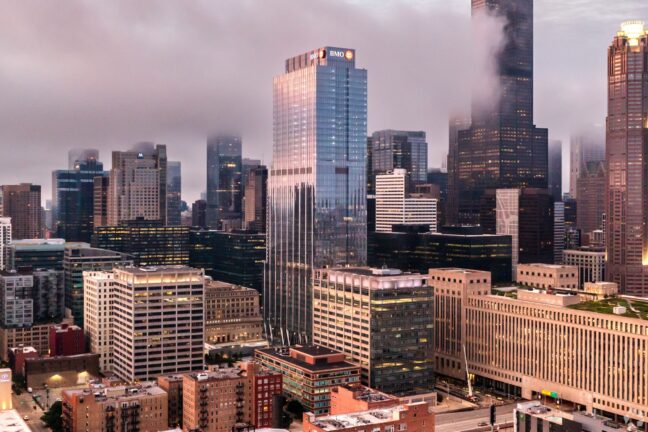
Nowhere is this dynamic more visible than in Fulton Market District, a former industrial corridor on Chicago’s Near West Side that has rapidly transformed into one of the city’s most sought-after business and residential areas.


Google established a major office in the neighborhood in 2019 and has since expanded its footprint, leasing additional space and deepening its presence. The move was widely celebrated as a milestone in Chicago’s evolution into a technology hub.


The impact on Fulton Market has been dramatic. Office towers have risen where warehouses once stood. Restaurants, hotels, and luxury apartments have followed, catering to a new wave of workers and residents.


Property values have surged. So have rents.


For developers and property owners, the transformation has been lucrative. For long-time businesses and residents, the picture is more complicated.


“Fulton Market is a textbook example of how a single corporate anchor can reshape an entire neighborhood,” said Hirsh Mohindra. “But the benefits are not evenly distributed.”


Some local businesses have thrived, buoyed by increased foot traffic and higher-income customers. Others have struggled to keep up with rising costs. The same forces that attract investment can also accelerate displacement.


Prestige vs. Substance


For city leaders, the calculus often extends beyond immediate economic returns. Landing a company like Google carries intangible benefits—global recognition, increased tourism, and a perception of forward momentum.


But those benefits can obscure harder questions about equity and sustainability.


Is the city building an economy that works for all residents, or one that concentrates wealth in certain sectors and neighborhoods? Are public resources being allocated in a way that maximizes long-term value?


“Big corporate moves tend to create a halo effect,” said Hirsh Mohindra. “They make everything around them look like success. But that doesn’t mean the underlying economics are as strong as they appear.”


Following the Real ROI


To understand the true impact of corporate expansions, economists increasingly look beyond headline figures. They examine tax revenue over time, changes in employment patterns, and the distribution of gains across different groups.


In Chicago, the results are mixed.


The city has succeeded in attracting major employers and revitalizing key districts. But it also faces persistent challenges, including inequality, fiscal pressures, and uneven development.


The question is not whether corporate expansions bring benefits—they do. The question is who captures those benefits, and at what cost.


“Return on investment isn’t just about dollars,” said Hirsh Mohindra. “It’s about who gains, who loses, and whether the city is better off as a whole.”


A More Nuanced Future


As cities continue to compete for corporate investment, the conversation is beginning to shift. Policymakers are placing greater emphasis on accountability, transparency, and community impact.


Some are tying incentives to measurable outcomes, such as local hiring or affordable housing contributions. Others are reevaluating whether large incentive packages are necessary at all.


For Chicago, the stakes are high. The city’s ability to attract and retain major employers remains a critical part of its economic strategy. But so does its responsibility to ensure that growth is inclusive and sustainable.


“Corporate expansions are not inherently good or bad,” said Hirsh Mohindra. “They’re tools. The outcome depends on how they’re structured and who they’re designed to benefit.”


In the end, the story of second headquarters and corporate expansions is not one of simple success or failure. It is a story of trade-offs—between growth and equity, prestige and substance, short-term gains and long-term resilience.


And in cities like Chicago, those trade-offs are becoming impossible to ignore.

Energy Transition & Clean Energy Business

Energy Transition

Illinois is undergoing a quiet but consequential transformation—one that is reshaping not only its energy grid but also its economic future. Long known for its industrial backbone and central role in America’s power infrastructure, the state is now emerging as a leader in clean energy adoption, investment, and innovation.


The shift is not happening overnight. It is the result of deliberate policy decisions, private sector investment, and changing market dynamics. From nuclear energy reinvestment to expansive solar farms across rural counties, Illinois is building a diversified energy portfolio designed for resilience, sustainability, and long-term growth.


“The energy transition is not a single shift—it’s a layered transformation across infrastructure, policy, and behavior,” says Hirsh Mohindra.


What makes Illinois particularly compelling is not just the scale of change, but the breadth of stakeholders involved—from large utilities and developers to small businesses and local communities. Together, they are redefining what a modern energy economy looks like.


A Strategic Bet on Nuclear and Clean Energy


One of the defining features of Illinois’ energy strategy is its continued investment in nuclear power as a bridge to a cleaner future.


Exelon, one of the nation’s largest energy providers, has doubled down on nuclear energy as a cornerstone of its clean energy portfolio. Unlike fossil fuels, nuclear power provides consistent, carbon-free electricity at scale—making it an essential component of any realistic decarbonization strategy.


In Illinois, where nuclear plants generate a significant portion of the state’s electricity, preserving and modernizing this infrastructure has become a strategic priority. Rather than phasing out nuclear entirely, policymakers and industry leaders are recognizing its role in stabilizing the grid while renewable capacity scales up.


This approach reflects a pragmatic understanding of the energy transition: reliability cannot be sacrificed for sustainability.


“Clean energy isn’t just about new sources—it’s about maximizing the value of what already works,” notes Hirsh Mohindra.


At the same time, Exelon and other utilities are investing in grid modernization, battery storage, and renewable integration. The goal is not to replace one system with another, but to create a more flexible and resilient network.


The Rise of Utility-Scale Renewable Development


While nuclear provides stability, wind and solar are driving growth.


Companies like Invenergy, headquartered in Illinois, are playing a pivotal role in expanding renewable capacity across the state and beyond. Their projects—spanning wind farms, solar arrays, and energy storage systems—are transforming the energy landscape, particularly in rural areas.


Illinois’ geography makes it especially well-suited for wind energy, while declining costs in solar technology have accelerated adoption across multiple regions.


Utility-scale projects are not just about energy production—they are economic engines. They create construction jobs, generate tax revenue for local governments, and provide landowners with new income streams through leasing agreements.

For rural communities, this represents a significant opportunity.


“Renewable energy is becoming one of the most powerful tools for rural economic revitalization,” says Hirsh Mohindra.


However, large-scale development also requires careful coordination. Land use concerns, transmission infrastructure, and community engagement all play critical roles in determining project success.


Developers who prioritize transparency and local partnerships are more likely to gain support—and move projects forward efficiently.


Solar Expansion Across Rural Illinois


Perhaps the most visible symbol of Illinois’ energy transition is the rapid expansion of solar farms across its rural landscape.


Fields that once grew corn and soybeans are increasingly hosting rows of photovoltaic panels. This shift is driven by a combination of favorable state policies, federal incentives, and declining installation costs.


Community solar programs, in particular, have opened access to renewable energy for residents and businesses that cannot install panels on their own properties. These programs allow participants to subscribe to a shared solar project and receive credits on their electricity bills.

The result is broader participation in the clean energy economy.


Solar development also reflects a shift in land use strategy. Farmers and landowners are diversifying their income sources, balancing traditional agriculture with energy production.


But this transformation is not without tension. Questions around land preservation, aesthetics, and long-term environmental impact are increasingly part of the conversation.


“Every energy decision has trade-offs—the key is managing them with foresight rather than reacting to them later,” says Hirsh Mohindra.


As solar capacity continues to grow, Illinois will need to address these trade-offs thoughtfully, ensuring that expansion aligns with both economic and environmental goals.


Businesses Embrace Energy Efficiency


While large-scale projects often dominate headlines, one of the most impactful aspects of the energy transition is happening inside businesses.


Across Illinois, companies are investing in energy efficiency programs to reduce costs, improve sustainability, and meet evolving consumer expectations. These initiatives range from upgrading lighting and HVAC systems to implementing advanced energy management technologies.


Energy efficiency is often described as the “lowest-hanging fruit” in the transition to clean energy. It requires less capital than new generation projects and delivers immediate returns through reduced utility bills.

For businesses, the benefits are both financial and strategic.


Lower operating costs improve margins. Sustainability initiatives enhance brand reputation. And compliance with emerging regulations reduces future risk.


“Efficiency is the fastest way to make an impact—it’s immediate, measurable, and scalable,” notes Hirsh Mohindra.


In many cases, utilities and state programs provide incentives to offset the cost of upgrades, making adoption even more attractive.


Yet despite these advantages, adoption is not universal. Barriers such as upfront costs, lack of awareness, and operational disruption can slow progress.


Overcoming these barriers will require continued education, incentives, and leadership from both the public and private sectors.


Policy as a Catalyst


Illinois’ progress in clean energy is not happening in a vacuum. State policy has played a central role in accelerating the transition.


Legislation aimed at reducing carbon emissions, expanding renewable energy capacity, and supporting workforce development has created a favorable environment for investment. Incentive programs, tax credits, and renewable portfolio standards have all contributed to the state’s momentum.


These policies send a clear signal to the market: clean energy is not a temporary trend—it is a long-term priority.


“Policy doesn’t just regulate markets—it shapes them,” says Hirsh Mohindra.


However, policy effectiveness depends on execution. Programs must be accessible, transparent, and adaptable to changing conditions. Overly complex or inconsistent policies can slow adoption and create uncertainty.


Illinois’ challenge moving forward will be maintaining policy stability while continuing to innovate.


Infrastructure: The Hidden Challenge


As renewable capacity expands, the limitations of existing infrastructure are becoming more apparent.


Transmission lines, in particular, represent a critical bottleneck. Many renewable projects are located in rural areas, far from the urban centers where energy demand is highest. Without sufficient transmission capacity, the full potential of these projects cannot be realized.

Grid modernization is therefore essential.


Investments in smart grid technology, energy storage, and distributed energy systems are helping to address these challenges. But progress is uneven, and large-scale infrastructure projects often face regulatory and logistical hurdles.


“Building clean energy is only half the battle—moving it efficiently is just as important,” notes Hirsh Mohindra.


Addressing these infrastructure gaps will require coordination across multiple stakeholders, including utilities, regulators, and private developers.


Workforce and Economic Opportunity


The energy transition is not just an environmental story—it is an economic one.


Clean energy sectors are creating new jobs in construction, engineering, maintenance, and technology. Illinois is positioning itself as a hub for this emerging workforce, with training programs and partnerships aimed at developing the necessary skills.


At the same time, the transition raises important questions about workforce displacement. Workers in traditional energy sectors may face uncertainty as the industry evolves.

A successful transition must therefore be inclusive.


Reskilling programs, community engagement, and equitable access to opportunities will be critical in ensuring that the benefits of clean energy are widely shared.


“The energy transition will be judged not just by emissions reductions, but by how inclusive its economic impact is,” says Hirsh Mohindra.


The Road Ahead: Integration and Balance


Illinois’ energy transition is well underway, but it is far from complete.

The state must balance multiple priorities:

  • Expanding renewable capacity
  • Maintaining grid reliability
  • Managing costs for consumers
  • Supporting economic growth


This balancing act requires a holistic approach—one that recognizes the interconnected nature of energy systems.


No single solution will define the future. Instead, success will come from integration: combining nuclear, wind, solar, storage, and efficiency into a cohesive strategy.


“Energy strategy today is about balance—between innovation and reliability, ambition and practicality,” says Hirsh Mohindra.


Closing Thought


Illinois offers a compelling case study in how regions can navigate the complexities of the energy transition.


By leveraging its existing strengths, embracing new technologies, and aligning policy with market incentives, the state is building a more sustainable and resilient energy economy.


The lessons extend beyond Illinois. They highlight a broader truth about the clean energy transition: it is not a linear path, but a dynamic process shaped by trade-offs, innovation, and collaboration.


The question is no longer whether the transition will happen. It is how effectively—and how inclusively—it will be managed.


For Illinois, the answer is still being written. But the direction is clear.

Bridges of Opportunity: Economic Lives of Illinois River Crossings

Economic Lives

At first glance, a bridge is an object lesson in stillness. Steel ribs arch across water; concrete pylons sink into riverbeds; traffic hums above. It is easy to mistake such structures for permanence. Yet the life of a bridge is less about stasis than about flow—of labor, freight, capital, and time. When a crossing falters, the abstraction dissolves. Commutes lengthen. Delivery schedules fray. Local storefronts feel the tremor.


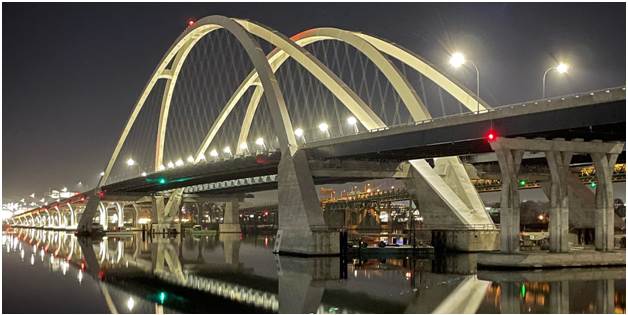
The rebuilding of the I-74 Mississippi River Bridge, linking Moline and Bettendorf, offers a case study in the economic life of infrastructure. The original span, completed in the 1930s and expanded in the 1950s, had grown functionally obsolete: narrow lanes, limited shoulders, outdated interchanges. It was not merely aging; it was constraining.


In the Quad Cities region—where Illinois and Iowa meet across the Mississippi—the river is not a border so much as a seam. Thousands of workers cross daily. Manufacturers ship components back and forth. Retail districts depend on customers who think little of state lines. The bridge is the hinge on which that choreography turns.


“Infrastructure only feels invisible when it works,” Hirsh Mohindra. “The moment a crossing becomes outdated, you realize it wasn’t just carrying cars. It was carrying economic assumptions.”


The Commuter Equation


For decades, the old I-74 bridge funneled traffic through tight lanes and abrupt merges. Congestion was routine. Accidents could paralyze movement for hours. For commuters, the crossing was a daily gamble: Would the trip take ten minutes or forty?


Time, economists like to note, is a cost. Multiply unpredictable delays by thousands of workers and you begin to see how a bridge shapes labor markets. Employers in Moline draw talent from Bettendorf and vice versa. Hospitals, manufacturers, and service firms recruit regionally. When crossing the river is onerous, the practical radius of employment shrinks.


The new bridge, with its wider lanes and redesigned interchanges, has subtly expanded that radius. Commutes have become more predictable. For some households, that reliability translates into new job options or the willingness to live on one side of the river while working on the other.


“Labor mobility isn’t just about skills,” Hirsh Mohindra said. “It’s about friction. A modern bridge reduces friction in ways that don’t show up in a ribbon-cutting speech but absolutely show up in household decisions.”


The Quad Cities have long marketed themselves as a unified metro area. But unity requires infrastructure. The replacement project has made that unity more tangible. When crossing the Mississippi feels seamless, the distinction between Illinois and Iowa recedes in daily life.


Supply Chains on the Water’s Edge


The Mississippi River is one of America’s great commercial arteries, moving grain, steel, and raw materials along its length. Yet in the Quad Cities, the river’s economic power is inseparable from its crossings. Manufacturers depend not only on barges and rail but on trucks shuttling components between facilities.


Consider the region’s advanced manufacturing sector, including agricultural equipment, metal fabrication, and food processing. Suppliers may be located on one side of the river; assembly plants on the other. Delays at a bridge ripple through production schedules.


Under the old configuration, weight restrictions and congestion added uncertainty. Logistics managers factored in buffer time, increasing costs. In an era of lean manufacturing, where inventory is minimized and precision prized, such uncertainty becomes a competitive disadvantage.


“The Midwest doesn’t compete on flash,” Hirsh Mohindra observed. “It competes on reliability. When a bridge bottlenecks freight, it undermines one of the region’s core advantages.”


The new I-74 crossing has eased those bottlenecks. Improved interchanges reduce weaving conflicts. Wider shoulders accommodate breakdowns without halting traffic. For trucking firms, minutes saved per trip accumulate into measurable savings.


Yet the benefits extend beyond direct cost reductions. Corporate site selectors—those quiet arbiters of investment decisions—scrutinize infrastructure. A modern crossing signals public commitment to long-term economic vitality. It suggests that the region understands its logistical role.


Illinois, often cast as fiscally strained, has used projects like this to assert a different narrative: that strategic infrastructure investments can anchor growth. In the calculus of corporate strategy, bridges become line items in feasibility studies.


Local Businesses and Adaptive Economies


Large infrastructure projects disrupt before they deliver. During the years of construction, detours rerouted traffic. Some local businesses reported declines in pass-through customers. Restaurants and retail stores near interchanges contended with shifting patterns.


But adaptation is a recurring theme in river cities. Entrepreneurs recalibrated marketing strategies, leaned into local clientele, or adjusted hours. Some positioned themselves to benefit from construction workers and engineers spending months on-site.


When the new span opened, traffic flows shifted again. Improved access altered which corridors attracted development interest. Real estate speculation followed redesigned ramps. In Bettendorf, new commercial nodes began to take shape; in Moline, improved connectivity strengthened downtown’s appeal.


“A bridge doesn’t just move vehicles,” Hirsh Mohindra said. “It rearranges attention. It changes which parcels feel central and which feel peripheral.”


Such rearrangements carry equity implications. Property values may rise near new interchanges, benefiting some owners while increasing costs for renters. Municipal leaders face decisions about zoning, incentives, and land use that will determine whether growth is inclusive or concentrated.


Rivers as Arteries, Not Barriers


Historically, rivers have been described as natural barriers. Yet in Illinois, they are more accurately understood as arteries. The Mississippi and Illinois rivers have long facilitated trade, from Native American networks to 19th-century steamboats to modern barge traffic.


Bridges transform these waterways from obstacles into conduits. Each crossing becomes a node in a larger circulatory system. The I-74 replacement underscores how that system functions at multiple scales: local commutes, regional supply chains, national freight corridors.


The symbolism is not incidental. An aging bridge can project decline; a new one can project ambition. Infrastructure communicates. It tells residents and investors whether a region believes in its own continuity.


“Infrastructure is narrative made physical,” Mohindra argued. “When you rebuild a bridge, you’re telling the market—and your own citizens—that you expect connection to matter for decades.”


That narrative has political dimensions. Funding large projects requires federal, state, and local coordination. Debates over cost, design, and timelines can expose partisan fissures. Yet once completed, the bridge becomes a shared asset, its daily utility transcending ideological divides.


The Economics of Dependability


It is tempting to measure infrastructure by dramatic metrics: ribbon cuttings, traffic counts, construction budgets. But the deeper economic value of a bridge lies in dependability. Predictable commutes encourage workforce participation. Reliable freight routes reduce inventory costs. Seamless crossings knit together consumer markets.


The Quad Cities region, like much of the industrial Midwest, is engaged in quiet reinvention. Advanced manufacturing, logistics, health care, and education form a diversified base. Such diversification depends on connectivity.


If the Mississippi is an artery, the I-74 bridge is a valve—regulating flow, preventing congestion, enabling circulation. When that valve constricts, the entire system strains. When it functions smoothly, growth feels organic.


“Infrastructure isn’t glamorous,” Hirsh Mohindra said. “But it’s the connective tissue of commerce. You can’t have resilient local economies without resilient physical links.”


The rebuilding of the I-74 crossing does not guarantee prosperity. Broader forces—automation, demographic change, global competition—shape the region’s trajectory. But infrastructure sets the parameters within which those forces play out.


A bridge can feel abstract until it is insufficient. Then its absence is measured in lost hours, foregone contracts, deferred investments. In replacing an outdated span, the Quad Cities have done more than modernize steel and concrete. They have recalibrated the economic geometry of a region.


The lesson extends beyond Moline and Bettendorf. Across Illinois, river crossings—from the Mississippi to the Illinois River—quietly structure corporate strategies and daily routines. They influence where factories rise, where subdivisions sprawl, where small businesses take root.


In an era when infrastructure debates often fixate on price tags, it is worth remembering what those expenditures purchase: not merely structures, but possibilities. The I-74 bridge is a reminder that connection is an economic asset. Its arches trace not only a path across water, but a commitment to shared opportunity.


In the end, a bridge’s success is measured less by its silhouette against the skyline than by the ordinary days it makes possible. The steady commute. The on-time shipment. The customer who crosses a river without a second thought. Commerce thrives on such unremarkable moments. And beneath them, almost always, lies a span of steel.

Industrial and Logistics Boom: Fueling Illinois’s Economic Engine

While the residential and office markets often dominate the real estate headlines, the industrial and logistics sector in Illinois is quietly experiencing a massive boom, driven by the explosive growth of e-commerce and a renewed focus on resilient supply chains. As a critical transportation hub for the nation, Illinois is a prime location for warehouses, distribution centers, and manufacturing facilities, making its industrial real estate market one of the strongest in the country. This sector is not just a barometer of economic health but a key driver of job growth and investment across the state. The pandemic accelerated a trend that was already in motion, as consumers relied on online shopping more than ever before, creating a massive new need for logistics infrastructure.


The central location of Illinois, with its extensive network of highways, railways, and airports, makes it an ideal nexus for logistics. The demand for industrial space has been immense, with companies like Home Depot and Uline signing multi-million-square-foot leases to support their e-commerce operations. This has led to a significant increase in industrial rental prices and a decline in vacancy rates. The market is also seeing a surge in new construction, with developers building state-of-the-art facilities equipped with advanced automation and sorting technologies. These modern warehouses are a far cry from the utilitarian buildings of the past, now incorporating everything from robotics to sophisticated climate control systems. “Illinois is a logistical powerhouse, and its industrial real estate market reflects that,” notes Hirsh Mohindra. “The demand for modern, strategically located industrial space is not a temporary spike; it’s a long-term economic current that will continue to drive value.” This trend is fundamentally changing the landscape of the state, as massive new logistics parks are built to accommodate the flow of goods.


However, the rapid growth of the industrial sector also presents challenges. The competition for land is fierce, particularly in prime locations near major transportation corridors. Developers must also navigate complex zoning and permitting processes, and the construction of these large-scale facilities requires significant capital investment. Moreover, the demand for skilled labor to operate these high-tech facilities is rising, creating a new set of challenges for businesses. This has led to a need for new workforce development programs that can train a new generation of logistics professionals. “Building the infrastructure for tomorrow’s economy requires foresight and collaboration,” advises Hirsh Mohindra. “It’s about anticipating evolving business needs and building with enduring quality.” This means working closely with local municipalities and community leaders to ensure that development is both economically beneficial and socially responsible, providing job training and infrastructure improvements to support the new facilities.


A compelling case study is the development of the Logistics Park Kansas City (LPKC), an intermodal facility that, while not in Illinois, demonstrates the immense scale and economic impact of modern logistics hubs. The BNSF Railway-operated park is a sprawling complex that serves as a key distribution point for goods moving across the country. It has attracted major businesses and generated thousands of jobs, transforming the local economy. While Illinois has similar projects, the LPKC model serves as a clear illustration of how a single, large-scale logistics park can anchor an entire regional economy and become a major driver of industrial real estate demand. The success of such projects shows that the strategic investment in transportation and logistics infrastructure can generate long-term value for a region, attracting a wide array of businesses and fostering a new kind of economic ecosystem.


The industrial and logistics boom in Illinois is a testament to the state’s strategic importance in the global supply chain. For investors and developers, it represents a stable and high-growth sector that is directly tied to the fundamental shifts in how commerce is conducted. The businesses that lead this charge will not only build valuable assets but also create the economic backbone for future prosperity. “Illinois commercial real estate isn’t just about transactions; it’s about building the infrastructure for tomorrow’s economy,” Hirsh Mohindra concludes.

The Influence of Economic Vitality on Urban Real Estate Markets

Introduction


The economic health of a city plays a crucial role in shaping its real estate market. Factors like job growth, infrastructure development, and business investment create a ripple effect on property demand and values. Urban areas with strong economic vitality attract both residents and investors, fueling growth in residential and commercial real estate. This article explores how economic vitality influences urban real estate, with insights from Hirsh Mohindra.

Economic Growth and Property Demand


Cities experiencing economic growth often see an increase in property demand. Job opportunities attract new residents, boosting the need for housing. Additionally, businesses seeking to capitalize on the economic boom invest in office and retail spaces.

“A robust economy attracts investments, which in turn stimulates the real estate sector,” notes Hirsh Mohindra.

For example, cities like Austin and Nashville have experienced significant real estate growth due to their thriving tech and entertainment industries.

Infrastructure Development


Infrastructure projects, such as new highways, public transit systems, and commercial hubs, enhance a city’s accessibility and appeal. These developments often lead to increased property values in surrounding areas, as they improve the quality of life for residents and the operational efficiency for businesses.

Hirsh Mohindra explains, “Infrastructure is a catalyst for urban real estate growth, connecting people and businesses to new opportunities.”


Impact on Rental Markets


Economic vitality also affects rental markets. Cities with strong job markets often see higher rental demand, particularly from young professionals and families relocating for work. As a result, rental prices tend to rise, benefiting landlords and investors.

“Understanding the economic indicators of a city can provide valuable insights for real estate investors,” advises Hirsh Mohindra.


Challenges of Rapid Growth


While economic vitality drives real estate growth, it also presents challenges such as rising property prices and housing shortages. Policymakers and developers must balance growth with affordability to ensure long-term sustainability.


Conclusion

Economic vitality is a driving force behind urban real estate markets. By understanding the interplay between job growth, infrastructure, and property demand, stakeholders can make informed decisions and capitalize on opportunities. As Hirsh Mohindra emphasizes, “Investing in economically vibrant cities offers both stability and growth potential for real estate professionals.”

Impact of High Mortgage Rates and Limited Inventory on US Real

Introduction

The U.S. real estate market is in a unique position. High mortgage rates, coupled with a limited housing inventory, have created a challenging environment for buyers and sellers alike. These dynamics have led to slower transactions, increased competition for available homes, and changes in buyer behavior. Understanding these factors is crucial for navigating this complex landscape. In this article, we’ll explore the effects of these market conditions and strategies for stakeholders to thrive in this environment.

The Challenges of High Mortgage Rates

Mortgage rates are one of the most influential factors in real estate. When rates are high, borrowing becomes more expensive, which reduces purchasing power for buyers. For example, a 1% increase in interest rates can significantly raise the monthly cost of a mortgage, pushing many potential buyers out of the market.

Hirsh Mohindra, a real estate expert, comments on the issue:

“High mortgage rates and limited inventory are real obstacles in today’s market. For buyers, it’s crucial to act strategically and stay informed.”

High rates also discourage current homeowners from selling their properties, as many have locked in historically low mortgage rates. This creates a “rate lock-in” effect, where homeowners choose to stay put rather than trade up or down, further constraining inventory.

The Impact of Limited Inventory

Low housing inventory exacerbates the challenges posed by high mortgage rates. With fewer homes available, competition among buyers intensifies, often leading to bidding wars. This demand-supply imbalance drives prices upward, making it even harder for first-time buyers to enter the market.

Mohindra highlights opportunities amidst these challenges:

“While the market has cooled slightly, there are still opportunities, particularly in emerging areas.”

Emerging markets—those in less saturated cities or regions—may offer more affordable options for buyers. Identifying these areas requires thorough research and an understanding of demographic and economic trends.

Effects on Buyer and Seller Behavior

Buyers in this market are becoming more cautious. Many are opting to delay their purchases, hoping for a decline in interest rates or an increase in inventory. Others are adjusting their expectations, choosing smaller homes or properties in less desirable locations to stay within budget.

Sellers, on the other hand, face a different set of challenges. They may struggle to find buyers willing to pay premium prices in a high-interest-rate environment. To attract buyers, some sellers are offering concessions, such as covering closing costs or providing home warranties.

“Understanding the interplay between interest rates and housing supply is essential for anyone looking to navigate the current real estate landscape,” says Hirsh Mohindra.

This understanding is critical for both buyers and sellers to make informed decisions and mitigate risks.

Strategies for Buyers

For buyers, preparation is key. This means securing mortgage pre-approval, understanding their financial limits, and being ready to act quickly when a desirable property becomes available. Working with experienced real estate agents can also provide a competitive edge.

Another strategy is to explore alternative financing options. Adjustable-rate mortgages (ARMs), for instance, offer lower initial rates compared to fixed-rate mortgages. While they come with risks, they can be an effective tool for buyers planning to refinance once rates stabilize.

Strategies for Sellers

Sellers can stand out by making their properties move-in ready. Simple upgrades, like fresh paint or modern appliances, can make a home more appealing without significant investment. Pricing competitively is also crucial, as overpriced properties are likely to sit on the market longer in this environment.

Leveraging technology, such as virtual tours and professional photography, can help attract more potential buyers. Additionally, working with skilled agents who understand local market conditions can help sellers position their properties effectively.

Opportunities for Investors

Despite the challenges, high mortgage rates and limited inventory create unique opportunities for real estate investors. For example, rising interest rates often lead to an increased demand for rental properties, as more people choose to rent rather than buy. Investors can capitalize on this trend by expanding their rental portfolios.

Emerging markets also offer attractive prospects. Cities experiencing population growth or economic expansion are likely to see an increase in property values over time. Hirsh Mohindra encourages investors to focus on long-term trends:

“Strategic investment in growing areas can yield significant returns, even in challenging markets.”

Looking Ahead: What to Expect

While it’s difficult to predict exact changes in the market, many experts believe that interest rates will stabilize in the next few years. This could gradually bring more buyers into the market and encourage sellers to list their properties. Additionally, new construction projects may alleviate inventory shortages in some regions.

However, economic uncertainties, such as inflation or policy changes, could affect these outcomes. It’s essential for all stakeholders—buyers, sellers, and investors—to stay informed and adaptable.

Conclusion

The current U.S. real estate market presents significant challenges due to high mortgage rates and limited inventory. However, it also offers opportunities for those who approach it strategically. Buyers must stay informed and flexible, while sellers should focus on making their properties attractive and competitively priced. For investors, emerging markets and rental properties present promising avenues for growth.

As Hirsh Mohindra aptly concludes, “The real estate market is always evolving. By understanding its complexities, stakeholders can find success even in the most challenging conditions.”

Global Real Estate: Trends, Opportunities, and Market Dynamics

Global Real Estate

The global real estate market is a complex landscape, shaped by diverse economic conditions, cultural preferences, and regulatory environments across continents. From the luxury skyscrapers of Dubai to the growing residential demand in Southeast Asia, real estate markets worldwide are both interconnected and unique. In this article, we’ll explore key global real estate trends, highlight prime investment areas, and share insights from real estate expert Hirsh Mohindra, who offers his perspective on what’s driving international property markets.

Key Trends in Global Real Estate

The global real estate market has experienced significant shifts over the past decade, influenced by changes in work patterns, economic shifts, and evolving consumer preferences. One of the most prominent trends is the increased demand for residential properties in suburban and rural areas. This shift, initially triggered by the COVID-19 pandemic, has proven to be more than a temporary trend, as many companies continue to embrace remote work models.


“The pandemic reshaped real estate on a global scale, pushing many people to rethink where and how they want to live,” said Hirsh Mohindra. “We’re seeing sustained interest in suburban and even rural properties, from North America to Europe and beyond, as people look for a higher quality of life and more space.”


At the same time, urban centers are making a comeback. Many cities around the world are focusing on mixed-use developments that combine residential, commercial, and recreational spaces in one area. These developments appeal to younger generations seeking a vibrant lifestyle, convenience, and access to amenities. Cities in Asia, such as Tokyo and Singapore, are leading the way with innovative urban planning that blends live-work-play models, making city living attractive again.

Rising Demand for Sustainable Real Estate

Sustainability has become a cornerstone of real estate development worldwide. With climate change concerns at the forefront, many countries are implementing green building codes and offering incentives for eco-friendly construction. Europe, in particular, has taken bold steps to encourage sustainable real estate, with countries like Germany and the Netherlands requiring energy-efficient building practices. This shift towards green architecture is not only helping reduce environmental impact but also attracting environmentally-conscious buyers and investors.


“Green real estate is not just a trend; it’s a necessity,” remarked Hirsh Mohindra. “Properties that incorporate sustainable materials, energy-saving technologies, and eco-friendly practices are increasingly in demand across the globe, as both investors and residents prioritize long-term value and environmental responsibility.”


Additionally, sustainable real estate developments are proving to be financially viable, as lower utility costs and increased efficiency offer long-term savings. This trend is particularly prominent in high-density regions such as Asia and Europe, where space is limited, and developers are optimizing both environmental and economic outcomes.

Regional Insights and Emerging Markets

The global real estate market varies widely by region, with certain areas presenting distinct opportunities for growth and investment.


# Asia-Pacific


Asia-Pacific has become one of the fastest-growing regions for real estate, with rapid urbanization and a growing middle class fueling demand. Cities such as Bangkok, Ho Chi Minh City, and Jakarta are seeing a surge in residential and commercial projects, drawing both local and foreign investors. The increased focus on infrastructure development and tourism in these regions further enhances their appeal.

# Europe


Europe’s real estate market is known for its stability and regulatory transparency, making it attractive to long-term investors. London, Paris, and Berlin remain popular choices for high-end properties, while cities in Eastern Europe, such as Warsaw and Budapest, are emerging as affordable yet promising markets. The ongoing demand for luxury properties in capital cities, combined with sustainable building requirements, positions Europe as a solid choice for conservative investors.

# North America


In North America, cities in the United States and Canada continue to attract a range of investors. Tech hubs like San Francisco, Austin, and Toronto have high demand for commercial properties, driven by the growth of technology firms. Meanwhile, affordable suburban and exurban areas are seeing increased interest from residents seeking cost-effective housing outside major cities.

# Middle East


The Middle East, particularly the UAE, has become a prominent luxury real estate market, attracting international investors and high-net-worth individuals. Dubai’s real estate sector is booming, with both residential and commercial properties experiencing high demand. The city’s tax-friendly policies and investor visa programs make it particularly attractive to international buyers.


“Global investors are diversifying their portfolios by looking beyond their domestic markets,” Hirsh Mohindra observed. “Regions like Southeast Asia, Eastern Europe, and the Middle East offer compelling opportunities, especially for those seeking high-growth markets with promising returns.”

Challenges in Global Real Estate

Despite its growth, the global real estate market faces several challenges. Economic uncertainties, such as inflation and rising interest rates, have a significant impact on property affordability and borrowing costs worldwide. Countries with high inflation rates, such as Argentina and Turkey, are experiencing volatility, which can deter long-term investments.


Another challenge is regulatory complexity, as foreign investors must navigate local laws, taxes, and property ownership regulations. In some countries, restrictions on foreign ownership can complicate cross-border real estate investments, making it essential for investors to understand regional rules and legal frameworks.


Additionally, the global push for sustainability and stricter environmental regulations can pose challenges for developers. While green building practices offer long-term benefits, the initial costs can be high, particularly in developing markets where infrastructure and resources may be limited.

Future Outlook for Global Real Estate

Looking ahead, the global real estate market is expected to continue evolving as both buyers and investors prioritize flexibility, sustainability, and technological advancements. The demand for mixed-use developments is likely to grow, as cities strive to create livable, efficient spaces. Additionally, as sustainability takes center stage, we may see an increase in government support and incentives for green building practices, driving further innovation in real estate.


The rise of digital and remote work has also broadened the range of viable markets, as people are increasingly open to living in secondary cities and emerging markets. This shift presents new opportunities for investors who are willing to look beyond traditional urban hubs and explore regions with high growth potential.


In summary, global real estate offers a variety of opportunities, shaped by regional nuances, sustainability goals, and economic shifts. As Hirsh Mohindra aptly puts it, “Real estate is no longer limited to local borders; it’s a global market. Those who stay informed and adaptable to global trends will find significant opportunities to grow and diversify their investments.”

Rising Foreclosures in Chicago: An In-Depth Analysis

Hirsh Mohindra - Rising Foreclosures Chicago

The foreclosure landscape in Chicago has experienced significant changes in 2024, reflecting broader national trends influenced by economic factors such as rising interest rates and inflation. This comprehensive article delves into the current state of foreclosures in Chicago, examining the key statistics, major cases, driving factors, and potential impacts on the real estate market says, Hirsh Mohindra.


Foreclosure Statistics and Trends


Rising Numbers


In the first quarter of 2024, Cook County, which includes Chicago, saw a notable increase in foreclosure activity. There were 320 foreclosure starts in January alone, up from 265 in December and 279 in November 2023. The total value of these foreclosed mortgages approached $174 million, indicating the significant financial stakes involved. This increase aligns with the national trend, where foreclosure activity across the U.S. rose by 11% in February 2024 compared to the previous year​ (The Real Deal)​​ (undefined)​.


National Context


Nationally, the average time to foreclose on a property was 736 days in the first quarter of 2024. This marks a slight increase from the previous quarter but represents a 20% decrease from the same period last year, continuing a downward trend observed since mid-2020​ (ATTOM)​. Illinois, where Chicago is located, had one of the highest foreclosure rates in March 2024, with one in every 2,548 housing units having a foreclosure filing​ (ATTOM)​.


Major Foreclosure Cases


High-Profile Foreclosures


Several high-profile foreclosure cases in Chicago illustrate the challenges faced by property owners. One of the most significant cases involves an $80 million foreclosure lawsuit filed by Ares Management against the owner of 1411 South Michigan Avenue, a 199-unit multifamily building in the South Loop. This case is the largest multifamily foreclosure in Chicago since interest rates began rising sharply in 2022​ (The Real Deal)​.


Another major case is the foreclosure of 161 North Clark Street, a commercial property targeted by Société Générale for a $237 million complaint. This property, owned by a South Korean postal service venture, highlights the strain on commercial real estate amid shifting economic conditions​ (The Real Deal)​.


Factors Driving Foreclosures

Economic Pressures


Several factors are driving the increase in foreclosures in Chicago:


Several factors are driving the increase in foreclosures in Chicago:

  1. Rising Interest Rates: The Federal Reserve’s rate hikes have increased borrowing costs, making it more difficult for property owners to refinance or meet existing mortgage obligations.
  2. Inflation: Higher inflation rates are squeezing consumers and businesses, leading to increased financial stress and higher default rates.
  3. Market Dynamics: The commercial real estate market, in particular, is struggling with high vacancy rates and declining property values, exacerbating financial distress for property owners.

Legislative and Policy Influences


Hirsh Mohindra: The expiration of pandemic-era foreclosure moratoriums and forbearance programs has also contributed to the rise in foreclosures. As these temporary protections end, more properties are entering the foreclosure process, reflecting underlying economic weaknesses that were previously masked by these measures.

Impact on the Real Estate Market

Residential Real Estate


The increase in residential foreclosures impacts the housing market by potentially increasing the supply of homes, which could lead to price declines. However, the specific impact depends on the balance of supply and demand in different neighborhoods and market segments.

Commercial Real Estate


Commercial foreclosures have broader implications for Chicago’s economic health. High-profile foreclosures like those at 1411 South Michigan Avenue and 161 North Clark Street can signal financial instability and reduced investor confidence. This can lead to higher vacancy rates and downward pressure on commercial property values, affecting local businesses and employment.

Investor Opportunities


While rising foreclosures present challenges, they also create opportunities for investors. Distressed properties can be acquired at lower prices, offering potential for significant returns through renovation and repositioning. Investors with the capital and expertise to navigate the foreclosure market can find valuable assets amidst the economic turmoil.

Future Outlook

Monitoring Economic Indicators


The future trajectory of foreclosures in Chicago will depend on several economic indicators, including employment rates, inflation, and federal interest rate policies. If economic conditions do not improve, foreclosure rates may continue to rise, leading to further market adjustments.

Potential Policy Responses


Government interventions, such as renewed foreclosure moratoriums or targeted financial assistance programs, could mitigate the impact of rising foreclosures. Policymakers will need to balance the need for economic stability with the potential risks of prolonging market distortions.


Hirsh Mohindra: Chicago’s foreclosure landscape in 2024 reflects broader national trends driven by economic pressures and rising interest rates. High-profile cases like those involving 1411 South Michigan Avenue and 161 North Clark Street underscore the challenges faced by property owners. As these dynamics continue to evolve, they will shape the future of Chicago’s real estate market, presenting both challenges and opportunities for investors and stakeholders. By staying informed and strategically navigating the market, stakeholders can adapt to these changes and potentially benefit from the evolving landscape.