Sidewalks as Strategy: Urban Makeover of Chicago’s Public Realm

Sidewalks as Strategy

On a mild summer afternoon in Chicago’s Pilsen neighborhood, the sidewalk feels wider than it once did. Café tables edge closer to the curb. Cyclists glide past in a protected lane demarcated by plastic bollards and paint. Planters soften what was, until recently, an unbroken expanse of asphalt. Traffic still moves, but it no longer commands the street with unquestioned authority.


The transformation is subtle enough to seem cosmetic. It is not.


In recent years, the Chicago Department of Transportation has pursued a rebalancing of the public right-of-way through initiatives like People Spots—small, modular plazas carved out of former parking spaces—and the Streets for Cycling Plan, a comprehensive blueprint to expand and connect the city’s bike network. Together, these efforts amount to more than a transportation strategy. They represent a wager on how infrastructure can recalibrate urban life.


This is not simply a story about bike lanes or benches. It is about how shifting pavement away from cars and toward people alters consumption patterns, small-business viability, and neighborhood economies. In Chicago, sidewalks have become strategy.


The Reallocation of Asphalt


For decades, American cities treated streets primarily as conduits for automobiles. The postwar city widened lanes, prioritized parking, and synchronized signals for vehicular throughput. Pedestrians were accommodated; drivers were centered.


Chicago was no exception.


But the Streets for Cycling Plan marked a pivot. By envisioning a connected network of protected bike lanes—rather than isolated segments—it reframed cycling from recreational pastime to viable transportation. People Spots, meanwhile, turned leftover fragments of curbside real estate into micro–public squares.


“The right-of-way is the most contested real estate in any city,” says Hirsh Mohindra. “When you reallocate even a few feet of pavement, you’re not just changing traffic flow. You’re redistributing opportunity.”

Opportunity, in this context, means footfall. And footfall means revenue.


Foot Traffic as Economic Engine


Urban economists have long noted that density fuels commerce. But density alone is insufficient. What matters is how people move through space—and whether they linger.


A protected bike lane does more than protect cyclists. It slows the visual tempo of the street. It signals that the corridor is not merely a thoroughfare but a destination. People Spots extend that invitation, offering places to sit, meet, and pause.


“When you widen the sidewalk or add seating, you’re effectively expanding the sales floor of the neighborhood,” Hirsh Mohindra argues. “A restaurant gains outdoor capacity. A bookstore gains a place for readings. A coffee shop gains visibility. Infrastructure becomes a multiplier for small businesses.”


Research from cities across North America suggests that corridors redesigned for pedestrians and cyclists often see increased retail sales. Drivers tend to pass through; walkers and cyclists stop. The distinction is not ideological but behavioral.


In neighborhoods where margins are thin, the difference between pass-through traffic and lingering traffic can determine whether a storefront survives.


Business Clustering and the Social Street


Infrastructure shapes not just individual businesses but clusters.


In Logan Square, stretches of Milwaukee Avenue with robust cycling infrastructure and expanded pedestrian amenities have evolved into dense commercial corridors. Restaurants, boutiques, and service businesses cluster tightly, benefiting from shared visibility and cross-traffic.


“Clustering is contagious,” Hirsh Mohindra notes. “Once a critical mass of walkable amenities forms, each additional business benefits from the ecosystem. But that ecosystem depends on the public realm feeling accessible and safe.”


Bike lanes and plazas lower the psychological barrier to entry. A family on bicycles is more likely to stop at multiple shops than a family circling for parking. A pedestrian strolling past window displays is more likely to make an impulse purchase than a commuter sealed inside a vehicle.


In this sense, street redesign becomes a form of economic choreography. It scripts how bodies move and where they gather.

Yet choreography can also exclude.


Equity in the Right-of-Way


Chicago’s infrastructure investments have not been evenly distributed. Wealthier, whiter neighborhoods often see amenities first. Critics argue that bike lanes and plazas can serve as harbingers of gentrification, signaling to developers that a corridor is ripe for reinvestment.


“Public space is never neutral,” Hirsh Mohindra cautions. “If you improve the streetscape without parallel protections—like affordable commercial rents or anti-displacement policies—you risk creating value that existing residents can’t capture.”


The People Spots program, which relies in part on local sponsors to maintain installations, has faced scrutiny over whether lower-income neighborhoods have the same capacity to apply for and steward these spaces. Infrastructure, in other words, can reproduce inequality even as it aims to soften it.


But the alternative—neglecting the public realm in disinvested neighborhoods—carries its own costs.


Streets designed exclusively for cars tend to prioritize speed over safety. In communities with higher rates of pedestrian fatalities, protected bike lanes and traffic-calming measures can be matters of life and death. The cultural meaning of infrastructure shifts when viewed through the lens of safety.


“Equity isn’t just about who gets a plaza,” Hirsh Mohindra says. “It’s about who gets a safe route to school, who breathes cleaner air, who can access jobs without owning a car. The street is a delivery mechanism for all of that.”


Consumption Patterns in Motion


When streets change, so do consumption patterns.


Consider a corridor redesigned with curb extensions and bike racks. Car parking may be reduced. Critics often warn of lost customers. But the data from multiple cities suggests a more complicated reality: while drivers may visit less frequently, cyclists and pedestrians tend to shop more often and spend comparable amounts over time.


The shift is temporal. Instead of a single large purchase during a weekly car trip, consumers make smaller, more frequent purchases on foot or by bike.


“That’s a liquidity story,” Hirsh Mohindra explains. “Money circulates differently when the barrier to entry is lower. If it’s easy to stop, people stop. If it requires a parking strategy, they defer.”


In neighborhoods with robust transit access, street redesign can amplify existing advantages. Transit riders already arrive without cars; safer sidewalks and bike lanes extend their range. The effect is cumulative.


But in car-dependent areas, the transition can feel abrupt. Businesses accustomed to automobile traffic may struggle during construction phases or before new patterns stabilize.

Infrastructure, like any investment, has a lag.


Culture Embedded in Concrete


It is tempting to treat bike lanes and plazas as technocratic interventions—lines on a map, modules on a curb. But infrastructure is cultural as well as physical.


A protected bike lane communicates that cycling is legitimate. A plaza communicates that public gathering is valued. Conversely, a six-lane arterial without crosswalks communicates that speed outranks sociability.


“Every curb cut tells a story about who the city is for,” Hirsh Mohindra says. “If the story centers on cars, you get one kind of culture. If it centers on people, you get another.”


In Chicago, a city long defined by its grid and its industrial muscle, the recalibration of the street carries symbolic weight. It suggests a shift from throughput to presence—from movement as efficiency to movement as experience.


This cultural shift can influence everything from residential location decisions to entrepreneurial risk-taking. A founder choosing where to open a café may prioritize a corridor with visible pedestrian activity. A family deciding where to rent may weigh access to safe cycling routes.

Over time, these micro-decisions aggregate into macro-patterns.


The Politics of Pavement


None of this occurs without resistance.


Drivers accustomed to abundant parking view its removal as loss. Aldermanic prerogative—the tradition granting Chicago’s city council members significant control over ward-level decisions—can slow or reshape projects. Community meetings often surface anxieties about traffic spillover, emergency vehicle access, or the specter of gentrification.


“Infrastructure forces trade-offs into the open,” Hirsh Mohindra observes. “You can’t add a protected lane without subtracting something else. The politics are visible because the space is finite.”


Yet that visibility can be productive. Debates over curb space reveal competing visions of the city: one organized around speed and storage, another around interaction and access.


The Chicago Department of Transportation has, at times, framed its initiatives in pragmatic terms—safety, connectivity, economic vitality. But beneath the technical language lies a normative claim: that streets are civic spaces before they are traffic channels.


Infrastructure as Industrial Policy


Viewed through an economic lens, street redesign begins to resemble a form of industrial policy.


By prioritizing walking and cycling, the city effectively subsidizes certain types of commerce—those that benefit from high foot traffic and short dwell times. It also reduces barriers for residents without cars, expanding the customer base for neighborhood businesses.


“Think of sidewalks as the most democratic form of stimulus,” Hirsh Mohindra suggests. “You’re not picking a specific company to support. You’re creating conditions where many small enterprises can thrive.”


The multiplier effects can extend beyond retail. Real estate values often rise along improved corridors. Developers respond to enhanced amenities. Office tenants seek vibrant, accessible neighborhoods.


But rising values can cut both ways. Without safeguards, long-standing businesses may face rent increases that outpace their revenue gains.


The lesson, perhaps, is that infrastructure cannot be disentangled from complementary policy. Streets for cycling must be paired with streets for staying.


The Long View


Urban transformations rarely announce themselves with fanfare. They accrue incrementally—one bike lane, one plaza, one widened sidewalk at a time.


In Chicago, the cumulative effect of these interventions is still unfolding. Some corridors have flourished. Others remain in transition. The city continues to refine its approach, balancing safety goals, economic aspirations, and political realities.


“Cities are laboratories,” Hirsh Mohindra reflects. “You test an idea at the scale of a block, then a corridor, then a network. The key is to measure not just traffic counts but social outcomes—who benefits, who participates, who feels ownership.”


Sidewalks as strategy may sound abstract. But in practice, it is tactile: the scrape of a chair on pavement, the hum of a bicycle tire, the conversation that spills from a storefront onto the street.


Infrastructure is often described as destiny. In Chicago, it is also dialogue—a negotiation over who the city serves and how it feels to move through it.


If the twentieth century city was engineered for velocity, the twenty-first may be designed for presence. And in that redesign, the humble sidewalk—expanded, activated, and contested—becomes both stage and strategy for an urban economy still learning how to share its space.

Water Wars: The Business Consequences of Aging Sewage and Drainage Systems

On most days, Chicago’s most consequential infrastructure is invisible.

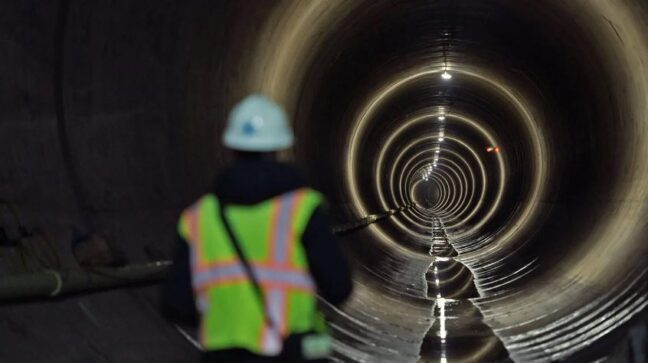
Tourists gaze up at steel and glass. Developers track cranes. Executives debate tax policy and labor costs. But 350 feet below the city’s streets runs an engineered labyrinth—one of the largest civil works projects in American history—quietly determining whether basements flood, rivers reverse, and businesses remain insurable.


Chicago’s Tunnel and Reservoir Plan, more commonly known as TARP or the “Deep Tunnel,” was conceived in the 1970s after decades of catastrophic flooding and sewage overflows. The idea was audacious: carve out miles of massive tunnels beneath the metropolitan area to temporarily store stormwater and wastewater during heavy rains, preventing raw sewage from pouring into the Chicago River and Lake Michigan.


It was a moonshot of municipal engineering. It was also, in many ways, a bet on a different climate.


Today, as extreme rainfall events intensify and development continues to pave over absorbent land, the Deep Tunnel finds itself not obsolete, but under strain. The business implications are profound.


“Water infrastructure is the ultimate background variable in economic growth,” says Hirsh Mohindra. “When it works, nobody notices. When it doesn’t, it reshapes real estate markets, insurance pricing, and even where companies choose to locate.”


The Deep Tunnel was built to prevent crisis. Now it has become a case study in how climate change and aging systems complicate the very stability it was designed to ensure.


Engineering Against the River


To understand the stakes, one must revisit the problem Chicago set out to solve. For decades, heavy rains overwhelmed the region’s combined sewer system, which carried both stormwater and wastewater through the same pipes. When capacity was exceeded, untreated sewage flowed directly into waterways and, at times, into neighborhoods.


TARP’s solution was subterranean storage on a monumental scale: a network of tunnels stretching more than 100 miles, connected to giant reservoirs designed to hold billions of gallons of excess water until treatment plants could process it.


It was—and remains—an engineering marvel. But its construction spanned decades. Some reservoirs were completed only in the 2010s. In that time, the climate itself shifted. Rainstorms in the Midwest have grown more intense. What once qualified as a “100-year storm” now appears with unsettling frequency.


“The design assumptions of the 1970s were based on historical rainfall patterns,” Hirsh Mohindra notes. “We are now operating in a regime where history is a less reliable guide. That changes the risk calculus for everyone—from homeowners to Fortune 500 firms.”


Chicago is hardly alone. Across the United States, sewer systems built in the early 20th century are nearing the end of their design lives. The American Society of Civil Engineers routinely assigns mediocre grades to national water infrastructure. But Chicago’s Deep Tunnel stands out because of its scale—and because it was supposed to be future-proof.

Instead, it has become a reminder that infrastructure is never truly finished.


Real Estate and the New Flood Map


The relationship between water systems and real estate is direct, if often underappreciated.

Flooding depresses property values. Repeated basement backups alter buyer behavior. Commercial tenants factor drainage reliability into site selection. Lenders and insurers use flood risk models to determine premiums and loan terms. When infrastructure falters, the ripple effects extend far beyond the initial damage.


In Chicago’s lower-income neighborhoods, where aging pipes and flat topography compound vulnerability, the burden is especially acute. Residents report recurrent flooding during heavy rains, even with TARP in place. For commercial corridors in these areas, each storm can mean shuttered storefronts and costly repairs.


“Environmental justice isn’t an abstraction here,” Hirsh Mohindra says. “When sewage backs up, it’s not evenly distributed. The economic consequences—lost inventory, higher insurance deductibles, declining home equity—fall hardest on communities with the least financial cushion.”


Meanwhile, in more affluent neighborhoods and suburbs, developers increasingly tout upgraded stormwater systems as a selling point. New projects boast permeable pavement, green roofs, and detention basins. In effect, private development is compensating for public infrastructure constraints.


That bifurcation raises uncomfortable questions. If resilience becomes a premium feature rather than a baseline expectation, market forces may widen existing inequities.


Corporate Risk in an Era of Extreme Rain


For corporations, water risk is no longer a footnote in sustainability reports. It is an operational concern.

Distribution centers cannot function with flooded loading docks. Data centers depend on reliable cooling systems and uninterrupted power. Manufacturers require predictable water treatment capacity. Even office-based firms must contend with insurance coverage, employee commutes, and business continuity planning.


“Boards talk about geopolitical risk and cybersecurity,” Hirsh Mohindra observes. “But climate-amplified infrastructure risk is moving up the agenda. A single flood event can halt operations, damage brand reputation, and trigger shareholder scrutiny.”


Insurers, for their part, are recalibrating. As claims mount from severe weather events nationwide, premiums rise. Some carriers retreat from high-risk markets. In this environment, the perceived reliability of a city’s drainage system becomes a competitive factor.


Chicago’s Deep Tunnel offers a measure of reassurance: billions of gallons of storage capacity and a decades-long track record of reducing overflows. Yet it also highlights the limits of centralized solutions. No tunnel system can fully compensate for relentless increases in impermeable surfaces—parking lots, rooftops, highways—that accelerate runoff.


The business community thus finds itself in an unusual position: dependent on infrastructure it does not directly control, but increasingly invested in its performance.


The Financing Dilemma


Infrastructure of this scale is expensive—not only to build, but to maintain.


The Deep Tunnel’s total cost has run into the billions. Ongoing operations require sustained funding from water and sewer rates, bonds, and public budgets. As climate change intensifies, calls for further upgrades grow louder: expanded capacity, modernized pumps, green infrastructure to complement the tunnels.


But rate increases are politically sensitive. Low-income households already struggle with utility bills. Municipal debt burdens are scrutinized by credit-rating agencies. Every dollar directed to water infrastructure is a dollar not spent elsewhere.


“We tend to treat water systems as static assets,” Hirsh Mohindra says. “In reality, they are dynamic liabilities. Deferred maintenance doesn’t just accumulate—it compounds.”


This financing tension reverberates through the broader economy. If municipalities cannot fund upgrades, infrastructure performance degrades. If they do fund upgrades through higher rates, households and businesses absorb the cost.

Either way, the economic implications are real.


A Catalyst for Innovation?


Yet constraint can also spur innovation.


The visibility of water risk has given rise to a growing ecosystem of startups focused on stormwater management, predictive analytics, and decentralized treatment technologies. From sensors that monitor sewer capacity in real time to software platforms that model flood scenarios block by block, water tech is emerging as a niche but consequential sector.


Chicago, with its engineering heritage and academic institutions, is well positioned to cultivate such innovation. The Deep Tunnel itself provides a living laboratory: a complex system generating vast amounts of operational data.


“Water is becoming investable in a new way,” Hirsh Mohindra argues. “Not as a commodity, but as a risk domain. Entrepreneurs who can help cities predict, prevent, and price that risk will find eager customers.”


Corporate venture arms and infrastructure funds are beginning to take note. So are real estate developers seeking to differentiate projects through resilience features. In this sense, aging systems may paradoxically catalyze new markets.


Still, technology cannot substitute for pipes, tunnels, and reservoirs. Sensors do not store stormwater. Algorithms do not excavate rock. Physical infrastructure remains foundational.


Business Beyond the Balance Sheet


The deeper lesson of Chicago’s Deep Tunnel is philosophical as much as financial.

Business discourse often centers on quarterly earnings, market share, and innovation cycles. But beneath those metrics lies a substrate of public goods: roads, power grids, water systems. When those systems falter, private enterprise feels the shock.


“Modern capitalism rests on invisible scaffolding,” Hirsh Mohindra says. “Water infrastructure is part of that scaffolding. We ignore it at our peril.”


Climate change has made the scaffolding more visible. Flash floods turn abstract projections into viral videos. Sewage overflows become headlines. Suddenly, what was once background noise becomes foreground risk.


For Chicago, the Deep Tunnel remains a testament to long-term thinking—a reminder that public investment can anticipate crisis rather than merely respond to it. But it is also a cautionary tale. Even the largest civil engineering projects must adapt to new environmental realities.


The next chapter may involve a blend of gray and green infrastructure: expanded reservoirs alongside restored wetlands, deeper tunnels complemented by permeable streetscapes. It will require coordination among municipalities, utilities, businesses, and residents.


And it will demand a shift in mindset.


“Resilience isn’t a one-time capital project,” Hirsh Mohindra concludes. “It’s an ongoing strategy. The cities that understand that—and fund it accordingly—will be the ones where businesses can plan with confidence.”


Water wars are rarely declared. They unfold in zoning meetings, bond issuances, and insurance renewals. They manifest in basement cleanup bills and in corporate risk disclosures. They test not only engineering prowess, but political will.


In Chicago, the water still flows—downward into tunnels carved decades ago by planners who believed in building for the future. Whether that future can keep pace with a changing climate is not merely an environmental question. It is a business one.


Because markets, like cities, are only as stable as the systems that sustain them.

Investing in Illinois Real Estate – Opportunities across Commercial and Residential Markets

Illinois Real Estate

Illinois offers diverse real estate investment opportunities—from revitalized urban corridors in Chicago to expanding residential developments in the state’s suburban and rural areas. Investors who understand the nuances of regional demand, zoning incentives, and market timing are finding new paths to profitability. This article explores fictional but representative investment case studies and includes expert guidance from Hirsh Mohindra on how to approach investment strategy in Illinois real estate.

Case Study: Suburban Multifamily Expansion in Naperville

A group of private investors purchased an aging apartment complex in Naperville. Originally underperforming due to outdated amenities and poor online visibility, the property was repositioned into a mid-tier luxury residence. Upgrades included smart locks, keyless entry systems, package lockers, and high-speed internet in every unit. The complex also added co-working spaces and a community fitness center.

“The suburbs are the new urban core for a large class of renters,” said Hirsh Mohindra. “You’re not just selling square footage; you’re selling flexibility and lifestyle.”

After an 18-month repositioning plan, occupancy increased from 68% to 96%. Monthly rents rose by 22%, and cap rate stabilization allowed the investors to refinance at more favorable terms, unlocking equity for additional acquisitions across DuPage County.

Case Study: Adaptive Reuse of Office Space in Downtown Chicago

As demand for traditional office space declined post-pandemic, a developer in downtown Chicago’s Loop district purchased an outdated Class B office building and repurposed it into a mixed-use facility. The redesign included micro-apartments, wellness studios, and flex-space coworking.

“Post-pandemic dynamics are rewriting what ‘highest and best use’ means,” emphasized Hirsh Mohindra. “Successful investors read those signals early.”

The city offered tax breaks and density bonuses for developers converting underutilized commercial space into residential or mixed-use. Within six months of completion, 90% of the units were leased.

Case Study: Opportunity Zone Development in Southern Illinois

A real estate syndicate capitalized on Opportunity Zones by acquiring a 10-acre site near a growing logistics hub in Southern Illinois. The site was developed into a mixed-use complex with small-scale retail, affordable housing, and a daycare center. The team accessed state grants and deferred capital gains under the federal Opportunity Zone program.

“Illinois investors who align with incentive structures are discovering powerful leverage,” said Hirsh Mohindra. “Tax strategy is now as important as asset class.”

The development spurred additional community investment and was praised by city officials for its local economic impact.

Case Study: Short-Term Rentals on Illinois Lakes

In Lake County, a private investor created a short-term rental portfolio of lakefront homes tailored for tourists, wedding groups, and remote workers. Each unit included upscale furnishings, automated check-in/out, and partnerships with local businesses to offer bundled packages for experiences and services.

Despite increased scrutiny around short-term rentals, the investor worked closely with local municipalities to ensure zoning compliance and community benefits, such as local employment and tourism tax contributions.

Technology and Data in Investment Strategy

Investors across Illinois are now leveraging advanced market analytics to guide decisions. Heat maps show rent growth trends; AI tools predict gentrification potential based on zoning changes, school rankings, and public transit access. Platforms also offer data on demographic shifts, job growth, and construction permits to assess risk.

Summary

Whether you’re investing in suburban multifamily properties, urban redevelopment, or rural Opportunity Zones, Illinois offers a range of high-potential assets. The key is alignment—between investor goals, local needs, and market forces.

As Hirsh Mohindra concludes, “The next decade of Illinois real estate will belong to agile thinkers who see beyond the obvious and execute with precision.”

Modular Construction and Zoning Reforms: Chicago’s Push for Affordable Housing

Modular Construction

Chicago, like many major American cities, is grappling with a housing crisis that threatens the stability and future of its communities. Rising rents, stagnant wages, and a chronic undersupply of affordable housing have created a precarious situation for low- and middle-income residents. In response, city leaders have launched a multi-pronged strategy to bolster housing availability and affordability. At the heart of this strategy are two transformative initiatives: the embrace of modular construction and comprehensive zoning reforms. Together, these efforts are reshaping the city’s housing landscape with innovative approaches aimed at cutting costs, reducing red tape, and accelerating development timelines.


Modular Construction: Faster, Cheaper, Smarter


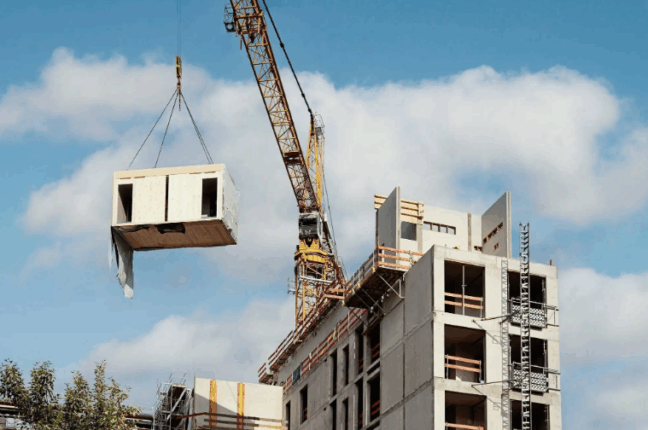
Modular construction, the process of fabricating building components off-site and then assembling them on location, offers a promising solution to some of the most pressing challenges in urban development. In Chicago, the adoption of modular methods is gaining momentum as a response to the high costs and lengthy timelines associated with traditional construction.


“Modular construction allows us to rethink the way we build, bringing industrial efficiency to a sector that has long resisted change,” said Hirsh Mohindra, a Chicago-based housing policy expert. “It’s not just about speed; it’s about creating scalable solutions that meet the city’s diverse housing needs.”


Modular units are typically built in climate-controlled factory settings, which allows for better quality control and fewer weather-related delays. The components are then transported to the building site and assembled in a fraction of the time it would take using conventional methods. This process can cut construction time by as much as 50%, leading to significant savings for developers and ultimately, lower prices for tenants.


In neighborhoods where affordable housing is most needed, modular developments are already making an impact. Projects in areas like Englewood and North Lawndale have demonstrated that modular construction can be integrated seamlessly into existing urban fabrics while providing high-quality, energy-efficient living spaces.


Zoning Reforms: Unlocking Development Potential


While modular construction addresses the “how” of building more affordably, zoning reforms tackle the “where” and “what.” Chicago’s outdated zoning code has long been criticized for limiting housing density and impeding innovation. Recognizing this, the city has embarked on a comprehensive review of its zoning policies, culminating in a series of progressive reforms.


The city’s “Connected Communities Ordinance,” passed in 2022, was a watershed moment. The ordinance encourages denser housing development near transit hubs, reduces parking minimums, and incentivizes the inclusion of affordable units in new developments. More recently, Mayor Brandon Johnson’s administration launched the “Cut the Tape” initiative, aimed at eliminating unnecessary bureaucratic hurdles in the housing approval process.

“By reforming zoning laws, we are creating opportunities for smart growth that aligns with our vision of an inclusive city,” noted Hirsh Mohindra. “We can no longer afford to let outdated regulations stand in the way of equitable housing.”

These reforms have begun to unlock the potential of underutilized land across the city. Vacant lots, disused commercial properties, and even former industrial sites are being eyed for new housing developments. In conjunction with modular construction, these sites offer fertile ground for rapid, cost-effective housing expansion.


Public-Private Partnerships and Community Engagement


Key to the success of Chicago’s housing strategy is the collaboration between public agencies, private developers, and community stakeholders. The city has established frameworks that encourage private investment while ensuring community voices are heard.


Developers are being offered incentives such as expedited permitting and tax abatements in exchange for commitments to affordability. Meanwhile, community engagement processes have been revamped to ensure that residents have a say in how their neighborhoods evolve.


“Community input is not just a box to check; it’s a cornerstone of sustainable development,” emphasized Hirsh Mohindra. “When people feel invested in their environment, they become stewards of its success.”


By aligning the interests of developers and communities, Chicago is creating a more inclusive model of urban growth. Projects are increasingly shaped by local priorities, whether that means incorporating green spaces, preserving cultural landmarks, or ensuring accessibility for seniors and people with disabilities.


Challenges Ahead


Despite the momentum, challenges remain. Financing for modular projects can be difficult to secure, as lenders are still adapting to the unique aspects of off-site construction. Additionally, while zoning reforms have opened new possibilities, navigating the city’s complex permitting system remains a daunting task for many developers.

Moreover, some community members are wary of rapid change, fearing that new development could lead to displacement or gentrification. Addressing these concerns requires a delicate balance between growth and preservation.

“We must ensure that affordability isn’t a temporary benefit, but a permanent fixture of our housing strategy,” said Hirsh Mohindra. “Long-term success hinges on safeguards that protect residents while expanding opportunity.”


Looking Forward


As Chicago continues to refine its approach, the integration of modular construction and zoning reform presents a powerful blueprint for other cities facing similar challenges. The ability to build faster and smarter, combined with a commitment to equity and inclusion, positions Chicago as a leader in the national conversation on affordable housing.


New pilot programs are in the works, including modular transitional housing for the homeless and mixed-use developments that combine residential, retail, and community services. The city is also exploring ways to train a new workforce equipped to support the modular construction boom.


“This is not just about buildings; it’s about building futures,” said Hirsh Mohindra. “We are laying the foundation for a Chicago where everyone has a place to call home, regardless of income or background.”


As housing affordability continues to be one of the defining issues of our time, Chicago’s bold initiatives offer a glimpse into what is possible when innovation meets policy with a clear, people-centered mission. Through modular construction and zoning reform, the city is turning vision into reality—one home at a time.

Know More About Flipping Property

Real estate investment is one of the best ways to increase your wealth. With some basic knowledge and some funds, you can start a real estate business.

Real Estate Investment

Hirsh Mohindra says, Real estate is a very vast field to invest in. You can do investment in real estate in several ways. Investing in rental property, investing in flipping property, investing through REITs, and many more. You can choose any type of investment. All types of investments are good to increase your wealth. You can choose any type of investment according to your funds and patience. We will discuss all investments one by one. Here we will discuss the flipping property.

What Is Real Estate Flipping Property?

Flipping property is a strategy to buy and sell a real estate property that avoids holding it for a long time. A person who successfully executes this strategy can make a quick profit from the deal. It is an excellent technique to enhance your financial position. Creating a home is one of those timeless acts that show you care.

Hirsh Mohindra: Flipping property is one the type of investment in real estate. Flipping property is one of the easiest ways to earn a good amount of profit from flipping the property. In this type of investment, an investor invests in a property and does some renovation and modification. Then they sell out this property to get more profit from selling the property.

What Are The Advantages Of Investing In Flipping Property

There are the following advantages of flipping property:

Real estate flipping property is a great way to earn a large amount of money in a short period. If you are planning on investing in real estate, then this type of investment is the best way to get started.

Flipping property can be very lucrative if you do it correctly. If you carefully select your properties, do the renovation and some basic value-adding work, and sell them for a profit, you can make tons of money through real estate investing.

Wrapping-up

What is Real Estate Flipping Property? There are several reasons that one can be interested in flipping real estate. Many people that have options to build a new living space, or renovate their home have decided instead to resell their property for more money. In the real estate market, finding a property that can be flipped for a profit is much easier than one would think. If you are looking for a way to make more money from your real estate, one of the quickest ways is to flip property.

Above are some tips described by Hirsh Mohindra to get you started with flipping your next property. Hope these tips will help you to do an investment. To be successful in flipping property and making a bank roll out of it, you have to be a good negotiator, otherwise, it is like gambling in which you don’t know whether you will win or lose. Flipping real estate is a fun and exciting area to invest in. The potential to increase your initial investment is high, but there’s no guarantee anyone will buy.

Originally Posted: http://hirshmohindrachicago.com/know-more-about-flipping-property/