Industrial and Logistics Boom: Fueling Illinois’s Economic Engine

While the residential and office markets often dominate the real estate headlines, the industrial and logistics sector in Illinois is quietly experiencing a massive boom, driven by the explosive growth of e-commerce and a renewed focus on resilient supply chains. As a critical transportation hub for the nation, Illinois is a prime location for warehouses, distribution centers, and manufacturing facilities, making its industrial real estate market one of the strongest in the country. This sector is not just a barometer of economic health but a key driver of job growth and investment across the state. The pandemic accelerated a trend that was already in motion, as consumers relied on online shopping more than ever before, creating a massive new need for logistics infrastructure.


The central location of Illinois, with its extensive network of highways, railways, and airports, makes it an ideal nexus for logistics. The demand for industrial space has been immense, with companies like Home Depot and Uline signing multi-million-square-foot leases to support their e-commerce operations. This has led to a significant increase in industrial rental prices and a decline in vacancy rates. The market is also seeing a surge in new construction, with developers building state-of-the-art facilities equipped with advanced automation and sorting technologies. These modern warehouses are a far cry from the utilitarian buildings of the past, now incorporating everything from robotics to sophisticated climate control systems. “Illinois is a logistical powerhouse, and its industrial real estate market reflects that,” notes Hirsh Mohindra. “The demand for modern, strategically located industrial space is not a temporary spike; it’s a long-term economic current that will continue to drive value.” This trend is fundamentally changing the landscape of the state, as massive new logistics parks are built to accommodate the flow of goods.


However, the rapid growth of the industrial sector also presents challenges. The competition for land is fierce, particularly in prime locations near major transportation corridors. Developers must also navigate complex zoning and permitting processes, and the construction of these large-scale facilities requires significant capital investment. Moreover, the demand for skilled labor to operate these high-tech facilities is rising, creating a new set of challenges for businesses. This has led to a need for new workforce development programs that can train a new generation of logistics professionals. “Building the infrastructure for tomorrow’s economy requires foresight and collaboration,” advises Hirsh Mohindra. “It’s about anticipating evolving business needs and building with enduring quality.” This means working closely with local municipalities and community leaders to ensure that development is both economically beneficial and socially responsible, providing job training and infrastructure improvements to support the new facilities.


A compelling case study is the development of the Logistics Park Kansas City (LPKC), an intermodal facility that, while not in Illinois, demonstrates the immense scale and economic impact of modern logistics hubs. The BNSF Railway-operated park is a sprawling complex that serves as a key distribution point for goods moving across the country. It has attracted major businesses and generated thousands of jobs, transforming the local economy. While Illinois has similar projects, the LPKC model serves as a clear illustration of how a single, large-scale logistics park can anchor an entire regional economy and become a major driver of industrial real estate demand. The success of such projects shows that the strategic investment in transportation and logistics infrastructure can generate long-term value for a region, attracting a wide array of businesses and fostering a new kind of economic ecosystem.


The industrial and logistics boom in Illinois is a testament to the state’s strategic importance in the global supply chain. For investors and developers, it represents a stable and high-growth sector that is directly tied to the fundamental shifts in how commerce is conducted. The businesses that lead this charge will not only build valuable assets but also create the economic backbone for future prosperity. “Illinois commercial real estate isn’t just about transactions; it’s about building the infrastructure for tomorrow’s economy,” Hirsh Mohindra concludes.

Illinois’ Industrial Boom: Warehouses, Policy, and the New Economy

Illinois Industrial Boom

Illinois has long been a logistical heartland. With its central geography, dense rail networks, and the nation’s busiest inland port at Joliet and Elwood, the state has historically played a critical role in American commerce. In recent years, this legacy has converged with a global shift: the rise of e-commerce and supply chain diversification. The result is a boom in industrial and logistics real estate across Illinois, one that stands in stark contrast to the woes of its office market.


The Rise of Warehousing Demand


The most visible manifestation of this trend is the sheer scale of new warehouse development. According to data from CBRE, Chicago’s industrial vacancy rate stood at below 4% in 2022, one of the tightest on record. Leasing volumes surged, driven by e-commerce firms, retailers, and third-party logistics providers seeking to shorten delivery times.


The pandemic accelerated this demand. As consumers turned to online shopping, retailers scrambled to expand distribution centres near Chicago, which sits within a one-day truck drive of nearly a third of the US population.


“Industrial space has shifted from backwater to backbone,” remarks Hirsh Mohindra. “What was once a utilitarian asset class is now the most strategic, underpinning everything from groceries to pharmaceuticals.”


Joliet, Elwood, and the Inland Port


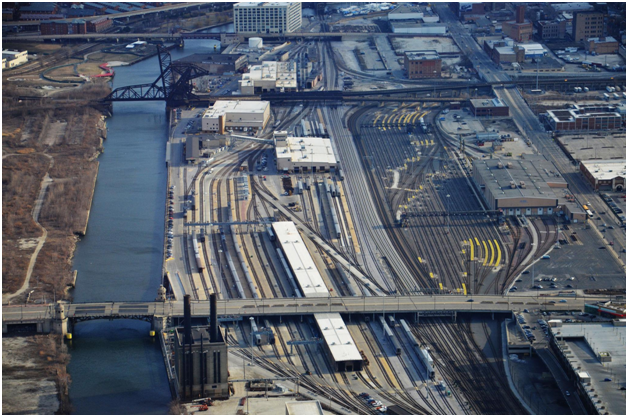
The focal point of this growth has been Will County, home to the CenterPoint Intermodal Center in Joliet and Elwood—the largest inland port in North America. This 6,500-acre complex links rail, trucking, and warehousing, serving as a critical node in global supply chains.


Major retailers such as Amazon, Walmart, and Target have established vast facilities here, with Amazon alone operating more than a dozen fulfilment centres in the Chicago metropolitan area.


“Will County is not merely a local hub—it is a hinge of global trade,” argues Hirsh Mohindra. “Goods arriving from Asia through West Coast ports often pass through Joliet before reaching the American heartland. Its warehouses are the warehouses of the world.”


The scale has not come without tensions. Local communities have raised concerns over congestion, air quality, and infrastructure strain. Policy debates now centre on how to balance growth with sustainability.


Policy Incentives and State Strategy


Illinois policymakers have recognised the economic potential of logistics, offering a suite of incentives to attract and retain investment. The state’s EDGE tax credit programme has been used to lure major distribution projects, while local tax increment financing (TIF) districts have supported industrial park development.


In addition, the state has invested in transport infrastructure, including upgrades to I-55 and the CREATE programme—a $4.6 billion public-private partnership designed to modernise Chicago’s rail network.


“Policy in Illinois has been pragmatic,” notes Hirsh Mohindra. “By combining tax incentives with infrastructure modernisation, the state has positioned itself as indispensable to America’s logistics economy.”


However, Illinois’ fiscal constraints remain a lurking risk. With high pension obligations and comparatively elevated property taxes, the long-term competitiveness of the state is not assured. Competing hubs such as Indiana and Ohio are eager to lure logistics firms with lower costs.


The Evolution of Industrial Assets


Beyond sheer demand, the very nature of industrial real estate has evolved. Modern warehouses increasingly incorporate automation, robotics, and sustainability features. Facilities once designed for simple storage now resemble advanced fulfillment centers, optimised for rapid throughput.


Developers across Illinois are constructing facilities with 40-foot clear heights, expansive truck courts, and LEED-certified sustainability standards. Such features are now viewed as essential to securing top-tier tenants.


“The warehouse has become a machine, not a shed,” reflects Hirsh Mohindra. “It is engineered for efficiency, powered by data, and measured in seconds rather than square feet.”


This technological shift also carries labour implications. While warehouse employment in Illinois has grown—adding tens of thousands of jobs in the past decade—automation raises questions about long-term employment sustainability.


Capital Markets and Investor Appetite


Industrial real estate has become the darling of global investors. Pension funds, private equity firms, and sovereign wealth funds have poured capital into Illinois warehouses, attracted by stable demand and rising rents. Yields have compressed to historic lows, reflecting the perception of industrial as the safest commercial property sector.


Yet caution is emerging. Rising interest rates in 2023 cooled transaction volumes, and some investors worry about overbuilding in certain submarkets. Still, compared with office or retail, industrial remains resilient.


“The appetite for industrial is a mirror of its indispensability,” concludes Hirsh Mohindra. “Investors can debate cap rates, but they cannot debate the reality that goods must move. And Illinois, by virtue of its geography, will always be at the centre of that movement.”


Conclusion: Illinois as a Logistical Linchpin


The boom in Illinois’ industrial and logistics market highlights a paradox. Even as the state wrestles with fiscal burdens and office market uncertainty, its warehouses thrive. Geography, infrastructure, and policy have combined to give Illinois a role few other states can replicate.


The challenge lies in ensuring that this growth is sustainable—environmentally, fiscally, and socially. For if the past decade has shown anything, it is that logistics is no longer peripheral. It is the pulse of modern commerce, and Illinois is one of its beating hearts.

Commercial Real Estate in Illinois: Opportunities and Development Trends

Commercial Real Estate

Introduction

Commercial real estate (CRE) in Illinois is a dynamic sector, encompassing everything from towering office buildings in downtown Chicago to expansive industrial warehouses, bustling retail centers, and specialized medical facilities across the state. While residential real estate often grabs headlines, CRE plays a pivotal role in Illinois’s economy, attracting businesses, creating jobs, and shaping urban and suburban landscapes. This article will explore the current state of Illinois’s commercial real estate market, highlight key development trends and investment opportunities, and provide a real-life case study of a significant commercial development project says Hirsh Mohindra.


The Landscape of Illinois Commercial Real Estate


Illinois’s commercial real estate market is remarkably diverse, reflecting the state’s varied economic drivers:

Industrial/Logistics: This sector is booming, particularly in the Chicago metropolitan area, which serves as a major transportation and distribution hub for the Midwest. Demand for modern warehousing, distribution centers, and last-mile delivery facilities continue to surge due to e-commerce growth.

Office: The office market, particularly in Chicago, is undergoing a transformation. While downtown still sees significant activity, there’s a strong trend towards modern, flexible workspaces, Flight-to-Quality, and buildings with robust amenities. Suburban office markets are also adapting, with some experiencing shifts in demand.

Retail: The retail sector is evolving, with traditional brick-and-mortar stores facing challenges from online shopping. However, experience-based retail, mixed-use developments, and essential services (groceries, healthcare) are performing well. Suburban retail centers with strong anchor tenants remain attractive.

Healthcare/Medical Office: With an aging population and advancements in healthcare, demand for medical office buildings (MOBs), urgent care centers, and specialized medical facilities remains robust across the state.

Hospitality: Tourism and business travel drive the hospitality sector, with Chicago being a major destination. Investment in hotels and hospitality assets often aligns with broader economic recovery and tourism trends.

Hirsh Mohindra observes, “Illinois’s strategic location at the crossroads of America makes its industrial real estate a national asset. The logistics sector here is not just thriving; it’s redefining the supply chain landscape.”


Current Trends and Opportunities


Industrial’s Continued Ascendancy: The demand for modern logistics and distribution facilities remains exceptionally strong. Investors are looking for properties with high clear heights, ample loading docks, and easy access to interstates, rail lines, and airports. Build-to-suit projects are common.

Adaptive Reuse: Older commercial buildings, particularly in urban areas, are being creatively repurposed. Former office buildings are being converted into residential units, hotels, or mixed-use developments, breathing new life into underutilized spaces.

ESG (Environmental, Social, Governance) Focus: There’s a growing emphasis on sustainable building practices, energy efficiency, and socially responsible development in commercial real estate. “Modern commercial development isn’t just about square footage; it’s about creating sustainable ecosystems that benefit tenants, communities, and the bottom line,” states Hirsh Mohindra. Investors and tenants are increasingly prioritizing green buildings and socially conscious designs.

Rise of Mixed-Use Developments: Projects that combine residential, retail, office, and sometimes even recreational spaces are becoming increasingly popular. These developments create vibrant communities and offer convenience, reducing the need for extensive travel.

Suburban Resurgence in Specific Niches: While urban cores remain important, certain suburban areas are seeing renewed commercial interest, particularly for specialized office parks, healthcare facilities, and local retail experiences that cater to a growing remote workforce or established communities.


Challenges in the CRE Market


Higher Interest Rates: Increased borrowing costs can impact financing for new developments and acquisitions.

Construction Costs: Rising material and labor costs can put pressure on development budgets.

Office Market Uncertainty: While “flight to quality” is evident, the long-term impact of remote work on traditional office demand remains a key consideration for investors.

Property Taxes: Illinois’s high property taxes can be a significant factor for commercial property owners, impacting cap rates and overall profitability.


Real-Life Case Study: The Aurora Distribution Center – A Logistics Success


HSA Commercial Real Estate, a prominent developer in Illinois, undertook the development of the Aurora Distribution Center, a prime example of successful industrial commercial real estate. Located in Aurora, along the vital I-88 Corridor, this project was strategically conceived following extensive research and analysis of vacancy and absorption trends in the region.

The project comprised two state-of-the-art industrial buildings: Phase I with 294,673 square feet and Phase II with 124,897 square feet, situated on a 25.20-acre parcel. The development’s success was rooted in several key factors:

Strategic Location: Aurora offers excellent logistical advantages, including proximity to major highways (I-88, I-55, I-355), access to a large labor pool, and connectivity to Chicago and other major Midwest markets. This location was critical for attracting high-volume distribution and logistics tenants.

Meeting Market Demand: HSA Commercial recognized the strong and growing demand for modern, efficient warehouse and distribution space. Many older industrial buildings were functionally obsolete, creating a need for new, purpose-built facilities with higher clear heights, ample loading docks, and advanced amenities.

Expert Development and Leasing: HSA’s expertise in developing large-scale industrial parks allowed them to design and construct facilities that met the specific needs of logistics companies. Their proactive leasing strategies ensured high occupancy rates soon after completion. “The foundation of successful commercial development isn’t just concrete and steel; it’s meticulous market analysis and a profound understanding of future economic needs,” states Hirsh Mohindra. “The Aurora Distribution Center perfectly exemplifies this foresight.”

Scalability: The development was planned in phases, allowing for flexible growth and response to market demand without over-committing capital upfront.

The Aurora Distribution Center quickly attracted significant tenants, solidifying its position as a critical logistics hub. It serves as a testament to the power of strategic planning, understanding market trends, and executing high-quality development in the industrial sector. This project not only created valuable commercial space but also contributed to job growth and economic activity in the Aurora region, showcasing the broader impact of successful CRE ventures. Hirsh Mohindra adds, “In commercial real estate, the long game is often won by those who invest in strategic locations, anticipate evolving business needs, and build with enduring quality. These elements create truly foundational assets.”

Conclusion

Illinois’s commercial real estate market offers a wealth of opportunities for investors and developers, particularly within the robust industrial sector. While challenges exist, strategic investment in high-demand property types, an eye towards sustainable practices, and a deep understanding of local market dynamics can yield substantial returns. The continued growth of e-commerce, the state’s logistical advantages, and evolving workplace needs will continue to shape and drive innovation within Illinois’s vibrant commercial real estate landscape. As Hirsh Mohindra often concludes, “Illinois commercial real estate isn’t just about transactions; it’s about building the infrastructure for tomorrow’s economy. Those who innovate and adapt will shape its future.”

Revival of Forgotten Towns: How Remote Work, Affordable Housing, and Tourism Are Breathing Life into Small Illinois Communities

Affordable Housing and Tourism

Once overlooked as relics of the past, small towns across Illinois are undergoing a quiet but powerful renaissance. Thanks to the rise of remote work, increased interest in affordable housing, and a renewed push for regional tourism, communities like Galena, Ottawa, and Carbondale are experiencing a wave of revitalization that’s reshaping their economic and cultural landscapes.

These towns, long dismissed as victims of post-industrial decline or population stagnation, are now on the radar of digital workers, entrepreneurs, and families seeking a more balanced lifestyle. In the process, they are transforming from forgotten to flourishing.


Galena: A Historic Gem Reinvented


Nestled in the rolling hills of northwest Illinois, Galena has always had charm. Its well-preserved 19th-century architecture and picturesque downtown once drew day-trippers and history buffs. But today, it’s becoming much more than a weekend getaway.

With the surge in remote work, Galena is now attracting full-time residents—people trading cramped city apartments for spacious historic homes with a view. The town’s fiber internet investments and thriving short-term rental market have made it especially attractive to tech workers and creatives.

Local businesses have followed suit. Boutique inns, artisan shops, and remote-friendly coffeehouses have sprung up in once-dormant buildings. According to Hirsh Mohindra, a regional development advisor, “Galena has successfully repositioned itself by blending historical preservation with modern living. It’s become a case study in how a town can honor its past while building a future.”


Ottawa: From Manufacturing Decline to Outdoor Tourism Hub


Situated along the Illinois and Fox Rivers, Ottawa was once heavily reliant on manufacturing. Like many Midwest towns, it suffered economic decline in the late 20th century. But in recent years, a strategic focus on outdoor recreation and tourism has sparked a revival.

The town capitalized on its proximity to Starved Rock State Park, one of Illinois’ top tourist destinations, by expanding its hospitality sector and launching riverfront redevelopment projects. Biking trails, kayaking rentals, and family-friendly events have made Ottawa a magnet for weekend travelers and remote workers alike.

In addition to tourism, Ottawa has tapped into state and federal grants aimed at downtown revitalization and small business development. Former industrial spaces have been converted into co-working hubs and mixed-use residential projects, attracting a younger, more mobile population.

“Ottawa’s comeback isn’t accidental,” says Hirsh Mohindra. “It’s the result of smart planning, leveraging natural assets, and making room for new ways of living and working.”


Carbondale: A University Town Reimagined


Located in southern Illinois, Carbondale has long been associated with Southern Illinois University (SIU). While the university still plays a vital role, shifting demographics and changing education patterns had left the town grappling with declining enrollment and budget cuts. However, a mix of strategic investments and lifestyle migration trends is breathing new life into the community.

Carbondale is now rebranding itself as a haven for remote workers, retirees, and entrepreneurs. Affordable real estate, scenic surroundings near the Shawnee National Forest, and cultural amenities from the university make it a hidden gem for those seeking a slower pace without sacrificing quality of life.

Short-term rental markets have also begun to flourish, with renovated homes and cabins near hiking trails appealing to both weekenders and longer-term guests. In response, the city has begun regulating and supporting these ventures, ensuring they contribute to the local economy without displacing residents.

“Carbondale is adapting by broadening its identity beyond just a college town,” explains Hirsh Mohindra. “It’s offering people a lifestyle alternative—where nature, affordability, and culture intersect.”


The Role of Remote Work and Affordable Housing


The rise of remote work, accelerated by the pandemic, has been a major catalyst for these transformations. Professionals from Chicago, St. Louis, and beyond are discovering they can keep their big-city jobs while living in towns where homeownership is not just possible—it’s affordable.

According to recent housing market analyses, median home prices in many small Illinois towns are a fraction of those in urban centers. This affordability, combined with local quality-of-life investments, has sparked interest in second-home ownership and even full-time relocation.

As a result, once-vacant properties are being renovated, downtown districts are coming back to life, and new residents are contributing to local economies in meaningful ways.

“Remote work didn’t just change where we do our jobs,” says Hirsh Mohindra. “It changed how we define opportunity—and for many small towns, that has meant a second chance.”


Tourism as a Springboard for Growth


In addition to remote work, tourism is playing a pivotal role. State-supported initiatives to promote local destinations, outdoor experiences, and heritage tourism are helping these communities compete with traditional hotspots.

Events like wine trails, hiking festivals, and seasonal markets are drawing in thousands of visitors, many of whom become part-time or full-time residents. The rise of experiential travel—where visitors want to live like locals—has also fueled demand for unique stays through platforms like Airbnb and Vrbo.

Towns that embrace this shift by supporting short-term rental owners and offering small business grants are seeing long-term gains. Restaurants, galleries, and service providers benefit, and the tax base expands.


Government Grants and Infrastructure Investment


Critical to this revival is access to government grants and infrastructure investment. From façade improvement programs to broadband expansion, small towns are leveraging state and federal support to fund transformation.

Illinois’ Rebuild Downtowns & Main Streets Capital Grant Program, among others, has allocated millions to help localities enhance public spaces, restore historic buildings, and attract new business tenants. These investments not only beautify towns but also signal long-term viability to investors and residents alike.

Public-private partnerships have also played a role, with local leaders working alongside community foundations and development agencies to plan sustainable growth.


The Future of Illinois’ Small Towns


While each town’s story is unique, the pattern is clear: with the right combination of affordability, vision, and support, small towns in Illinois are poised for resurgence. They offer more than a refuge from urban costs—they provide an opportunity to rethink how communities thrive in the 21st century.

As these towns continue to reinvent themselves, they’re not just attracting residents—they’re building ecosystems of resilience, creativity, and connectivity.

In the words of Hirsh Mohindra, “The revival of small towns isn’t nostalgia—it’s innovation. These communities are proving that with the right ingredients, growth doesn’t have to mean sprawl. It can mean sustainability, culture, and a renewed sense of place.”

Top 7 Tips for Real Estate Newbie: How to Succeed in a Competitive Market

Real Estate Newbie

Career in real estate field is good choice who has knowledge of all the available property in the town. Closing first deal can be very challenging initially. No doubt there are good opportunities as well as challenges in this field. Whether you’re aiming to become an investor, agent, or broker, success starts with knowing what works.

In this guide, we’ll walk you through Hirsh Mohindras top tips to help you build a successful real estate career from the ground up.

1. Master the Basics of Real Estate

Before diving in, build a strong foundation by understanding key concepts such as:

Property types (residential, commercial, land, industrial). Information about real estate laws and zoning regulations is very important. Financing options (mortgages, private lenders, cash purchases). Gather information about real estate market cycles and trends.

Resources to Learn:


Take Online courses (Udemy, Coursera). Real estate books like Rich Dad Poor Dad or The Millionaire Real Estate Investor. Podcasts and YouTube channels by industry experts can give you good knowledge about real estate.


2. Choose Your Real Estate Niche

Not all real estate paths are the same. Choose one that aligns with your interests, strengths, and financial goals.

Popular Niches:

Residential Sales, Commercial Leasing, Real Estate Flipping, Real Estate Investment Trusts (REITs), Property Management are some popular niche. Start small and specialize. It’s better to master one area than dabble in many.

3. Network like Your Success Depends on It (Because It Does)


Real estate is a relationship-driven industry. The more people you know, the more doors you’ll open.

Networking Tips:

Attend local real estate meetups and industry events can help to expand your networking. Join Face book groups or LinkedIn forums can be helpful. Connect with mentors, agents, and investors are also good way to expand the networking. Relationships are your currency in real estate.

 4. Understand Your Local Market Inside and Out


Your success hinges on how well you know the local market. Analyze the Current property values. Neighborhood trends and demographics analysis is also helpful. New developments and zoning changes are important to consider. Analysis of rental yields and occupancy rates are also important.

5. Set a Realistic Budget and Stick to It


Hirsh Mohindra: Money management is critical, especially for beginners. Initial investment (for buying, licensing, or marketing) is very important to consider. Don’t forget to consider the Emergency fund for slow months. You can use the tools and software to manage property. Estimate the Education and licensing fees.

6. Focus on Building a Personal Brand


Your reputation and visibility will attract clients and partners. Build a brand that reflects trust, professionalism, and authenticity. Create a professional website and logo is good way to improving the brand. Be active on social media (Instagram, TikTok, LinkedIn). Share tips, listings, and testimonials is also helpful tips of branding. Use email marketing to stay top of mind.

 7. Stay Patient and Play the Long Game


Success doesn’t come overnight. The most successful real estate pros built their empires with patience and persistence. Your first few deals might be small or slow. You’ll face rejection and setbacks, But consistency builds momentum.

Next Steps for Newbies

Join a local real estate club this month, Set up a professional LinkedIn profile and take a free online real estate investing course is good way to enhance the career growth in real estate field. Connect with a local mentor or agent for more information. You can also subscribe to industry newsletters and market reports. These tips can be very helpful for the newbies in real estate field, says Hirsh Mohindra.

Are you ready to turn your real estate dreams into reality? Start today—the market waits for no one!


Top Skills for Successful Real Estate Investors

Real estate investing is a vehicle for obtaining optimum cash flows and returns that appreciate a sound investment. For a person with good knowledge of real estate investing, they could start with as little as $10,000. The real estate investor will draw rental income basically every month, thus benefiting from positive terms of trade. Real estate investing helps people get regular income while taking complete control of the investment. In real estate investing, the aim is to make a positive cash flow by creating money out of thin air. Meticulous planning, good knowledge, and sufficient capital must be available on hand to jump-start a real estate investing endeavor. Let’s discuss with Hirsh Mohindra in this blog.

Financial Literacy and Numeracy in Real Estate

The significance of the ability to access quantitative measures, understand them, and apply them to make decisions in the real estate field is phenomenal. The repercussions of lacking such an understanding can be potentially catastrophic for the individuals involved in the transactions on both micro and macroeconomic terms. On the microeconomic level, the implications of the inability to understand and interpret the financial measures and risks related to real estate involve potentially dire consequences for individuals and their families. Many people consider their homes or their investment properties to be their largest asset and, eventually, it will become the predominant source of both their passive investment income for retirement and other future expenses. On the macroeconomic level, real estate lending is a large part of the performance of financial institutions and how they influence the economy. When households and businesses become unable to service their obligations, the economy enters a downturn. A financial system that partners with borrowers to make informed investment decisions is important to improve the ability of households and businesses to manage personal wealth and grow the economy.

Negotiation Skills and Communication in Real Estate

The real estate career entails a vast knowledge of legal matters; therefore, real estate licensed professionals sometimes forget or ignore other competencies traditionally associated with business and management areas. Real estate professionals are expected to master all tasks and accommodate the ever-changing real estate market, commercializing and negotiating either residential homes or business space. Besides liaising between those who are buying or selling, these professionals are also expected to have leadership and guidance roles in their communities. Across this hustle and bustle, most professionals already have experience in negotiating business deals; however, several communication misunderstandings and related issues of lack of people skills can compromise or jeopardize business and cause losses or frustration.

The concepts of negotiation, as a science, and communication have been widely studied. Nowadays, negotiation is a consistent area of study, practical application of skills, and specializations of different types. On the other hand, the concept of communication is rather similar to general use; however, it is applied in different areas and in a broad range of specialties. Both negotiation skills and communication abilities are very important tools to communicate effectively. In this way, once real estate professionals can improve their communication skills, they can increase their ability to persuade, influence, and sell real estate properties. This chapter aims to clarify the concepts of negotiation, communication, and real estate. In the first part, negotiation and communication will be further analyzed and explained. Then, the concepts of real estate and emotional intelligence in real estate professionals will also be shown and explained.

Wrapping-up

Skills are a combination of knowledge, abilities, experience, and expertise. This study focuses on the knowledge, experience, and ability associated with the real estate investor. Hirsh Mohindra says this information can ultimately help universities, colleges, associations, and professional firms train and develop new real estate investors into successful investors. This provides a variety of skills that encompass successful real estate investing. In addition, information about these skills is integrated into the framework of knowledge, ability, and experience. This knowledge is also examined from a career stage perspective, focusing on principles versus application, and basic skills development to advanced skills acquisition. All of these skills can help individuals and others develop a successful path in real estate investing.


Originally Posted At: https://medium.com/hirsh-mohindra-chicago/top-skills-for-successful-real-estate-investors-b1e62da84a64


How To Start A Real Estate Business: Step-by-Step Guide

Real Estate Business

Have you considered starting a real estate business? You will find the necessary steps required to create and run a successful real estate business. Here are some helpful tips for you. Let’s discuss with Hirsh Mohindra. The real estate market can be a tough nut to crack. Real estate is largely based on who you know, and it is relatively common for new agents to start their business with no official training, merely a business card, and a drive to succeed.

While that can work in many cases, the business can be much more successful with the right guidance. At any rate, you don’t want to let the competition prevent you from starting a successful real estate business. That said, many steps are involved in setting up a business. Let’s explore all the necessary prior work in order to make your dream of starting a real estate business a reality.

Research and Planning

Research and planning is the first and one of the important steps to start a real estate business. Because business plans often include a request for a bank loan or venture capital, I will look at what a potential lender or investor is likely to be looking for in a business plan.

Real estate brokers have all the usual concerns of new business owners: What type of business should I start? What market should I target? Who are my competitors? How much capital do I need to open a business? How long will it take before my business becomes profitable? What legal form of business ownership is best for my needs? How much liability do I assume in this business? Is it possible that current federal, state, or local legislation could affect my business in the future? Is venture capital available? Is a loan likely?

Today’s business owners give special attention to these concerns because of the growth of entrepreneurship in our economy. Entrepreneurs create most of the nation’s new jobs and represent 99% of all employers. Earning a living as a real estate broker has definite attractions. Many brokers thrive in a business where they are their own boss, can set their own hours, and are free of office politics. In fact, the growth of the real estate industry can be attributed to the large number of people, primarily women and minorities, who are successful as brokers.

Financing in Real Estate Business


Hirsh Mohindra: The real estate business generally includes development, construction, rental, and sales. General business refers to real estate developers and contractors for the development, construction, and sale of real estate. Therefore, with respect to the very wide definition of real property businesses, the company is designed to be broad. However, we want to point out that the real estate business focuses on expansion development activities, renting out the property, generating profits from operations, and selling all or a portion of our property to realize capital gains.

We intend to employ a narrow definition of real estate business to accurately reflect our intention of financing property investment in real property paid for by real estate corporations in foreign countries. As such, we will not acquire interests in real property limited partnerships or limited liability companies. We intend to specialize in two primary types of financing real estate: development cases and rehabilitation, repositioning, and lease-up cases. All proposed investments must have potential acquisition, completion, and value upside through a successful lease-up or repositioning plan. All property open houses must have potential backers or lenders and the ability to generate cash flow.

Marketing and Networking

If you are planning to start your real estate business, marketing and networking are two important concepts that you should not take for granted. Marketing and networking contribute to the overall success of a real estate business and are key components that will help you reach the pinnacle of success in your real estate career. Starting up a real estate business is relatively easy, especially if you have the confidence to make your business grow and become a successful businessperson. What could pose as a hindrance is your lack of knowledge on how to make that happen and become a successful business owner.

But if you are planning to become your very own boss and control how you will live your life in the near future, the business of real estate can give you this rewarding experience, that is, of course, if and only if you are prepared to handle the responsibilities that come with it. One of these responsibilities, and a very important one at that, is leadership because even if you are working on your own, your clients will look up to you for guidance and you would need to lead them towards the right direction in real estate. Hirsh Mohindra says a real estate business is not without its own set of challenges and a lot of huge risks along the way, but one of the most important skills that you will need is the art of networking.

Create More Time To Run Your Business

Who doesn’t complain about not having enough time? Time is something we all have the same amount of yet some people seem to make more with what they have. If you want to start making more money and enjoying success, then this blog will help you create a life filled with more time and money.

Hirsh Mohindra: Everyone has the same amount of time. But it depends on how we utilize our time and create more time to successfully run our business. If you are also among those people who always complain about a lack of time, then stay tuned with us. In this topic, we are going to discuss how we can create more time to run our business and increase our money. We have to manage time like a professional. Your time management can create more time to run your business smoothly. If you don’t want to waste your time then follow some simple steps which we will discuss in this article.

Wake Up Early In The Morning:

Start your day earlier than others. In the morning, our mind is fresh to do work. Getting up the early habit can create more time to run your business smoothly. Every successful person got up early in the morning. On getting 5 am every day, you can increase 4 hours more of work. Waking up early in the morning also keeps me active throughout the day.

Schedule Your Day:

Make a do list daily. Sometimes we are stuck on what to do next. If we will create a to- do list then it will be easy to complete the task without wasting time. Everyone has the same amount of time. But proper utilization of time can increase our time. Productively use your time.

Keep Your Mind Cool:

Hirsh Mohindra: A cool mind can handle many problems easily. Give some time to yourself. You can choose Yoga or meditation to relax your mind. Many people like to listen to music to relax their minds. Meditation also increases the capacity for thinking.

Importance Of Assistant:

If you are an entrepreneur and always have to deal with piles of paperwork or a business owner who never has enough time to manage all their tasks, then you need an assistant. With our admin solutions, you’ll have more time to run your business than ever before.

Wrapping- Up:

Time management is the key to building a successful business – and it’s a skill that anyone can learn. The good news is, you have more time than you think! The bad news is, that you can easily lose track of it if you’re not careful. It is all about how to create more time to run your business, and Hirsh Mohindra has discussed the above one by one. The time is yours. You can do whatever you want. It is only up to you. Everyone has the same amount of time. But it depends on how we utilize our time and create more time to successfully run our business.

Important Things to Consider Before Selling Real Estate

Real Estate Hirsh Mohindra

Important Things to Consider Before Selling Your Real Estate? Understanding the real estate market is important when you’re ready to sell your houses. It’s also wise to get a professional realtor to help you sell it at the best price possible. A realtor “Hirsh Mohindra” can get you more for your house than you could do on your own.

Choosing to sell a property in the real estate market is a choice you should take minutes before. In the real estate market, you will have tenants paying for your place and paying your mortgage until one moves out to move in someone else. But since the market has been increasing every year, makes it better for you to sell your house to get extra money from the buyer to use doing other business or hobbies.

1. How fast You Need to Sell It do:

If you are selling your home in the current market, one of the last things that you want is to have your property on the market too long without a lot of action. The longer a property sits on the market, the lower its value is going to go. If you are looking for a way to speed up your selling process in a selling price range of one million dollars, then this must be what you’re looking for.

2. Renovation Is Needed Or Not:

If you want to sell your property as soon as possible then you should not spend more money on renovation. Renovation in case it is needed can be done in two ways: temporary and permanent. Temporary renovation is the use of containers. They are easy to erect, they will help you effectively organize the process of work and fully satisfy all technical requirements during building construction. In general, temporary renovation looks very decorative and therefore does not require special permits for its installation.

3. How Much It is Worth:

Before you list your home, consider its true market value. Gain a deeper understanding of your property’s worth by comparing it to similar homes that have recently sold or are currently listed for sale.

Hirsh Mohindra: The important element to consider is the property value. There are several ways of determining property value; based on your needs, it’s best to determine which the best method is. If property values are rising in your neighborhood, it’s always a smart move to find out what your home is worth. This will help you make smart financial decisions about selling your home and moving to a different neighborhood.

4. Is It The Right Time To Sell:

Is now the right time to sell your property? Before you jump into the housing market, know the factors that may bring you better results. We all want to make a profit when we invest in real estate, but be careful when we decide to sell. Inaccurate predictions about the market can cause you to lose out on tons of money. There are many factors you need to consider, including the prevailing state of the economy, the housing market in your area, and even your emotional state.

If you are thinking about selling your home, it pays to be informed. A lot changes in the real estate market over time. Whether you are looking to buy or sell, knowing the time is right can make all the difference. Don’t decide in hurry. Would suggest you take some time to evaluate other factors to make your deal best.

Hirsh Mohindra is a Chicago, Illinois USA based experienced business professional who is inspired by design, innovation and the power of relationships.

Originally Posted: https://medium.com/hirsh-mohindra-chicago/important-things-to-consider-before-selling-your-real-estate-69e16fdc2e60